 |
|
|
|
|
|
|
Miniature Painting
Rajasthan has been a great center of Indian arts and crafts in general and paintings
in particular. The decoration of dwellings and other household objects was but one
aspect of the creative genius of the Rajasthani - the world of miniature paintings
is perhaps the most fascinating and the distinctive styles that have existed here
are renowned the world over.
From the 16th century onwards, various schools of painting flourished in Rajasthan
the Mewar School, Bundi-Kota Kalam, Bikaner, Jaipur, Marwar and Kishangarh Schools.
Each school having an inimitable and distinctive style.
These medieval miniature paintings vividly render hills, valleys gardens, palaces,
court scenes, desert and religious processions.
Themes from Ramayana, Krishna Lila, Choura Panchasika, Ragamala series and a Gita
Govinda were commonly used. The colors used by the artists were made from minerals,
vegetables, precious stones, conch shells, pure gold and silver. And it took as
long as several months to prepare the colors.
Rajput miniatures which flourished under princely patronage are being reproduced
even today, by descendants of the original craftsmen. Although several innovations
have taken place in the paintings, their classical element and aura continues.
The miniature paintings of Rajasthan are renowned the world over. It is believed
that miniature paintings were being made in Rajasthan as early as the 18th century
and later the Mughal court employed the artists.
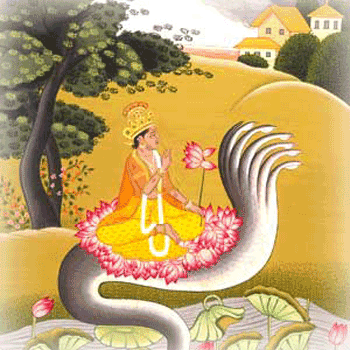
Today, families engaged in miniature paintings exist in Jaipur, Jodhpur, Nathdwara
and Kishangarh and continue to paint fine works of art on handmade paper. The ancient
tradition of scroll painting survives in Rajasthan as Phadas and Pichwais in bold
vigorous lines and bright primary colours displaying much of the ancient Indian
tradition of narrative painting.
|
|
@Copyright 2008-2014 RajasthanTour4U.com | Blog | Contact Us | Advertise | FAQs | Travel Links | Sitemap | |
|