 |
|
|
|
|
|
|
Carpets and Dhurries
Rajasthani hand-woven cotton durries also called Panja durries, are known for
their remarkable geometric patterns and colors. They not only command sizable markets
in India, but also overseas.
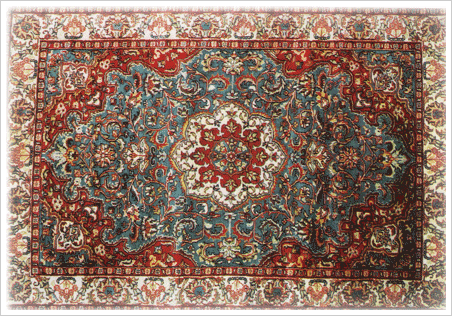
The dhurrie, a simple rug that was once used as an underlay, has now become one
of the state's best known weaving traditions. Weavers sit on looms in villages,
creating an interesting blend of patterns- mostly geometric, sometimes floral- in
an exciting combination of colours. Made from cotton yarn, in areas such as Bikaner
and Jaisalmer, the camel-hair, woolen dhurrie too is available. Rugs are manufactured
in areas around Tonk and Namdahs.
They have a variety of use depending on size, pattern and material. The smallest
one is 12" by 12" and is used as base cover for telephone stands and flower vases.
The ideal size for doing meditation is 24" by 24", known as aasan.
Dhurries used in large political or social gatherings may be as big as 20 feet by
20 feet. Dhurries are easily portable being light in weight and foldable. They come
in variety of color combinations and patterns catering to the needs of any taste
and occasion.
Dhurrries have a low maintenance cost as they do not get infected by Silverfish
or other bugs responsible for destroying carpets. Dhurries can be used year 'round.
The cotton dhurrie is warm in winters and cool in summers.
The exquisite Rajasthani carpets are a popular item of export today. Raja Man Singh
I of Amer pioneered carpet manufacturing in Rajasthan. When he acquired several
exquisite carpets from Heart (Afghanistan) for his palace, he also invited artisans
from there to train the local workers. Eventually Jaipur, Bikaner and Amer became
the prominent centres of carpet weaving.
The carpet industry of Jaipur further received a boost during the region of Maharaja
Sawai Ram Singh II. Jaipur is known for its quality carpets. The designs are mostly
Persian and Caucasian. The motifs consists of human figures, flora, fauna, landscapes
and geometrics.
Carpets first began to be manufactured in Rajasthan when weavers from Afghanistan
were installed in the royal ateliers in the 17th century. Ever since, they have
flourished here, with their exuberant colours and geometric motifs finding their
way into showrooms around the world. Naturally they are available in the bazaars
at a price far lower than they command in stores overseas.
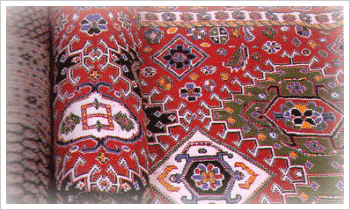
Woolen Carpet
Wool carpet has an extensive history, beginning an estimated 8000 years ago with
people first learning to shear sheep and goats and create weaving techniques from
wool. Out of necessity for warmth and insulation, carpets were eventually born,
excellent for keeping the feet warm and for warming up homes. A product as timeless
as the wool carpet is also very timely, since many people prefer to have carpets
today that are made out of 100% wool....more on Woolen
Carpet
|
|
@Copyright 2008-2014 RajasthanTour4U.com | Blog | Contact Us | Advertise | FAQs | Travel Links | Sitemap | |
|