 |
|
|
|
|
|
|
Bandhej
Bandhej (Bandhani) was introduced in Jamnagar when the city was founded 400 years
ago. This city has now become one of the principal centers of bandhej, creating
new pattern and experimenting with modern colors.
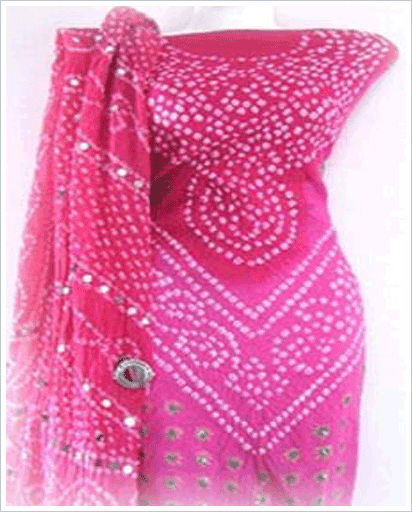
Bandhej is the Art of royalty - The tie-dyed fabrics of Gujarat are perhaps the
best produced in India. Over the years the BANDHEJ label has become synonymous with
a distinct style in traditional clothing. It has gained a great reputation for the
variety, styling, specially developed fabrics, fit, finish and quality.
Bandhej is different from patola as the tye and dye process is done after the fabric
is woven. Tye and dye fabrics of Bandhej's are popular among the women of Gujarat,
khatiavar, Rajasthan and Sindh. It is called pattern dyeing (resist method of printing)
which is one of the most preventive method of printing. Part of the fabric is dyed
and dyed with the dipping method, rubia, silk, linen and cotton threads are used
for dyeing the material. Thickness of the thread depends on the thickness of the
fabric. In Rajasthan usually women are engaged in doing this work.
The utility items made of this method are dupattas, kurta's, turbans, quilts, ghagras,
sarees. Also cusion covers, table mats, covers are quite popular. Colors used in
bandhej are very bright and multi coloured which are auspicious and are known as
a symbol of youth and romance.The designed are based on the shapes of animals, birds,
flowers, dancing figures etc.
Bandhej is a dyeing practiced mainly in India. (Bhagyoday fashions) Jaipur, Jodhpur
is famous for Bandhej sarees, salwar suits and lehanga cholis. Bandhani (Bandhej)
means lot of colors. Mainly bright colors like red, black, green and yellow are
used in bandhej prints. Bandhej is actually art of tyeing and dyeing and this process
results in multiple symbols like dots, squares, waves and stripes. Natural colors
are used in Bandhej. Red and black is the most common color combination of bandhej
but we use also other pairs of colors.
Dyeing the cloth in such a manner that many small resist-dyed 'spots' produce elaborate
patterns over the fabric creates Bandhej sarees.
You can find Jodhpur Bandhini at Kapra Bazaar. Jodhpur, India Tie and dye in small
motifs or in wave-like strips, on cotton, chiffon or silk and many other patterns
are available. Bandhej of Jodhpur, Rajasthan is used as Sarees, Jodhpuri coats,
Rajasthani dresses, Salwar-kameez sets, yardages for turbans, etc. You can find
all types of Bandhini at Mehar Collection. Even the prices there are pretty less.
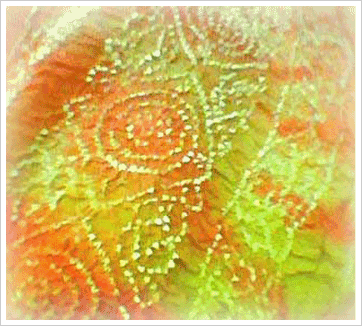
The Jodhpuri craftsmen have perfected the technique of Bandhini. They can make the
most intricate patterns emerge in discharge, with vibrant backgrounds. To go to
Jodhpur and come back without buying Bandhini is a sheer waste. There are a lot
of shops in Jodhpur, selling Bandhini. Some of the good markets in Jodhpur for Bandhini
are: Sojati Gate Market, Nai Sarak Market and Sadar Market.
|
|
@Copyright 2008-2014 RajasthanTour4U.com | Blog | Contact Us | Advertise | FAQs | Travel Links | Sitemap | |
|