Archive for September 2, 2009
Chakdar and Gherdar Jama - Tradition Mughal and Rajasthani Wear
The tradition of wearing jama was on the occasions of wars and marriage ceremonies. Jama is a tight fitting bodice, high waist and a flared skirt which vary from knee to ankle length. On the upper portion there is choli and it touches the knees. It’s not a daily wear clothing.
ORIGIN:
In the mid of seventeen century before Akbar reign, jama was court dress known as “Takauchiya’jama”. The flare of jama was not chakdar rather it was gherdar. Abdul fazl has written in the history that Akbar promoted gherdar jama. It is depicted in pictures, paintings and museum of the sixteen century.
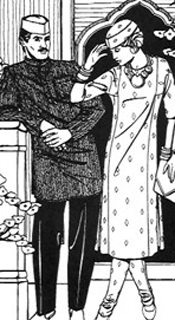
Jama - Tradition Mughal and Rajasthani Wear
STRUCTURE:
It is open fronted garment with one panel crossed over another on the front. It is kept in pace by tie cords which held the inner panel on the inside at the waist or armpit
Fabric:
Fine cloth, silk or brocade is used for making jama. Jama measured cloth is embroidered, woven and printed.
TYPES:
There are two types: chakdar jama and gherdar jama. The chakdar jama has hanging, narrowing ends of the sort while later on had an even round hemline and tended to be full.
Earlier in Rajasthan knee length jama was there but with passage of time long jama, that covered the feet and trailed the floor, was in fashion. It started in the eighteen centuary while earlier one last till (1719-1748)Mohammad shah period.
EMBROIDERY PROCESS:
On bodice there are dense bootis which are embroidered. There is strings or cords for closing choli known as kas. These underneath kas are simple and outer ones are beautiful, ornamented and attractive. The stem which are on corners is broad on exterior and narrow in interior.
In the 19 th centuary the area of choli in which there is one flap over other was changed to front open.