Posts Tagged museums and art galleries

Mount Abu Government Museum – Collection of Archaeological Excavations of 8th-12th Century A.D

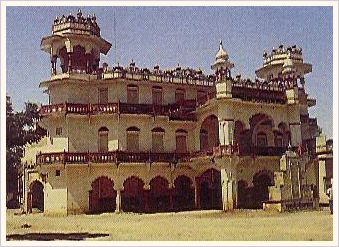
Mount Abu Government Museum

Mount Abu Government Museum

The only hill station in western and central India – Mount Abu in Rajasthan has been a center of cultural activity since the prehistoric period. It was the capital of the Parmars in 13th century AD and later on came under the Chauhans.

Mount Abu huddles among the rocks on a 1,220-m granite table mountain at the far southwestern end of the Aravalli hills. It is built around a lake and is surrounded by forested hills.

Located on the complex of Raj Bhawan, the museum was established in 1962. It has a good  collection of archaeological excavations dating back to 8th-12th century A.D. It also has Jain bronze carvings,brassworks, historic objects associated with this region. etc. for viewing.

Different Sections of Mount Abu Museum

Gallery of Weapons, ornaments  and Musical Instruments

The first section has been adorned by a diorama of local tribal hut with their usual living style by adding a gallery of weapons, musical instruments, ladies ornaments like ‘barly’, ‘damani’, ‘karna’, ‘guthma toda’, ‘gaga wala thoomar’, ‘kanksi berla’ and various types of earrings and garments etc. belonging to hill dwellers.

Series of Miniature Paintings

The second section has a series of miniature paintings based on raga-raginis, lain images from Sirohi, medium sized shields, a small canon called ‘Topdi’ and some pieces of carvings on local wood.

The notable collection of this museum, is the finely carved out statues of Devdasi or Nartakis (Dancer).

There is an image of the Chakrabahu Shiva having a ‘trishul’ (trident) in one hand and a ‘khadag’ in the other and sitting on Nandi, the bull. On each side of Shiva are dancing girls.

Sculpture Gallery Section

In the Abu collection consisting of 404 sculptures, the most distinctive exhibit is the Vish Kanya (snake goddess), which is 3 feet high. It is shown breast-feeding a snake. The figures are well executed and the attitudes are impressive and natural. It also has the Surya (8th century AD) found in Achalgarh, the Shiva (10th century AD) brought from Dilwara temple, the Chanvar Vahini and Laxmi (12th century AD) also from Chandravati and Chanmunda (8th century A D).

The Sculpture Gallery has some memorial inscriptions collected from nearby areas e.g. Chapa’s inscription, (local heroine of Achalgarh).

Other Tourist Attractions in Mount Abu

Mount Abu is also well known for the famous Dilwara Jain Temples, Gurumukh Temple, Nakki Lake and many more archaeological remains.

There are interesting treks and picnic spots, romantic royal retreats of the various erstwhile families of Rajputana  period.

The scenic landscapes include gigantic blocks of rocks in weird shapes, an array of coniferous trees, flowering shrubs, lovely lakes and the cool climate much in contrast to the arid environs of the state.

Tags: , , , , , , , , , , , ,

Udaipur Archaelogical Museum, Ahar – Favorite Haunt of Archaeologists and Research Scholars

About 3.2km from the Delhi Gate in Udaipur City, is Ahar, a favorite haunt of archaeologists and research scholars.

According to history this town was founded around 950AD by Rawal Allat of Mewar. He built the city on the ruins of the Harappan site of Tambavati Nagri, the city of the ancestors of King Vikramaditya before he shifted to Ujjain.


Cenotaphs at Ahar near Udaipur City

Cenotaphs at Ahar near Udaipur City

The Museum at Ahar has a varied collection of findings from excavations at the mound of Dhulkot.  The major attractions of the museum are the skin scrubber, seals and grain pot from 1st century BC, animal figures, stone weights and balls.

20 Different Royal Cenotaphs of Famous Mewar Maharajas

The Ahar Museum is also home to around 20 different royal cenotaphs of famous Mewar maharajas (maharanas), including the Hindi king of Maharaja Amar Singh, who was in power in the early 17th century. Each of these Indian leaders were cremated here during grand ceremonies.

The work of art attached to these cenotaphs are something to look out for. Whenever tourists visit Udaipur they should definitely go and visit the magnificent Ahar Museum, Udaipur for a lifetime experience.
Read the rest of this entry »

Tags: , , , , , , , , , ,

Folklore Museum, Jaisalmer – Explore Royal Past of Jaisalmer


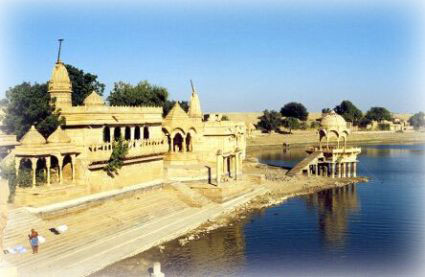
Gadissar Lake, Jaisalmer

Gadissar Lake, Jaisalmer

For anyone interested in seeing the culture of Jaisalmer on display through the ages, the Lok Sanskritik Sangrahalaya or the museum of Folk culture situated on the bank of Gadsisar Lake in Mehar Bagh Garden is a must.


 Excellent Collection of  Artifacts and Mementos of the Royal Past of Jaisalmer

Jaisalmer Folklore Museum, a relatively recent tourist attraction in Jaisalmer, was founded in 1984 by N K Sharma, a local connoisseur. 

The museum exhibits the established art of Rajasthan including excellent collection of art, artifacts and mementos of the royal past of Jaisalmer.

The initiator, NK Sharma painstakingly collected paintings, old coins, post cards and manuscripts and articles related to the folk and culture of the land for the people to learn more about the art and traditions of Jaisalmer.
Read the rest of this entry »

Tags: , , , , , , , , ,

Fort Museum in Junagarh, Bikaner – Fine Collections of Antique Weapons

Junagarh Museum - Antique Collection of Weaponry

Junagarh Museum - Antique Collection of Weaponry

The famous “Fort Museum” in Junagarh, Bikaner surely gives its visitors a great chance to peep into the history.  Ganga Mahal, the imposing hall of Junagarh Fort now houses the Museum.

Huge Collections of Rajput Weaponry

You will be amazed to see a huge collection of diabolic pistols, swords and weapons, each an exquisite work of art in this museum. Swords with ivory and crystal handles, some in shape of lions and other shapes can also be seen here. Cold and silver howdahs, jhulas, kis and a first world war biplane are also on view.

You should also visit the Diwan-i-khas, which houses an intricately carved mammoth sandalwood throne placed along with three massive arches.

Other important objects include a pair of drums belonging to jamblioji, the saint who predicted the foundation of the dynasty by Rao Bika for 450 years. Photographs and items of personal use by Maharaja Ganga Singh and miniatures are also on view.

 Junagarh fort was built under the supervision of Karan Chand the prime minister of Raja Rai Singhji, the sixth ruler of Bikaner, who ruled from 1571 to 1611 AD. Construction of the walls and associated moat commenced in 1588 and were completed in 1593.

Other Attractions of Junagarh Fort

Junagarh Fort, Bikaner

Junagarh Fort, Bikaner

The Junagarh fort in Bikaner encloses a number of temples, pavilions and 37 palaces. Each of the palaces are a work of art with carved windows, kiosk, hanging balconies and towers.

The Moon palace, the Flower palace, the Karan Mahal, and the Anup Mahal are all unique in their own rights. Each of the rooms of the Junagarh fort including the Rang Mahal, Ganga Niwas, Vijai Mahal, and Dungar Niwas are now living museums of the glorious past and grandeur.

Amongst the temples, Har Mandir is the most important and beautiful. The royal family worshipped their gods and goddesses here for long.

Tags: , , , , , , , , , , , , ,

Dungarpur Government Museum – Prominent Collection of Charming Sculptures

Rajmata Devendra Kunwar State Museum, Dungarpur

Rajmata Devendra Kunwar State Museum, Dungarpur

Rajmata Devendra Kunwar State Museum and Cultural Centre in Dungarpur district was opened to the general public in the year 1988.

Royal Family Gifted Personal Collection for the Museum

In the late 1970, Dungarpur Royal family decided to gift their personal collection for the museum.

Both the brothers Maharawal Lakshman Singh and Dr. Nagendra Singh gifted their entire personal collection of charming sculptures, historically important inscriptions and metal images. The family also gifted land for building of museum, where it stands now.

Prominent Sculptural Specimens of Museum

Displayed in three galleries, the collection in the museum include 197 images of gods and goddesses, 23 inscriptions, metal images, coins and objects related with tribal culture of the region and throws light on the history of Vagad Pradesh, which spreads over present area of Dungarpur, Banswara and Kherwara.

The prominent sculptural specimens are Mahsasur – Mardini (16th -17th centuary A.D), Vinadhar Shiva in black Stone (6th- 7thcentury A.D) Kumari, a female figure discovered from Aamjhara, a beautiful image of Gajlaxmi (17th – 18th century A.D) and Navgraha in a single stone piece.

The museum also has a panel of portraits of the erstwhile Maharajas of Dungarpur State and photographs of palaces, temples and monuments from the many phases of the land’s history.

Timing : 10 A.M. to 4.30 P.M
Closed On : Friday and Gazetted Holidays

Tags: , , , , , , , , , , , , ,

Government Museum of Kota – Rich Collection of Rare Coins, Manuscripts and Paintings

Kota Museum - Rare Collection of Coins, Paintings and Scriptures

Kota Museum - Rare Collection of Coins, Paintings and Scriptures

Housed in the Brijvilas Palace Kota, the museum  displays a rich collection of rare coins, manuscripts and a representative selection of  Hadoti sculpture. Especially noteworthy is an exquisitely sculptured statue brought here from Baroli. The museum was formerly located in Hawa Mahal in Jaipur but was later shifted to Brij Vilas Palace.

Different Sections of Museum

Archaeological Section
The archaeological section of the museum consists of various sculptures, some dating back to the Gupta period (4th century). Sculptures worth mentioning are Shesh Sayi Vishnu from Badoli (Chittaurgarh), Jain image of Vardhaman from Baran and a dancing pair from Ramgarh.

Inscription Section

A few inscriptions are displayed in the museum. Yupa pillars from Badwa are very important specimens of 3rd century A. D. showing the popularity of Vedic rites.

Coins Section

Coins discovered from various sites of kota region are preserved in the numismatic section. Most of the coins belong to the Mughal period and a few of them to the rajput period.

Painting Section

The Painting section has several miniature paintings of Bundi, Kota, Nathdwara and Jaipur schools. Paintings of Shrimad Bhagawata of the early 17th century are most attractive from the point of view of workmanship.

Manuscript Section

Various Sanskrit manuscripts can be seen in the manuscript section. They include Vedic, Astronomical and Astrological works. Some Hindi manuscripts are also preserved.

The Gita and the Bhagawata written in the minutest letters on paper scroll are worth mentioning from the calligraphic point of view.

Local Arts & Craft of Hadoti Region

Arms, several kinds of handicrafts, costumes, etc, are also displayed in this section. A panoramic view of the cultural aspects of Kota region is available in this section through photographs, charts, maps etc.

Timing : 10 A.M to 4.30 P.M
Closed On: Friday and Gazetted Holidays

Tags: , , , , , , , , , , ,

Government Museum – Epicenter of Lohagarh Fort, Bharatpur

Government Museum in Lohagarh Fort, Bharatpur

Government Museum in Lohagarh Fort, Bharatpur

Bharatpur Government museum is located at the center of the famous Lohagarh Fort in Bharatpur city.

The Museum houses a rich collection of archaeological wealth of the nearby areas as from the old Bharatpur State.

The huge palatial building Kachahari Kalan, once the administrative block of the rulers of Bharatpur state, was converted into a Museum in 1944. Later on, the Kamra Khas (personal chamber) building on the first floor was added to the museum.

It exhibits sculptures found during the excavation of old villages e.g. Noh, Mailah, Bareh, Bayana etc. ranging from the Kuslian period. Weapons Used in battles in the medieval period by the jat rulers, paintings, manuscripts, zoological specimens, local art and craft and carvings on sandal wood and ivory etc.

The Art gallery of the museum has specimens of miniature paintings on leaves of the peepal tree, mica and old lothopapers alongwith the paintings of the Maharajas of Bharatpur.

On the Upper story one section consists of various types of guns and miniature canons used during 18th century A.D. called ‘Chaddre’. These miniature canons – two sets of eleven each, were used by Maharaja Sawai Jawahar Singh in the battle while passing through the Jaipur territory on his return from a pilgrimage to Pushkar.

This museum primarily consists of 581 stone sculptures, 10 inscriptions, 120 terracottas, 13 metallic objects, 670 coins, 1966 weapons, 196 miniature paintings and 861 local art & crafts.

Different Sections of  Museum

The Whole museum has been divided in to the following sections:

  • Archaeology
  • ArmourtArts
  • Crafts and Industry
  • Children Gallery
  • Miscellaneous

Timing and Fees

The museum remains open from 10.00 am to 4.30 pm. The museum closed on Friday and Gazetted Holidays. The entry fee is Rs. 3.00 for Adults, Rs. 1.00 for Students and Monday free.

Tags: , , , , , , , , ,

Fateh Prakash Palace Museum, Chittorgarh – A Showcase of Sculptures of Medieval Era

Fateh Prakash Museum, Chittorgarh

Fateh Prakash Palace Museum, Chittorgarh

Fateh Prakash Palace Museum, Chittorgarh  is located inside Chittorgarh Fort.  A big segment of the famous Fateh Prakash Palace was transformed into this museum in the year 1968 in order to preserve and highlight the heritage of Chittorgarh region.

Showcase  Sculptures of Medieval Era

The museum showcases a wide variety of things, specially sculptures. Significant among these sculptures is a statue of Ganapati that dates back to 8-9th century. Indira and Jai Ambica statues from the medieval era are also the proud possessions of this museum.

Section of  Fateh Prakash Palace Museum

Different section of this Museum devoted to daggers, weapons and armoury consists of helmets, axes, old shields, knives, farsa and uniforms of soldiers.

This museum also houses clay models of local tribes along with their traditional outfits. This entire splendid museum is divided in several sections like Coins, Art Gallery, Weapons and Tribal Life, Archaeology and Wood Crafts of Bassi village.

The collection includes objects of stone age, 632 sculptures, 2061 coins, 125 paintings and 318 arms & weapons, 2 inscriptions, 55 terracotta figures, 18 metallic objects and 70 objects of art & craft.

This museum remains open from 10.00 am to 4.30 pm. Visitors coming to Chittorgarh Fateh Prakash Palace Museum on Monday can enjoy a free entry.  This place remains closed on Friday and gazetted holidays.

Tags: , , , , , , , , , , , ,

Amber Archeological Museum – Home of Traditional Mughal Style Artifacts

Amber Fort in Jaipur is located 9 kilometer north west of Jaipur and was once the capital of the Minas. This fort set on the banks of Maota Lake, was founded by Raja Man Singh in 1592.

Some Architectural Marvels at Amber Fort

Some of the noteworthy architectural marvels in the complex are the ‘Diwan-E-Khas’, the ‘Sheesh Mahal’ and the ‘Jai Mandir’ with exquisite mirror work, the ‘Diwan-E-Aam’, the ‘Sukh Niwas’, the Shila Mata Temple and Kali temple and the well laid out garden the ‘Kesar Kyari’.

The fort is entered through the ‘Dil-e-Aaram’ Garden, laid out in the traditional Mughal style.

Amber Archeological Museum

Amber Archeological Museum

Amber Archeological Museum

The museum is located in the Dil-e-Aaram Gardens of Amber and was established way back in 1949. Prior to this, the excavated material from Rairh, Bairat, Sambhar, Nagar etc. and the sculptures and epigraphs collected from various sites in the erstwhile Jaipur State were housed at Vidyadhar Gardens in Purana Ghat.

In July 1949 the entire collection was transferred to Dil-e-Aaram Garden, a part of the old palace 1992 in this complex.

Different Sections of  Museum

The museum is divided into three sections :

  • Archaeological section, Which contains material recovered from excavations at Rairh, Bairat,Sambhar, Nagar, Pamvar, Bansi and Virat Nagar.
  • Sculpture section.
  • Epigraphy section.

There are two yupa Pillars (sacrificial posts) with inscriptions from Barnala,  Pratihar sculptures from Abhaneris (8th ccentury A.D.) and Terracotta from Rairh, Bairat, Sambhar and Nagar belonging to an earlyu historical perios.

The material is arranged in chronological sequence, making the visitor familiar with the contribution of Rajasthan in various fields of art through the ages.

Timing: 10 A.M to 5 P.M

Closed  On: Friday and Gazetted Holidays

Personal Note

I have visited this Museum 2-3 times. I find it really interesting as you can learn a lot about the history, culture and other aspects of civilization. There are not a huge number of articles but still a visit to the museum is helpful in knowing a lot of stuff particularly about Amber.

Tags: , , , , , , , , , , , , , , , ,

Alwar Goverment Museum – Rich Repository of Arts and Artifacts of Heritage Rajasthan

Former Rulers of Alwar - Owner of the Collections at Government Museum

Former Rulers of Alwar - Owner of the Collections at Government Museum

Rajasthan is culturally rich and has extensive tradition in art and culture, which reflects Indian way life. Each region of Rajasthan has different and diverse form of art and culture to present to its visitors.

About Alwar Government Museum

Foremost amongst the Tourist Attractions in Alwar is the Government Museum, a rich repository of arts and artifacts that well reflect the cultural heritage of this royal land of Rajasthan. The Vinay Vilas Mahal in the City Palace of Alwar is home to this fabulous museum.

Entire Collection of the Museum Belongs to Royal family

This Museum  has a unique collection of arms, bidri work, lacquered and ivory work, musical instruments, stuffed animals, beautiful brass and pottery works from Jaipur, Multan, Bengal and Ceylon, miniature paintings and Persian and Sanskrit manuscripts.

Entire collection of the museum came from the royal family, which includes 234 sculptures, 11 inscriptions, 9702 coins, 35 metal objects, 2565 paintings & manuscripts, 2270 arms & weapons and 1809 objects of local art, crafts and musical instruments.

Costumes and Clothes at Display in Alwar Government Museum

Costumes and Clothes at Display in Alwar Government Museum

Different Sections of Museum

The museum is divided into three major sections, each housed in a big hall.

The first section contains various archaeological finds chiefly sculptures and inscriptions from the region. Items presented by the ruler of the former Alwar state includes mounted skins of wild animals like tiger, leopard and lion shot by them during their local and foreign excursions.

The second section is the most important one as it contains various manuscripts in Persian including Gulistan of S’adi as well as marvellous paintings of Mughal and Rajput Schools. The paintings have been further divided into various sub-styles.

The third section of the museum contains the armory of State rulers. Various kinds of shields, swords, pistols, rifles, daggers and other items are on display.

Timing : 10 A.M to 4.30PM
Closed On: Friday and Gazetted Holidays

Tags: , , , , , , , , , , , , , , , ,