Posts Tagged rajasthan museums

Government Museum in Udaipur – Highlight the Rich Culture of Rajasthan

Udaipur is a majestic city that presents artifacts of the bygone age by the means of museums. These museums peep into the ancient times of the imperial city.

These museums are made to preserve the priceless objects of the noble kings. They offer a glimpse of the items that used to be the part of the regal lifestyle.

Udaipur Government is making constant efforts to preserve the artifacts of the previous age.

Government Museum in Udaipur

The Government Museum of Udaipur was originally located in Gulab Bagh and was called the Victoria Hall Museum. It has now been shifted to Karan Vilas Mahal within the precincts of the City Palace.

This museum highlights the the richness of the culture and heritage of Rajasthan all the way through its wide-ranging collection of excavated items, inscriptions, sculptures, paintings and handicrafts.

Attractions at the Museum

The inscriptions exhibited at the museum range from those of 2nd B.C to 17th century A.D. The antiquities of the plastic art of Mewar add to the attraction. The sculpture gallery, spread over a big hall, contains some unique and valuable specimens. Inscriptions exhibited at the museum date back to as early as 200 BC.

The most remarkable collection is that of more than nine thousand miniature paintings of Mewar School from the period of Maharana Jagat Singh (1628 – 1652 AD) to Maharana Swaroop Singh (1842 – 1861 AD).

It has a Natural History section called the Children Gallery which has models of animals like tiger, deer etc. The museum also has collection of colourful Mewari turbans.
Tags: , , , , , , , ,

Birla Museum of Science & Technology Pilani, Rajasthan – First Technological Museum Established in India

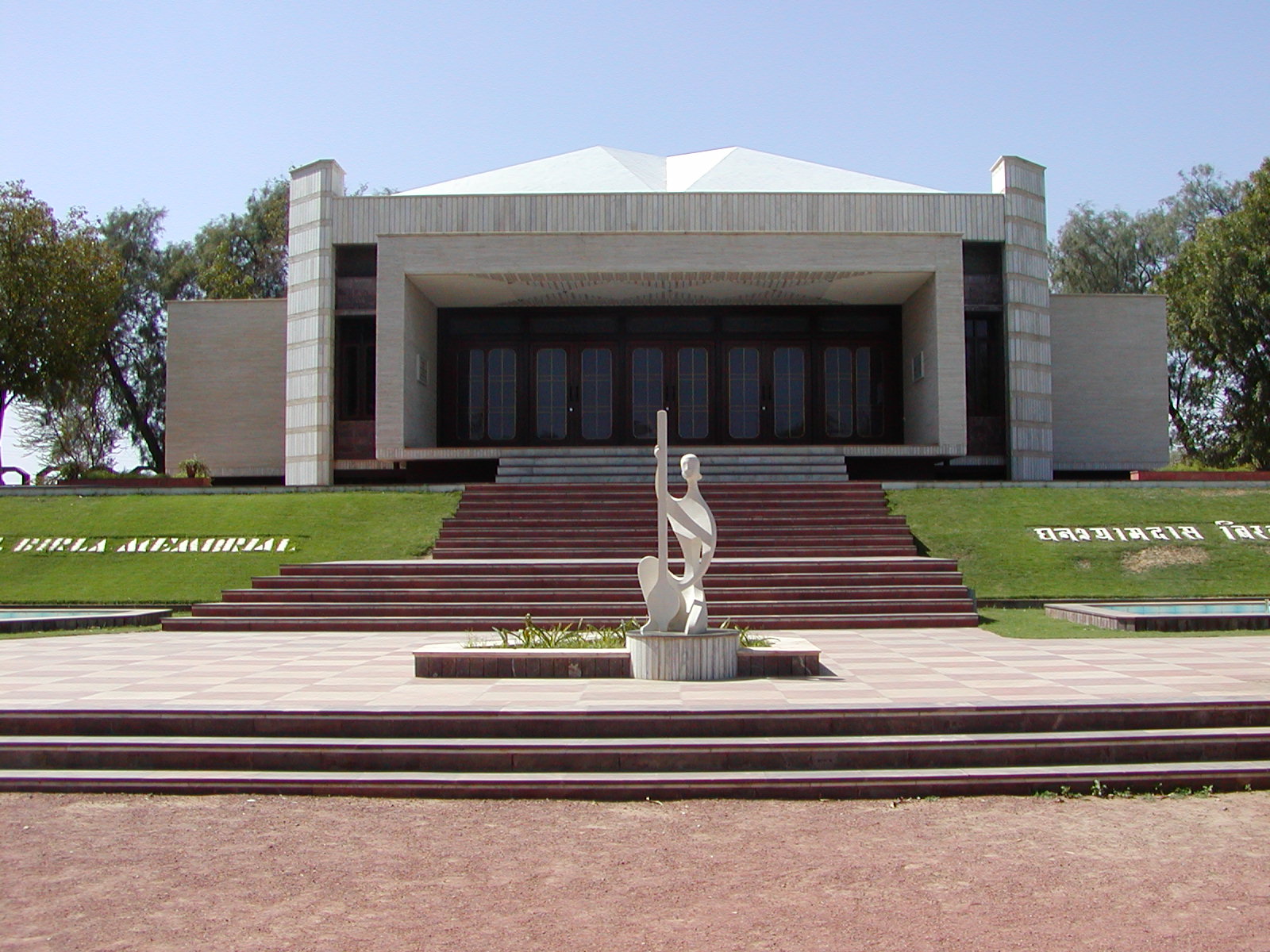
Birla Science and Technlogy Museum in Pilani, Rajasthan

Birla Science and Technlogy Museum in Pilani, Rajasthan

Birla Institute of Technology & Science is a renowned science and technology university located in Pilani, Rajasthan. Pilani is a small town situated 220 KM West to Delhi and 217 KM North to Jaipur City.

Birla Museum of Science and Technology

Birla Museum is located in Vidhya Vihar Campus of Institute. It was  built in 1954.

It exhibits the accomplishments of technology in various sections including latest scientific equipments, models of material science and illustrative diagrams, working models, charts & photographs explaining the principles of the sciences. It also throws light on the various aspects of engineering science.

The Birla Museum Pilani also contains Aerodynamics Gallery and Gandhi Gallery.

Sharda Peeth – Temple of Goddess Saraswati

Pilani which was once a small village, is mainly famous for being the hometown of the premier business and industrial family the Birlas.

BITS has a temple of Goddess Saraswati – The goddess of knowledge and arts, called Sharda Peeth.  It was built by Dr. G D Birla. The temple is built on a 7 feet high basement, with 70 pillars for support and spread across an area of 25000 feet square is entirely built using white marble.

The temple reflects the mix of ancient spirituality and modern technology. Architecturally it follows the North Indian  scheme of temple construction and is a replica in marble of the Khandariya Mahadeo temple at Khajuraho.

Other places of interest in Pilani are Shiva Ganga  and the Pachwati.

Tags: , , , , , , , , , , , , ,

Maharaja Sawai Mansingh Museum in Jaipur – Excellent Combination of the Mughal and Rajasthani Style of Architecture

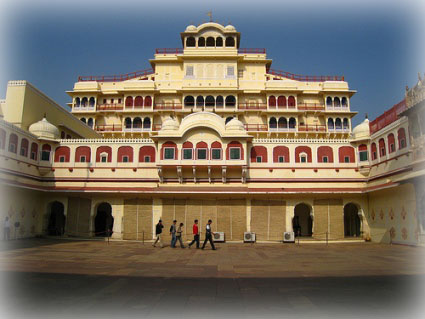
Maharaja Sawai Mansingh Museum in City Palace Jaipur

Maharaja Sawai Mansingh Museum in City Palace Jaipur

Maharaja Sawai Mansingh Museum is located within the City Palace complex and nestled amidst old buildings, temples and the palace quarters. This museum was founded in 1959.

The exhibits consist of the ancestral collections built up by the successive rulers of  Jaipur. A small selection of paintings, manuscripts, maps, carpets, textiles, costumes, weapons and armours was displayed in the Pothikhana (library) and the Silehkhana or armoury (both of these in their present form, were established in 1952) of the palace.

Different Exhibits of Museum

Sileh Khana Armoury Gallery

One of the richest collection of the Indian weapons in the world is displayed here in a most artistic and symbolic manner.

Amongst the important weapons displayed here are: Heavy Khanda(sword) probably of Raja Man Singh I, swords of Mughal emperors Jehangir and Shahjahan, night polo ball, Sawai Jai Singh’s pistol and matchlock guns of 17th century probably cast at Jaigarh fort, Amber.

Rekhla(miniature cannon), Jujarba(Camel Guns), lances, Katars(daggers), bows and arrows, Maces and Gunpowder flasks, Howdahs(Elephants seat used during hunting) are also on display.

Art Gallery

The Art Gallery is housed in the Diwan-i-Aam constructed for holding important State functions.

A variety of objects-miniature paintings, illustrated manuscripts, decorated bookcovers, palm-leaf and Sanchipat manuscripts, old printed books, gigantic Mughal carpets, gold and silver Takhis-Rawan (movable throne), covered Ambabadis and open Howdahs, palanquins and carriages with richly embroidered velvet coverings are displayed in this gallery.

There are rare bird and animal studies by Ustad Mansur, court scenes, battle scenes, portraits and mythological paintings by famous Mughal painters can be shown here.

Textile Gallery

The royal costumes are displayed in the first floor of the Mubarak Mahal. The enormous Atamsukh, a beautiful rich Banaras brocade quilted cloak of Maharaja Sawai Madho Singh I is an object of amazement.

Baggi Khana

There are many Chariots and Coaches of or say baggies are displayed. The most interesting amongst these are the 19th century European cab adapted to Indian conditions and the Thakurji ka Rath.

The two silver jars  the largest silver object in the world, as per entry in the Guinness Book of World record made in The City Palace in 1896 weighing 345 kg each and taken to England by Maharaja Sawai Madho Singh II filed with Ganges water in 1902 can be seen in Sarvatobhadra.

Tags: , , , , , , , , , , , ,

City Palace Museum in Udaipur – Perfect Destination To Trace The Relics of The Bygone Era

The huge City Palace, towering over the Pichola Lake, is the largest palace  in Rajasthan. Construction of this palace was started by Maharana Udai Singh, the city’s founder. The main part of the palace is now preserved as a museum with a large and varied collection.

City Palace Museum Also Known as  ” Pratap Museum”

City Palace Museum in Udaipur

City Palace Museum in Udaipur

Located inside the complex of City Palace, this museum is also known as Pratap Museum. The name Pratap Museum was given because the museum holds dear the armor of the brave and gallant Maharana Pratap and also possesses the drums and bugles of the great ruler Rana Sanga.

As you enter the City Palace, the straight way will take you to this museum of artifacts. The entrance gate of the City Museum is known as Ganesh Deori, which means “Door of Lord Ganesha”.

It was established in 1890 and is one of the earliest museums of the Rajasthan.

Priceless Possessions of Detailed Rajasthani Art

The museum has priceless possessions of the former age like antique paintings of Mewar and detailed Rajasthani art. You will find an unusual assortment of coins, sculptures, inscriptions, portraits and wall-paintings here.

It also displays the turban of Khurram, who was popularly known as Emperor ShahJahan. The turban still depicts the friendship that survived between ShahJahan and Maharana Khazan Singh.

Different Sections of The Museum

The museum is divided into several pavilions and halls. Every pavilion has a distinct theme of its own.

  • Mor Chowk and Manka Mahal

The museum includes the Mor Chowk with its beautiful peacocks in mosaics. The Manka (Ruby) Mahal has glass and porcelain figures while Krishna Vilas has a remarkable collection of miniatures.

  • Bari Mahal,  Zenana Mahal and Moti Mahal

In the Bari Mahal, there is a fine central garden. Zenana Mahal is the main place where you can see arms and armor, paintings and photographs, majestic insignia, processional accouterments and various other objects that reveals the royal legacy and conventions of the Maharanas of Mewar and Sisodia..

The Moti Mahal has beautiful mirror work and the Chini Mahal is covered in ornamental tiles.

The city museum opens between 10-4:30 and is closed on fridays and gazetted holidays.

Tags: , , , , , , , , , , , , ,

Government Museum in Jaisalmer – Insight View On Glorious Past of Jaisalmer

Situated amid picturesque Thar Desert, the Jaisalmer city commands premiere position among the tourist attractions in Rajasthan. The Jaisalmer city is revered both by Indian as well as foreign tourists.

Like various other cities of Rajasthan, in Jaisalmer too you will find different facets of its own glorious heritage. Although you can find historical monuments scattered all over the city, the Jaisalmer Fort and Museums of Jaisalmer will immediately command your attention.

About Government Museum in Jaisalmer

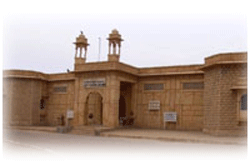
Government Museum in Jaisalmer City

Government Museum in Jaisalmer City

The Government Museum of Jaisalmer is an important landmark. It was inaugurated in the year 1984. The museum is located on Police Line Road near Moomal Hotel of RTDC and further south of the Jawahar Niwas Palace.

Different Exhibits of the Museum

The large collection of objects like wood and sea fossils help one to get insight into the glorious past days of Jaisalmer and throughout the Rajasthan region.

The main attraction of the museum are 72 stone sculptures and 8 inscriptions, 65 coins, 13 paintings, 179 embroidered dresses and handicraft. These sculptures which belonged to primitive towns like Kiradu and Lodurva, a Jain Pilgrimage, bear proofs of the artistic tradition of the then society. These are as old as 12th century pulsating with glory and grandeur. The uniqueness lies in the beautiful glass case exhibiting the Great Indian Bustard and Tailor.

Time to visit this museum is between 10.00 am to 4:30 pm. No entry fee is required on Monday. This museum remain closed on Fridays and all the gazatted holidays.

Tags: , , , , , , , , , , , ,

Government Museum in Ajmer – Narrates The Rich History of Rajasthan

Ajmer Government Museum is one of the most attractive propositions of the city of Ajmer. It narrates the rich history of the place and preserves it with utmost care is the.

The museum is situated in the heart of the old city and is close to the railway station. The museum is housed in the beautiful fort and palace built by the Mughal Emperor Akbar in 1570. After British occupation in 1818 and during the first war of Independence in 1857 it was used as the Rajputana Arsenal by the British which gave the name magazine.

Government Museum in Ajmer

Government Museum in Ajmer

Museum Also Known as “Rajputan Museum”

The Museum was started in 1908 by the Government of India with the object of collecting and preserving many unique objects of antiquarian interest which were lying uncared for and scattered all over Rajasthan.

The rajputan Museum as it is significantly named, has in its galleries important exhibits from almost all the princely States. There is a library attached to his museum which cotains rare books and important historical publications.

Different Sections of Ajmer Government Museum

The Museum houses a rich collection of artifacts ranging from the Guptas to the late medieval period.

  • Home of Excellent Collection of Sculptures

An excellant collection of sculptures from the Chauhan centre of Baghera (10th 12th A.D.) are also preserved here as also a fine collection of Jain Tirthankara images and rare images of Gomukha Yaksha and Saraswati which are on display in the Jain gallery of this Museum.

  • Epigraphical Section

The Epigraphical section has around hundered exhibits, many of whom are still in excellent condition.Of special interest are the Brahmi inscription from Barli (2nd century B.C.), the Jodhpur Inscription of Bauka, the Pratapgarh Inscription of Mahendrapala II and the Nagari. Samoli Slab Inscription of Siladitya.

A number of important copper plate grants add to the value of rich collection of museum. They include: two copper plates of Maharaj Sarvanatha of Uchchhakapla (437-38 A.D. refferring to Kalachuri Era), Daulatpura copper plate of the Pratihara king Bhojadeva and, the copper plate of Rana Kumbha of Mewar.

  • Rich Collection of Paintings and Coins

The museum also has a rich collection of paintings and coins. From the early punch marked coins to those of the Gupta coins, once can trace the developments of coins in India. Coins of the Rajputs kings are also preserved here.

Tags: , , , , , , , , , , ,

Ganga Golden Jubilee Museum in Bikaner – Explore Royal Treasure of Rajasthan

Ganga Golden Jubilee Museum was founded by his Majesty Ganga Singh, on the occasion of his golden jubilee in 1937, when he completed fifty years of his reign. A big celebration was held and dignitaries from overseas graced the festivity.

At first the museum was housed in a sand stone building near the Lalgarh palace in Bikaner, but it was rather a small building and was shifted to a new building in the Civil lines in 1954. Then it was handed over to the state government of Rajasthan.

The exhibits are splendid master pieces of  Harappan civilization, Gupta and Kushan era and sculptures of the late classical time.

Principal Sections of the Museum

Historical Mughal Farmans

The History of Bikaner contains a colourful record of war adventures. More than half a dozen rulers lost their lives while participating in the imperial campaigns of the Mughals.

Various ‘Farmans’ bearing original Imperial seals, issued by the Emperors – Jahangir, Shah Jahan, Aurangzeb and Shah Alam, are preserved in this museum.

Exquisite Collection Miniatures Paintings

An exquisite collection of Rajasthani miniatures paintings of almost all the sub-schools of Rajasthan such as Bikaner, Bundi, Mewar, Jaipur, Jodhpur etc. are on view here.

Finest Collections of Early Terracotta Art

The museum has one of the finest collections of early terracotta art, in the country. These belong to the early Gupta period and were discovered in 1017 AD by Dr. L. P. Tessitori from the ancient Theris of Rang Mahal, Badopal, Pir Sultan-Ki-Theri located between Suratgarh and Hanumangarh of the old Bikaner state.

Sculptures Section

The sculpture of Jain Saraswati (11th-12th Century) is a unique piece of marble of four feet eight inches in height. Discovered from village Pallu (Ganganagar), it is a peerless example of medieval Indian sculpture.

Lacquer Work

The museum has a fine collection of superb lacquered works, a craft special to Bikaner entirely done by the artisans, called Ustas (Ustaads), on wood, metal, glass, stone, leather and ostrich egg shells.

Wood And Stone Carvings

Bikaner stands almost unsurpassed in wood and stone carvings. A teak wood table and a wooden casket, a model of the Gajner Palace (Bikaner), a typical ‘Ikka’ (horse drawn cart) and chariot with minutest details are on view in the museum.

Tags: , , , , , , , , , ,

Museum of Indology, Jaipur – Excellent Collection of Folk, Tantric Art Objects and Paintings

Paintings in Indology Museum, JLN Marg Jaipur

Paintings in Indology Museum, JLN Marg Jaipur

Richness of culture, tradition and glorified part can be traced in the vista of exhibits that are reserved in the multiple of museums that are constructed in Jaipur. In fact, all the museums in Rajasthan are storehouses of manuscripts, scriptures, and artworks, which waive the aura of the imperial Maharajas.

Some of the museums in State Capital Jaipur are Albert Hall, City Palace Museum and Museum of Indology.

Museum of Indology in Jaipur

Museum of Indology was created and developed by Acharya Ram Charan Sharma “Vyakul in 1960. The museum has an excellent private collection of folk and Tantric art objects, paintings done on rice, manuscripts, ornaments, fossils, clocks and currency.

Different Exhibits of the Indology Museum

Some of the priced collection includes a map of india painted on a grain of rice, misprinted rupees, a 180 million year old fossil,and Gaytri Mantra written on a single strand of hair and manuscript written by Aurangzeb to a glass bed.

The eighteen sections of this museum include old manuscripts and indian textile designs, Tantrik Paintings, gems etc. making it one of the finest museum of Rajasthan.

The museum is situated at Jawahar Lal Nehru Marg of Jaipur City and is open from 10:00 to 17:00 hrs daily except holidays.

Tags: , , , , , , , , , , , ,

Rao Madho Singh Museum, Kota – Exquisite Collection of Royal Rajasthan

Kota Fort Museum

Kota Fort Museum

The 17th century old Kota fort is a vast complex of buildings, halls, temples and countryyards altered and added from time to time by different rulers. This Fort is also known for its Durbar Hall which has beautiful paintings and mirror work and has doors of ebony and ivory.

Rao Madho Singh Museum in Kota

Rao Madho Singh Museum is located in the Kota’s Fort and is named after the son of the first ruler of Kota state under Mughal emperor Jehangir.

It encloses exquisite collection of mellow mural paintings, attractive sculptures dating back to many centuries, royal armory, frescos and miniature paintings of Rajput traditions.

Many royal artifacts used by the Kota rulers are displayed in this museum attracting many historians and art lovers.

The upper galleries Laksh Bhandar, Arjun Mahal , Chhatri Mahal and Baka Mahal contain some of the finest mural paintings of kota school.

A Quick Insight about Kota

Kota lying on the banks of the Chambal River is a perfect blend of commercialization and at the same time reflects the cultural heritage of Rajasthan.

The city is replete with many forts, museums, palaces, temples and gardens which makes it an interesting tourist destination. The fort in Kota overlooking the Chambal Valley project is one of the most frequented spots in Kota.

Other Tourist Attractions in Kota

Various tourist attractions in Kota are the Jag Mandir, Brij Raj Bhawan Palace, Umed Bhawan Palace, a splendid haveli with beautiful frescoes and the royal cenotaphs.

Tags: , , , , , , , , , ,

Government Museum, Sikar – House of Ancient Sculptures

Government Museum, Sikar was opened to public on 28 June, 2006. The museum was built mainly to house the sculptures collected from Harshnath temple of 10 Cent. A.D.

Harshnath Temple, which is 14 km. away from Sikar, is an ancient site famous for the ruins old Shiva Temple located on the Aravalli hills of Rajasthan. The architectural display of the old temple is breath taking .

Different Exhibits of Sikar Government Museum

This museum primarily consists of 287 stone sculptures, 2 inscriptions, 17 metallic images, 51 weapons, 51 paintings, 1256 coin and 205 objects of local art, craft and archaeology.

Sikar – Famous Around the World for Mansion

Sikar is a part of the Shekhawati region of Rajasthan, famous around the world for its mansions with frescoes or painted havelis.

Sikar was an important trading centre and  Its merchant demonstrated their affluence by building large and luxurious mansions that are typical of Shekhawati region.

The important havelis  that a tourist can visit include Biyani Haveli made in 1865, Somani Haveli, painted in red and blue colors and the Chhotalal Sodhani Haveli built in 1884, that has an impressive entrance painted with dancing girls and panels from the Mahabharata inside.

Other Tourist Attractions in Sikar

Sikar also has cenotaphs of its royals, the important one is the Chhatri of Devi Singh from 1795 with nearly eighty painted panels. The market place here has a Clock Tower.

Another Major Attraction of Sikar is Khatushyamji Temple which is located 65 Km. away from Sikar & 80 Km. from Jaipur.

Tags: , , , , , , , , , , ,