Posts Tagged paintings of rajasthan

Government Museum in Ajmer – Narrates The Rich History of Rajasthan

Ajmer Government Museum is one of the most attractive propositions of the city of Ajmer. It narrates the rich history of the place and preserves it with utmost care is the.

The museum is situated in the heart of the old city and is close to the railway station. The museum is housed in the beautiful fort and palace built by the Mughal Emperor Akbar in 1570. After British occupation in 1818 and during the first war of Independence in 1857 it was used as the Rajputana Arsenal by the British which gave the name magazine.

Government Museum in Ajmer

Government Museum in Ajmer

Museum Also Known as “Rajputan Museum”

The Museum was started in 1908 by the Government of India with the object of collecting and preserving many unique objects of antiquarian interest which were lying uncared for and scattered all over Rajasthan.

The rajputan Museum as it is significantly named, has in its galleries important exhibits from almost all the princely States. There is a library attached to his museum which cotains rare books and important historical publications.

Different Sections of Ajmer Government Museum

The Museum houses a rich collection of artifacts ranging from the Guptas to the late medieval period.

  • Home of Excellent Collection of Sculptures

An excellant collection of sculptures from the Chauhan centre of Baghera (10th 12th A.D.) are also preserved here as also a fine collection of Jain Tirthankara images and rare images of Gomukha Yaksha and Saraswati which are on display in the Jain gallery of this Museum.

  • Epigraphical Section

The Epigraphical section has around hundered exhibits, many of whom are still in excellent condition.Of special interest are the Brahmi inscription from Barli (2nd century B.C.), the Jodhpur Inscription of Bauka, the Pratapgarh Inscription of Mahendrapala II and the Nagari. Samoli Slab Inscription of Siladitya.

A number of important copper plate grants add to the value of rich collection of museum. They include: two copper plates of Maharaj Sarvanatha of Uchchhakapla (437-38 A.D. refferring to Kalachuri Era), Daulatpura copper plate of the Pratihara king Bhojadeva and, the copper plate of Rana Kumbha of Mewar.

  • Rich Collection of Paintings and Coins

The museum also has a rich collection of paintings and coins. From the early punch marked coins to those of the Gupta coins, once can trace the developments of coins in India. Coins of the Rajputs kings are also preserved here.
Tags: , , , , , , , , , , ,

Rajasthani Traditional Paintings – Phad, Pichhwai and Murals Paintings

Traditional Phad Paintings Depicting Heroes of Rajasthan

Traditional Phad Paintings Depicting Heroes of Rajasthan

Rajasthani paintings beautifully depict rural Rajasthan and its conservations.  The tradition on painting the wall of houses with scenes from mythological and chivalric tales has been prevalent in Rajasthan for the past many centuries.

Today we are writing about some traditional Paintings of Rajasthan which are very famous all over world.

Phad Paintings

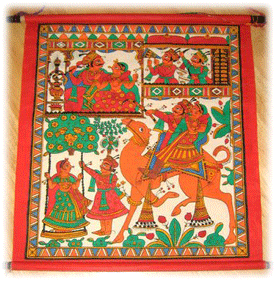
Phad paintings are a beautiful specimen of Indian cloth painting, which has its origin in Rajasthan. These paintings can be simply described as a large painting on Khadi, which venerates the deeds of a hero. They have their own styles and patterns and are very popular due to their vibrant colors and historic themes.

Phad paintings, depicting the life of Pabuji a local hero, now deified are predominately red and green coloured long scrolls carried by the Bhopas. They are unfurled by these itinerant balladeers of Rajasthan, who narrate in song the legend of pabuji on auspicious occasions to the accompaniment of the folk instrument ‘Ravanhatta‘.

Made by the joshis of Shahpura, near Bhilwara, Phads are now also available in smaller panels portraying single incidents or characters from the epic.

Pichhvai Painting at Shrinathji Temple in Nathdwara

Pichhvai Cloth Painting at Shrinathji Temple in Nathdwara

Pichhwai paintings

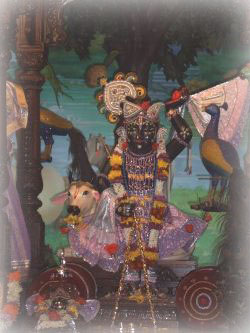
The Pichhwais are cloth paintings hung in temples. These Pichhwais depicting Lord Krishna as Shrinathji in different moods, are hung behind his image in the temple and changed according to the season. Done in dark rich hues on rough hand-spun cloth, they have deep religious roots and are devotionaly rendered by the painters.

This painting tradition developed in the temple of Nathadwara in southern Rajasthan, and the paintings show Krishna playing the flute and dancing with his consorts, the gopis. The divine love-play here stands for the devotion of believers and their union with their deity.

About Murals

All over Rajasthan, one can see brightly coloured murals. These murals done in the folk art style, depict processions, battles and folk deities. The murals in the palaces of Bikaner, Udaipur and Bundi are classical works of art and have been rendered in the miniature style.

The frescoes of Shekawati are world renowned and the region is popularly termed as an ‘Open Air Art Gallery’.

Tags: , , , , , , , , , , , ,

Miniature Paintings of Mughal and Rajput Times – Colorful Pictures on Ivory and Handmade Paper

Rajasthan’s role in the development of Indian art has been very important. The decoration of dwellings and other household objects was but one aspect of the creative genius of the Rajasthani.

The world of miniature paintings is perhaps the most fascinating and the distinctive styles that have existed here in the state of Rajasthan. From the 16th century onwards, various schools of paintings flourished in Rajasthan. Some of the important ones are Mewar School, Kishangarh schools, Kota Kalam Bikaner and Hadoti.

Rajput Miniature Painiting from Rajasthan

Rajput Miniature Paintings on Handmade Paper from Rajasthan

Miniature Paintings in Rajasthan

These paintings vividly render hills, valleys, gardens, palaces, courts and religious processions. Themes from the Ramayana, Krishna Lila and the Gita Govindam have also been pictorially translated.

The colours used for the paintings were made of minerals, vegetables, precious stones, conch shells and metals like gold and silver. And it took as long as several months to prepare the colours.

Some Historical Facts about  Miniature Paintings

In the 16th centuty, Many artists from Rajasthan were employed by Mughals for the purpose of making miniature paintings. But the real expansion of miniature painting to the regional kingdoms of Rajasthan was predominantly after the Mughals’ downfall.

Rajput miniatures, that  flourished under the princely patronage, are being reproduced even in the present times by the successors of the erstwhile craftsmen.

The classical element and aura of these paintings incessantly continue even though several innovations have taken place since then. Those families who are engaged in making miniature paintings have survived in Jaipur, Jodhpur, Nathdwara and Kishangarh and continue to paint fine works of art on hand-made paper.

Jaipur Artists Embellished with their Unique Skills

Mughal Paintings of Ancient Times in Rajasthan, India

Mughal Paintings of Ancient Times in Rajasthan, India

In the back streets of the Pink City, you’ll find Brahmin artists working on a variety of materials from handmade paper and boards of wood to ivory and marble. Most of them still use natural colours  Using the finest squirrel hairbrushes, it takes a miniaturist weeks to complete a commission.

With the lack of originality, most of the present artisans merely replicate the work of their forefathers who were know for their breathtakingly precise and detailed workmanship. Also in recent times, some of the sales oriented artists have now switched to cheaper chemical colours to satisfy the demand of tourists.

Miniature paintings were once made on a base of ivory but that’s all in the past. The use of ivory has been banned now in the interests of our wildlife.

Tags: , , , , , , , , , ,