Posts Tagged history of rajasthan

Havelis in Rajasthan – Testimony of Glorious Royal History of Rajasthan

In Rajasthan there are numerous palaces, forts, fortresses and a larger number of havelies. These palatial residences of the nobles were located in their villages and were occupied more than the palaces were.

Havelis in Rajasthan

Havelis in Rajasthan

Havelis in Rajasthan

The havelis are really not that big to be rated as palaces, and it will be too elaborate to be called ordinary palaces of residence. Over the years, there has been a gradul shifting by the owners to bigger cities and quite a few of these havelies have started withering with age.

This old world charm is apparent in the massive countryyards, the Zenana mahals with murals, the carved balconies and the mardana baithak where the nobles sat with visitors.

Intricately Carved and Frescoes

These havelis are intricately carved and frescoes are one important feature. Colored in various shades, the havelis look beautiful and quite conspicuous. Mirror work further adds to the charm of these places. Large corridors, pavilions and ceiling very much resemble that of the palaces. Multiple courtyards and fountains are typical of important ones.

Today many of the Havelis in Rajasthan India have been refurbished into the heritage hotels in Rajasthan where you can enjoy a royal retreat on your tour to Rajasthan. These Havelis have maintained their vintage charm and decor and recreates the medieval ambiance everywhere.
The exquisite havelis of rajasthan are a testimony to the glorious royal history of Rajasthan.

Some Popular Havelis of Rajasthan

  • Nathmalji ki Haveli, Jaisalmer
  • Alsisar Haveli, Jaipur
  • Patwon ki Haveli, Jaisalmer
  • Salim Singh ki Haveli, Jaisalmer
  • Samode Haveli, Jaipur
  • The Piramal Haveli, Shekhawati

If you are looking to book some of the haveli hotels in jaipur you can log into http://www.jaipurhoteldeals.com

We also organize tours to rajasthan, you can explore these exotic havelies in the following tours:

Rajasthan Heritage Tour

Imperial Rajasthan Tour

Tags: , , , , , ,

Government Museum in Ajmer – Narrates The Rich History of Rajasthan

Ajmer Government Museum is one of the most attractive propositions of the city of Ajmer. It narrates the rich history of the place and preserves it with utmost care is the.

The museum is situated in the heart of the old city and is close to the railway station. The museum is housed in the beautiful fort and palace built by the Mughal Emperor Akbar in 1570. After British occupation in 1818 and during the first war of Independence in 1857 it was used as the Rajputana Arsenal by the British which gave the name magazine.

Government Museum in Ajmer

Government Museum in Ajmer

Museum Also Known as “Rajputan Museum”

The Museum was started in 1908 by the Government of India with the object of collecting and preserving many unique objects of antiquarian interest which were lying uncared for and scattered all over Rajasthan.

The rajputan Museum as it is significantly named, has in its galleries important exhibits from almost all the princely States. There is a library attached to his museum which cotains rare books and important historical publications.

Different Sections of Ajmer Government Museum

The Museum houses a rich collection of artifacts ranging from the Guptas to the late medieval period.

  • Home of Excellent Collection of Sculptures

An excellant collection of sculptures from the Chauhan centre of Baghera (10th 12th A.D.) are also preserved here as also a fine collection of Jain Tirthankara images and rare images of Gomukha Yaksha and Saraswati which are on display in the Jain gallery of this Museum.

  • Epigraphical Section

The Epigraphical section has around hundered exhibits, many of whom are still in excellent condition.Of special interest are the Brahmi inscription from Barli (2nd century B.C.), the Jodhpur Inscription of Bauka, the Pratapgarh Inscription of Mahendrapala II and the Nagari. Samoli Slab Inscription of Siladitya.

A number of important copper plate grants add to the value of rich collection of museum. They include: two copper plates of Maharaj Sarvanatha of Uchchhakapla (437-38 A.D. refferring to Kalachuri Era), Daulatpura copper plate of the Pratihara king Bhojadeva and, the copper plate of Rana Kumbha of Mewar.

  • Rich Collection of Paintings and Coins

The museum also has a rich collection of paintings and coins. From the early punch marked coins to those of the Gupta coins, once can trace the developments of coins in India. Coins of the Rajputs kings are also preserved here.

Tags: , , , , , , , , , , ,

The Marwari Horse – Brave and Beautiful Horse of Rajasthan

Riding on Marwari Horse - A Rajasthani Breed of Horses 

Riding on Marwari Horse - A Rajasthani Breed of Horses

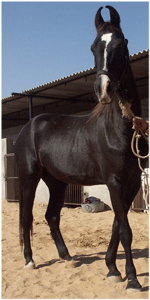
Rajasthan is famous for the Marwari or Malani breed of horses which have become status symbols and  known for its inward-turning ear tips. It comes in all colors, although pinto colors tend to be the most popular.

He is a tough, brave and undeniably beautiful horse who has proven his ability to adapt and thrive in most environments. Trained highly in the art of war, it was known for its bravery on the battlefield.

Over the centuries, the Marwari horse was bred in the harsh desert climate of Rajasthan by warring Rajput clans. The outcome was a hardy, intelligent horse with a great stamina, which could thrive on little food and water. 

Famous Example of  Marwari Horse’s Courage in History

The Marwari horses have been used throughout History of Rajasthan as a cavalry horse by the people of the Marwar region, and was noted for its loyalty and bravery in battle.

The most famous example is the story of how the Marwari steed Chetak saved his master Maharana Pratap in the battle of Haldi Ghati in 1546. Though mortally wounded, with one foot severed, Chetak carried his master to safety by jumping over a river. Only then he gave up his life and died, according to the legend, in his master’s arms.

Maharana Pratap never forgot his loyal Chetak and when the circumstances improved, he erected a monument in his memory. This memorial still exists today in the village of Haldi Ghati, 30 km north of Udaipur.

Characteristics of the Marwari Horse Breed

The Marwari horse is a medium-sized, elegant horse. The most distinguishing features of the Marwari horse are its lyre-shaped ears, which curve inward and often meet at the tips.

Besides providing a sharp hearing, they can turn 180 degrees.It has a longish head with a broad forehead, wide-set and alert eyes and a well-shaped, rather small mouth. It is elegantly proportioned with a proud head carried on a well-arched neck. The legs are straight and sound with small and very hard hooves.

The coat of the Marwari horse is silky and often has the metallic shine of the Turkmeni horses. It comes in all colours, including piebald and skewbald. Very popular as well, are the Cremellos, which in Rajasthan are called Nukra.

Riding on Marwari Horse -  Realise New levels of Joy

To ride a Marwari horse is to realise new levels of joy that demand in turn, a receptive stillness for its appreciation. It is to view the way ahead through a pair of perfectly curved ears, gateway to the heart of Rajasthan’s spiritual and ceremonial heritage.

In Rural Rajasthan the Marwari horses are commonly trained for dancing at the many festivals and marriages that occur throughout the year.

Marwari Horses on The Decline

Lack of government support to protect and promote the horse has led to a steady decline in its number.

Scattered breeders across western Rajasthan are striving hard to increase the numbers, but feel without financial assistance their efforts would not bear fruit.

Tags: , , , , , , , , , , , , ,

Bairat Virat Nagar Museum – Rich Collections of Potteries, Paintings, Old Coins and Weapons

Bairat Virat Nagar Museum is located at Virat Nagar, the erstwhile capital of the legendary Matsayadesh.  This town is  located 52 km north of Jaipur, and 66 km west of Alwar.

Virat Nagar History -  Ancient Capital of the Legendary Matsayadesh

Viratnagar was the capital of the ancient Indian kingdom (Mahajanapada) of Machcha or Matsya. The kingdom came under the control of the neighboring Chedi Kingdom in the 5th century, and was later part of the Mauryan Empire.

Frequent references of Matsayadesh have been made in the Indian epic – The Mahabharat. In the epic period, the area around the district of Jaipur, Alwar and Bharatpur came to be known as Matsayadesh with Virat Nagar as its capital.

Museum Exhibits Ancient Materials

The museum exhibits some of the ancient materials found during the excavation. Collections include potteries, paintings, old coins, seals, metallic pieces, weapons and statues. 

Bairat Museum opens at 10:00 Am and closes at 4.30 Pm daily except Fridays and government holidays.

Mughal Darwaja in Virat Nagar

Mughal Darwaja in Virat Nagar


Other Tourist Attractions in Virat Nagar

There are the rock-cut edicts of Emperor Ashoka, and a circular brick-and-timber shrineof this period. The temple has lime plastered panels of brickwork, alternating with 26 octagonal pillars of wood.

The entire structure was enclosed within a large rectangular compound containing an open ground for an assembly in front of the entrance.

The town also has a number of Mughal structures, including a Chhatri (cenotaph) with some of the earliest surviving murals in Rajasthan, and a lodge where the Mughal emperor Akbar hunted and stayed overnight on his yearly pilgrimage to Ajmer.

Tags: , , , , , , , , , ,

Folklore Museum, Jaisalmer – Explore Royal Past of Jaisalmer


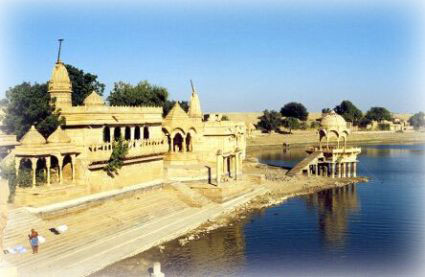
Gadissar Lake, Jaisalmer

Gadissar Lake, Jaisalmer

For anyone interested in seeing the culture of Jaisalmer on display through the ages, the Lok Sanskritik Sangrahalaya or the museum of Folk culture situated on the bank of Gadsisar Lake in Mehar Bagh Garden is a must.


 Excellent Collection of  Artifacts and Mementos of the Royal Past of Jaisalmer

Jaisalmer Folklore Museum, a relatively recent tourist attraction in Jaisalmer, was founded in 1984 by N K Sharma, a local connoisseur. 

The museum exhibits the established art of Rajasthan including excellent collection of art, artifacts and mementos of the royal past of Jaisalmer.

The initiator, NK Sharma painstakingly collected paintings, old coins, post cards and manuscripts and articles related to the folk and culture of the land for the people to learn more about the art and traditions of Jaisalmer.
Read the rest of this entry »

Tags: , , , , , , , , ,

Fort Museum in Junagarh, Bikaner – Fine Collections of Antique Weapons

Junagarh Museum - Antique Collection of Weaponry

Junagarh Museum - Antique Collection of Weaponry

The famous “Fort Museum” in Junagarh, Bikaner surely gives its visitors a great chance to peep into the history.  Ganga Mahal, the imposing hall of Junagarh Fort now houses the Museum.

Huge Collections of Rajput Weaponry

You will be amazed to see a huge collection of diabolic pistols, swords and weapons, each an exquisite work of art in this museum. Swords with ivory and crystal handles, some in shape of lions and other shapes can also be seen here. Cold and silver howdahs, jhulas, kis and a first world war biplane are also on view.

You should also visit the Diwan-i-khas, which houses an intricately carved mammoth sandalwood throne placed along with three massive arches.

Other important objects include a pair of drums belonging to jamblioji, the saint who predicted the foundation of the dynasty by Rao Bika for 450 years. Photographs and items of personal use by Maharaja Ganga Singh and miniatures are also on view.

 Junagarh fort was built under the supervision of Karan Chand the prime minister of Raja Rai Singhji, the sixth ruler of Bikaner, who ruled from 1571 to 1611 AD. Construction of the walls and associated moat commenced in 1588 and were completed in 1593.

Other Attractions of Junagarh Fort

Junagarh Fort, Bikaner

Junagarh Fort, Bikaner

The Junagarh fort in Bikaner encloses a number of temples, pavilions and 37 palaces. Each of the palaces are a work of art with carved windows, kiosk, hanging balconies and towers.

The Moon palace, the Flower palace, the Karan Mahal, and the Anup Mahal are all unique in their own rights. Each of the rooms of the Junagarh fort including the Rang Mahal, Ganga Niwas, Vijai Mahal, and Dungar Niwas are now living museums of the glorious past and grandeur.

Amongst the temples, Har Mandir is the most important and beautiful. The royal family worshipped their gods and goddesses here for long.

Tags: , , , , , , , , , , , , ,

Rajasthan – Location, Geography, Formation, Flora, Fauna and Districts

Rajasthan is a place of camels plodding over soft sand dunes. It is a state of men with proud mustaches and women with twinkling anklets in colorful swirling ghagras.

The landscape is dotted with island palaces shimmering on idyllic blue lakes, temples and fortresses situated on hilltops of the rugged and rocky Aravalli, exquisite palaces built during the reign of some of its many erstwhile Rajput dynasties and well laid out gardens with pavilions and kiosks, all of which add to the splendor and whimsical charm of this majestic land.

When was Rajasthan Born?

Rajasthan was formed on 30 March 1949, when all the princely states ruled by Rajputs(formerly known as Rajputana) merged into the Dominion of India.

The only difference between erstwhile Rajputana and Rajasthan is that certain portions of what had been British India, in the former province of Ajmer-Merwara, were included. Portions lying geographically outside of Rajputana such as the Sumel-Tappa area were given to Madhya Pradesh.


Geography of Rajasthan

Rajasthan, lying between 23º30′ and 30º11′ North latitudes and 69º 29′ and 78 º 17′ East longitudes at the northwestern part, is one of the biggest state of India.

Rajasthan is edged by Pakistan in the west and northwest, the states of Punjab, Uttar Pradesh and Haryana in the north and northeast, the state of Madhya Pradesh lies in the southeast and Gujrat in the southwest. The Tropic of Cancer passes across the southern point of the state in the Banswara district.

Rajasthan Covers 11% of the Total Geographical Area of India

Rajasthan has an area of 3, 42,239sq.km comprising of the 11% of the total geographical area of India. The extensive topography includes rocky terrain, rolling sand dunes, wetlands, barren tracts or land filled with thorny scrubs, river-drained plains, plateaus, ravines and wooded regions .


Main features of Geography of Rajasthan – Thar desert and Aravali range.

A massive portion of the state of Rajasthan( about 70% of total landmass) is desiccated and encloses the biggest Indian desert – the Thar Desert known as the ‘Maru-kantar’. This desert region embraces the districts of Jaisalmer, Barmer, Bikaner and Jodhpur.

The Aravali mountain ranges that run from Delhi to Gujarat cut through the State almost vertically. The Aravali ranges divide the State through south-east and north-west. The north-west region covering two-thirds of the state consist mostly of a series of sand dunes. Bikaner, Jaisalmer, Jodhpur and part of the Jhunjhunu districts form” part of this region. The eastern region has large fertile tracts.

District Map of Rajasthan - Source: Wikimedia

District Map of Rajasthan - Source: Wikimedia

Districts in Rajasthan

Rajasthan is divided into 33 districts and seven divisions:

  • Ajmer Division: Ajmer, Bhilwara, Nagaur, Tonk.
  • Bharatpur Division: Bharatpur, Dholpur, Karauli, Sawai Madhopur
  • Bikaner Division: Bikaner, Churu, Ganganagar, Hanumangarh
  • Jaipur Division: Jaipur, Alwar, Jhunjhunu, Sikar, Dausa
  • Jodhpur Division: Barmer, Jaisalmer, Jalore, Jodhpur District, Pali, Sirohi
  • Kota Division: Baran, Bundi, Jhalawar, Kota
  • Udaipur Division: Banswara District, Chittorgarh District, Pratapgarh    District, Dungarpur District, Udaipur, Rajsamand

Tags: , , , , , , , , , , ,

Rajasthan – Flora, Fauna, Sand Dunes, Aravlis Mountain Range, Climate, History and the Rajputs

Rajasthan State - Arid and Dry Cimate with Rich Culture and History

Rajasthan State - Arid and Dry Cimate with Rich Culture and History

Rajasthan has a total area of 343,000 sq km and the most striking feature of this land is its division by the majestic Aravalli mountain range. It is the backbone of the state and divides it into two geographical featured regions.

North West of the Aravlis are the Jodhpur, Jaisalmer, Barmer and Bikaner regions, it is the home of arid plains and shifting sand dunes of the great Thar desert. Water levels are so low that it was quoted by Italian traveler Manucci “Wells are so deep that when water is drawn out of them with the help of oxen, beat a drum as a warning that the pot is at the mouth of the well and they are about to draw water.”

Yet this land with its relentless carpet of sand is neither barren nor uninhabited. In fact, the colourfully dressed women against the starch backgrounds is one of the first and most lasting of all impressions that one may have of this state. The harsh dry climate has, however, forced the people to evolve a semi-nomadic lifestyle; when survival becomes difficult these people move out with their cattle to more welcoming pastures.

The other side of the hills is a land rich in vegetation. There are long stretches of dense forests, kush green valleys and fertile fields. This area is drained by several rivers – the most important being the Chamabal. Geographically, many areas in Rajasthan are older than the Himalayas. Excavations at Kalibangan, in Ganganagar district proves that a fully developed and organized society was in existence in this area long before the Harappan culture.

The later history of Rajasthan is of various kingdoms and their regular wars. In the midst of sixth century, the Brave Rajputs “The Warriors” came to dominate the region and wrote the most glorious chapters of history with their blood and blade. This period saw the rise of Prithvi Raj Chauhan, Maharani Padmini, the beautiful queen of Rana Rattan Singh of Chittaur, Rana Sangha, Man Singh of Amer and Rana Pratap of Chittaur and many other which became hallowed in folk memory.

This is a just brief about the glories of past, the history, the vegetation and the dry and arid climate of Rajasthan. History of Rajasthan is still present in the villages and the desert, the villages still follow the centuries old customs. There are many and many aspects of Rajasthan you will learn about Rajasthan from this blog of us, so stay stuned and post in comments if you happen to like our initiative.

Tags: , , , , , , , , , , , , , ,