Posts Tagged aravali range rajasthan

Mount Abu, Hill Station Of Rajasthan To Be Developed As Eco-Sensitive Zone

Mount Abu situated on an isolated plateau of Aravalli range of hills about 4000 ft.above sea level is one of the prettiest hill stations in India.

Mount Abu To Developed As Eco-Sensitive Zone
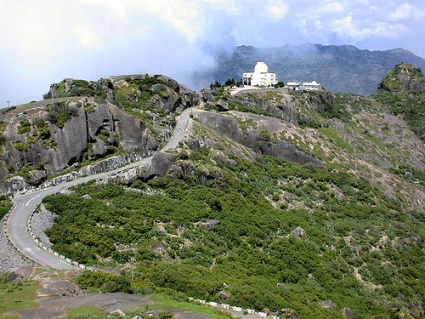
Mount Abu Hill Station will be a Eco-sensetive Zone

Mount Abu Hill Station will be a Eco-sensetive Zone

The Union environment ministry has recently declared Mount Abu an Eco-sensitive zone. This mandates eco-friendly measures for all, including locals and visiting tourists. The Centre on June 25 passed a notification to this effect, under which several restrictions will be imposed in and around Mount Abu to protect the area from ecological degradation.

The eco-sensitive zone covers the entire area of the notified urban area limit, including Mount Abu municipal limits and adjoining forest block areas.

All activities in the forest block areas shall be governed by the provisions of the Rajasthan Forest Act, 1953 and the Forests (Conservation) Act, 1980 (69 of 1980) and all the activities in the Protected Areas (Sanctuary) shall be governed by the provisions of the Wildlife  Protection Act, 1972 (53 of 1972).

A zonal master plan for the eco-sensitive zone shall be prepared by the state government within two years from the date of publication of the notification and will be submitted for approval to the ministry of environment and forests.

Effects of  Eco-Sensitive Zone

  • Only non-polluting, non-hazardous cottage industries or agro-based industries shall be permitted in the protected area.
  • New traffic regulations will also come up and there is a possibility that the entry of vehicles near tourist places will be restricted.
  • No person shall use plastic carry bags within the notified area
  • Restoration of denuded areas, conservation of existing water bodies including Nakki Lake, management of the catchment areas, watershed management, groundwater management, soil and moisture conservation

Mount Abu Tourist Attractions

Mount Abu is considered a summer retreat but it also has a stunning array of attractions such as the Dilwara Jain Temples, which dates back  to 11th- 13th centuries makes it a popular pilgrimage centre of Rajasthan.

The Sunset Point in Mount Abu is great for catching splendid views of the sunset over the hills. The Achalgarh Fort is one of the best areas to catch views of Mount Abu. The highest point in Mount Abu is Guru Shikhar, which has a temple dedicated to the Holy Trinity.

Mount Abu is also home to the Brahma Kumaris Spiritual University & Museum, which is a popular yoga and meditation center.


Tags: , , , , , , , , , , , ,

Rajasthan – Location, Geography, Formation, Flora, Fauna and Districts

Rajasthan is a place of camels plodding over soft sand dunes. It is a state of men with proud mustaches and women with twinkling anklets in colorful swirling ghagras.

The landscape is dotted with island palaces shimmering on idyllic blue lakes, temples and fortresses situated on hilltops of the rugged and rocky Aravalli, exquisite palaces built during the reign of some of its many erstwhile Rajput dynasties and well laid out gardens with pavilions and kiosks, all of which add to the splendor and whimsical charm of this majestic land.

When was Rajasthan Born?

Rajasthan was formed on 30 March 1949, when all the princely states ruled by Rajputs(formerly known as Rajputana) merged into the Dominion of India.

The only difference between erstwhile Rajputana and Rajasthan is that certain portions of what had been British India, in the former province of Ajmer-Merwara, were included. Portions lying geographically outside of Rajputana such as the Sumel-Tappa area were given to Madhya Pradesh.


Geography of Rajasthan

Rajasthan, lying between 23º30′ and 30º11′ North latitudes and 69º 29′ and 78 º 17′ East longitudes at the northwestern part, is one of the biggest state of India.

Rajasthan is edged by Pakistan in the west and northwest, the states of Punjab, Uttar Pradesh and Haryana in the north and northeast, the state of Madhya Pradesh lies in the southeast and Gujrat in the southwest. The Tropic of Cancer passes across the southern point of the state in the Banswara district.

Rajasthan Covers 11% of the Total Geographical Area of India

Rajasthan has an area of 3, 42,239sq.km comprising of the 11% of the total geographical area of India. The extensive topography includes rocky terrain, rolling sand dunes, wetlands, barren tracts or land filled with thorny scrubs, river-drained plains, plateaus, ravines and wooded regions .


Main features of Geography of Rajasthan – Thar desert and Aravali range.

A massive portion of the state of Rajasthan( about 70% of total landmass) is desiccated and encloses the biggest Indian desert – the Thar Desert known as the ‘Maru-kantar’. This desert region embraces the districts of Jaisalmer, Barmer, Bikaner and Jodhpur.

The Aravali mountain ranges that run from Delhi to Gujarat cut through the State almost vertically. The Aravali ranges divide the State through south-east and north-west. The north-west region covering two-thirds of the state consist mostly of a series of sand dunes. Bikaner, Jaisalmer, Jodhpur and part of the Jhunjhunu districts form” part of this region. The eastern region has large fertile tracts.

District Map of Rajasthan - Source: Wikimedia

District Map of Rajasthan - Source: Wikimedia

Districts in Rajasthan

Rajasthan is divided into 33 districts and seven divisions:

  • Ajmer Division: Ajmer, Bhilwara, Nagaur, Tonk.
  • Bharatpur Division: Bharatpur, Dholpur, Karauli, Sawai Madhopur
  • Bikaner Division: Bikaner, Churu, Ganganagar, Hanumangarh
  • Jaipur Division: Jaipur, Alwar, Jhunjhunu, Sikar, Dausa
  • Jodhpur Division: Barmer, Jaisalmer, Jalore, Jodhpur District, Pali, Sirohi
  • Kota Division: Baran, Bundi, Jhalawar, Kota
  • Udaipur Division: Banswara District, Chittorgarh District, Pratapgarh    District, Dungarpur District, Udaipur, Rajsamand

Tags: , , , , , , , , , , ,