Posts Tagged mount abu rajasthan

Various Lush Gardens and Parks Blooming With Flowers in Mount Abu – The Hill City of Rajasthan

The Rajputs of Rajasthan were great lovers of art and architecture. They adore the beauty of forts, palaces and museums, an also enhancing natural beauty by gardening and planting flowering plants.
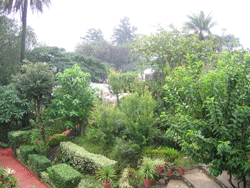
Gardens in Mount Abu

Gardens in Mount Abu

Mount Abut one of the most popular tourist destinations in summer is also popular in winters due to its scenic beauty. Gardens constitute great tourist attraction in Mount Abu.

There are many well laid out lush gardens and parks blooming with flowers in this hill city. The prominent amongst them are Brahma Kumari Serene Peace Park, Gandhi Park, Municipal Park, Shaitan Singh Park and Terrace Garden.

Insight View of Mount Abu

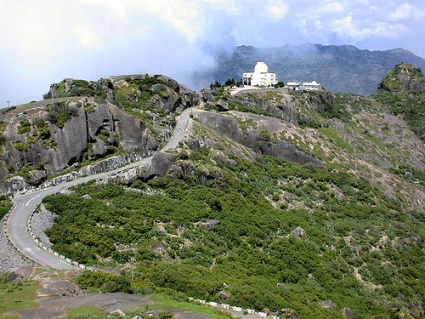
The quaint hill station Mount Abu is set amidst verdant hills and picturesque landscape.  A sacred retreat with the magnificent Jain Temples, mount Abu also attracts tourists for its scenic display of rocks juxtaposed with abundant flora and fauna.

The road leading to Mount Abu is a curved one characterized by arid region dotted with huge rocks in weird shapes and high velocity winds. This is also the highest point between the Nilgiris in the south and the Himalayan range up north.

The hill station in Rajasthan, Mount Abu is more than just a summer retreat. Its stunning array of exquisite Dilwara Jain Temples, dating back 11th- 13th centuries, make it a popular pilgrimage center.

There are various interesting treks and picnic spots close to Mount Abu.
Tags: , , , , , , , ,

Mount Abu, Hill Station Of Rajasthan To Be Developed As Eco-Sensitive Zone

Mount Abu situated on an isolated plateau of Aravalli range of hills about 4000 ft.above sea level is one of the prettiest hill stations in India.

Mount Abu To Developed As Eco-Sensitive Zone

Mount Abu Hill Station will be a Eco-sensetive Zone

Mount Abu Hill Station will be a Eco-sensetive Zone

The Union environment ministry has recently declared Mount Abu an Eco-sensitive zone. This mandates eco-friendly measures for all, including locals and visiting tourists. The Centre on June 25 passed a notification to this effect, under which several restrictions will be imposed in and around Mount Abu to protect the area from ecological degradation.

The eco-sensitive zone covers the entire area of the notified urban area limit, including Mount Abu municipal limits and adjoining forest block areas.

All activities in the forest block areas shall be governed by the provisions of the Rajasthan Forest Act, 1953 and the Forests (Conservation) Act, 1980 (69 of 1980) and all the activities in the Protected Areas (Sanctuary) shall be governed by the provisions of the Wildlife  Protection Act, 1972 (53 of 1972).

A zonal master plan for the eco-sensitive zone shall be prepared by the state government within two years from the date of publication of the notification and will be submitted for approval to the ministry of environment and forests.

Effects of  Eco-Sensitive Zone

  • Only non-polluting, non-hazardous cottage industries or agro-based industries shall be permitted in the protected area.
  • New traffic regulations will also come up and there is a possibility that the entry of vehicles near tourist places will be restricted.
  • No person shall use plastic carry bags within the notified area
  • Restoration of denuded areas, conservation of existing water bodies including Nakki Lake, management of the catchment areas, watershed management, groundwater management, soil and moisture conservation

Mount Abu Tourist Attractions

Mount Abu is considered a summer retreat but it also has a stunning array of attractions such as the Dilwara Jain Temples, which dates back  to 11th- 13th centuries makes it a popular pilgrimage centre of Rajasthan.

The Sunset Point in Mount Abu is great for catching splendid views of the sunset over the hills. The Achalgarh Fort is one of the best areas to catch views of Mount Abu. The highest point in Mount Abu is Guru Shikhar, which has a temple dedicated to the Holy Trinity.

Mount Abu is also home to the Brahma Kumaris Spiritual University & Museum, which is a popular yoga and meditation center.


Tags: , , , , , , , , , , , ,

Mount Abu Government Museum – Collection of Archaeological Excavations of 8th-12th Century A.D

Mount Abu Government Museum

Mount Abu Government Museum

The only hill station in western and central India – Mount Abu in Rajasthan has been a center of cultural activity since the prehistoric period. It was the capital of the Parmars in 13th century AD and later on came under the Chauhans.

Mount Abu huddles among the rocks on a 1,220-m granite table mountain at the far southwestern end of the Aravalli hills. It is built around a lake and is surrounded by forested hills.

Located on the complex of Raj Bhawan, the museum was established in 1962. It has a good  collection of archaeological excavations dating back to 8th-12th century A.D. It also has Jain bronze carvings,brassworks, historic objects associated with this region. etc. for viewing.

Different Sections of Mount Abu Museum

Gallery of Weapons, ornaments  and Musical Instruments

The first section has been adorned by a diorama of local tribal hut with their usual living style by adding a gallery of weapons, musical instruments, ladies ornaments like ‘barly’, ‘damani’, ‘karna’, ‘guthma toda’, ‘gaga wala thoomar’, ‘kanksi berla’ and various types of earrings and garments etc. belonging to hill dwellers.

Series of Miniature Paintings

The second section has a series of miniature paintings based on raga-raginis, lain images from Sirohi, medium sized shields, a small canon called ‘Topdi’ and some pieces of carvings on local wood.

The notable collection of this museum, is the finely carved out statues of Devdasi or Nartakis (Dancer).

There is an image of the Chakrabahu Shiva having a ‘trishul’ (trident) in one hand and a ‘khadag’ in the other and sitting on Nandi, the bull. On each side of Shiva are dancing girls.

Sculpture Gallery Section

In the Abu collection consisting of 404 sculptures, the most distinctive exhibit is the Vish Kanya (snake goddess), which is 3 feet high. It is shown breast-feeding a snake. The figures are well executed and the attitudes are impressive and natural. It also has the Surya (8th century AD) found in Achalgarh, the Shiva (10th century AD) brought from Dilwara temple, the Chanvar Vahini and Laxmi (12th century AD) also from Chandravati and Chanmunda (8th century A D).

The Sculpture Gallery has some memorial inscriptions collected from nearby areas e.g. Chapa’s inscription, (local heroine of Achalgarh).

Other Tourist Attractions in Mount Abu

Mount Abu is also well known for the famous Dilwara Jain Temples, Gurumukh Temple, Nakki Lake and many more archaeological remains.

There are interesting treks and picnic spots, romantic royal retreats of the various erstwhile families of Rajputana  period.

The scenic landscapes include gigantic blocks of rocks in weird shapes, an array of coniferous trees, flowering shrubs, lovely lakes and the cool climate much in contrast to the arid environs of the state.

Tags: , , , , , , , , , , , ,

Summer Festival in Mount Abu – A Hill Station of Rajasthan

Summer Festival in Mount Abu - An Escape from Burning Heat of Plains of Rajasthan

Summer Festival in Mount Abu - An Escape from Burning Heat of Plains of Rajasthan

About Mount Abu

Mount Abu the only hill station in Rajasthan, situated in the sylyan setting of verdant forests. Its a major pilgrim centre located in the south- western corner of Rajasthan .

Abu, according to legend, stands for the Son of Himalaya, deriving its name from Arbuda, the powerful serpent who rescued Nandi, the sacred bull of Lord Shiva , from a chasm. This picturesque hill station stirs to life during the three day Summer festival.

more on mount abu

Summer Festival – A Cool Experience of Life

The festival begins with an enthralling ballad, followed by folk dances of Rajasthan like Gair, Ghoomar and Dhap.

The evening is enlivened by a Sham-e- Qualwali. Qualwals or high pitch singers from all over the state come to perform here and captivate the audience with their vocal skills.

A Village Artisan Playing Fluet Type Musical Intrument in Summer Festival

A Village Artisan Playing Fluet Type Musical Intrument in Summer Festival

The Rowing Competition

Other gripping events include a boat race on the Nakki Lake and roller skating race. The grand finale of the festival is a display of dazzling fireworks. Refresh yourself in the tranquil surroundings of Nakki Lake.

It is believed that the Gods formed the lake-bed by digging it with their fingernails – ‘nakh’ – hence the name nakki lake.

Other Tourist Places in Mount Abu

Mount Abu has a beautiful lake, a comples of exquisitely carved Jain Temples, old fort, Gurumukh Temple, Honeymoon Point which attracts tourists from the world over.

In the summers, there are very few tourists who plan a visit to Rajasthan, and I agree with them totally because even I myself prefer staying in the comfort of air conditioning. On the contrary, Abu proves to be a great tourist destination especially in summers, as domestic tourists tries to escape the rising mercury levels in the state.

Tags: , , , , , , , , , , , , ,

Luna Vasahi Temple – Delwara Jain Temples , Mount Abu, Rajasthan

Delwara Jain Temple

The famous Delwara Jain temples are 2.5 km away from the Mount Abu, which in ancient Hindu and Jain scriptures is referred to as Arbudgiri. The Delwara temples were dedicated to the Jain Tirthankars and also served as storehouses of illustrated manuscripts and treatises.

Vimala Shah, Vastu Pala and Teja Pala contributed a lot toward the development of Jain art and architecture. The Jain temples at Mount Abu are built in the Nagara style of temple architecture

The ornamental detail spread over the minutely carved ceilings, doorways, pillars and panels is simply marvelous and has to be seen to be believed.

About Luna Vasahi Temple

Luna Vashi - Dilwara Jain Temple, Mount Abu, India

Ornate Sculptures @ Luna Vasahi - Dilwara Jain Temple, Mount Abu, India

The magnificent Luna Vasahi temple dedicated to the 22nd Jain Tirthankara Shri Neminathji, was built in 1231 A.D by two  porwal brothers Vastupal and Tejpal both ministers of Raja Virdhaval, a ruler of Gujarat.

The temple built in memory of their late brother Luna was designed after the Vimal Vashi temple.

Historically, this is the last of the monuments built in the Solanki Dynasty.

Architecture of Luna Vasahi Temple

The main hall or Rang mandap has a central dome from which hanfs a big ornamental pendent featuring elaborate carving.

You will notice, arranged in a circular band are 72 figures of Tirthankars in sitting posture and just below this band are 360 small figures of jain monks in another circular band. The Hathishala or elephant cell features ten elaborately carved marble elephants.

The Navchowki features some of the most magnificent and delicate marble stone cutting work of the temple. Each of the nine ceilings here seems to exceed the others in beauty and grace.

The Gudh mandap features a black marble idol of the 22nd Jain Tirthankara Neminath. The Kirthi Stambha is a big black stone pillar that stands on the left side of the temple. The pillar was constructed by Maharana Kumbha of Mewar. The remaining three temples of Dilwara are smaller but just as elegant as the other two.

There is a small cell, in between the trees, dedicated to the worship of foot-prints of ‘Dada Sahib’ Jain Acharaya Shri Jindutt Suri.

Tags: , , , , , , , , , , , , , , ,