About Pushkar
The small and beautiful town of Pushkar is set in a valley just about 14 km off Ajmer in the north Indian state of Rajasthan.
Surrounded by hills on three sides and sand dunes on the other, Pushkar forms a fascinating location and a befitting backdrop for the annual religious and cattle fair which is globally famous and attracts thousands of visitors from all parts of the world.
It transforms into spectacular fair ground for twelve days during the month of kartik (Oct- Nov).
About Pushkar Fair – History
The Pushkar Fair, a major tourist attractions draws people from all over the ancient and secluded environs of Pushkar town. Devotees throng to its Ghats to bathe and cleanse their sins in the sacred Pushkar Lake to attain a place in heaven.
It is belived that this lake appeared miraculously on the spot where petals of a lotus flower fell from the hands of Lord Brahma, the creator. This answers for the famous temple here, dedicate to Lord Brahma.
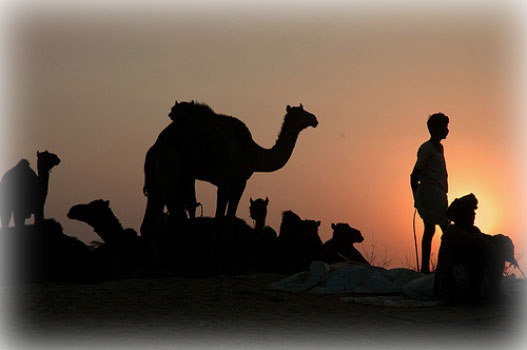
Camels Resting at Pukhar Fair, Rajasthan
Sight Seeing at Pushkar Fair
The fair is predominantly a rural gathering. Villagers come from different parts of the state and bring their cattle with them.
On spectacular sand dunes camel, horse and bullock races are great crowd pullers. All roads lead to the lake, which is flooded with pilgrims.
The movement of the crowd is like a tide of color with currents of crimson, yellow and turquoise.
Evenings at the Pushkar Fair have their own charm. The silent night is pierced by calls of camels. Ballads are sung by actors in passionate tones. Folk dramas, skits and folk dance are organized for the entertainment of the tourists.
Arrangements of Staying during Fair
The Rajasthan Tourism Development Corporation (RTDC) puts up a tourist village during the fair.
The tourist village is self sufficient and specially designed to complement the natural beauty of the site. It has a Coffee Shop and Dining Hall which can cater to 1500 guests at a time.
The village is arranged in blocks of tents, each with its own identity, being named after the famous dances of Rajasthan. The village also has huts with attached western style toilets and running water.