Posts Tagged rajasthan india

Rajasthan – Location, Geography, Formation, Flora, Fauna and Districts

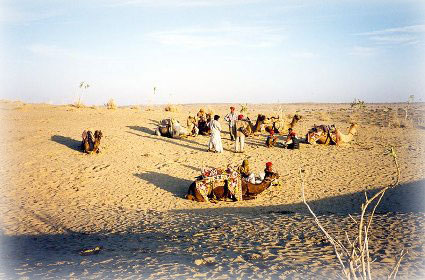
Rajasthan is a place of camels plodding over soft sand dunes. It is a state of men with proud mustaches and women with twinkling anklets in colorful swirling ghagras.

The landscape is dotted with island palaces shimmering on idyllic blue lakes, temples and fortresses situated on hilltops of the rugged and rocky Aravalli, exquisite palaces built during the reign of some of its many erstwhile Rajput dynasties and well laid out gardens with pavilions and kiosks, all of which add to the splendor and whimsical charm of this majestic land.

When was Rajasthan Born?

Rajasthan was formed on 30 March 1949, when all the princely states ruled by Rajputs(formerly known as Rajputana) merged into the Dominion of India.

The only difference between erstwhile Rajputana and Rajasthan is that certain portions of what had been British India, in the former province of Ajmer-Merwara, were included. Portions lying geographically outside of Rajputana such as the Sumel-Tappa area were given to Madhya Pradesh.


Geography of Rajasthan

Rajasthan, lying between 23º30′ and 30º11′ North latitudes and 69º 29′ and 78 º 17′ East longitudes at the northwestern part, is one of the biggest state of India.

Rajasthan is edged by Pakistan in the west and northwest, the states of Punjab, Uttar Pradesh and Haryana in the north and northeast, the state of Madhya Pradesh lies in the southeast and Gujrat in the southwest. The Tropic of Cancer passes across the southern point of the state in the Banswara district.

Rajasthan Covers 11% of the Total Geographical Area of India

Rajasthan has an area of 3, 42,239sq.km comprising of the 11% of the total geographical area of India. The extensive topography includes rocky terrain, rolling sand dunes, wetlands, barren tracts or land filled with thorny scrubs, river-drained plains, plateaus, ravines and wooded regions .


Main features of Geography of Rajasthan – Thar desert and Aravali range.

A massive portion of the state of Rajasthan( about 70% of total landmass) is desiccated and encloses the biggest Indian desert – the Thar Desert known as the ‘Maru-kantar’. This desert region embraces the districts of Jaisalmer, Barmer, Bikaner and Jodhpur.

The Aravali mountain ranges that run from Delhi to Gujarat cut through the State almost vertically. The Aravali ranges divide the State through south-east and north-west. The north-west region covering two-thirds of the state consist mostly of a series of sand dunes. Bikaner, Jaisalmer, Jodhpur and part of the Jhunjhunu districts form” part of this region. The eastern region has large fertile tracts.

District Map of Rajasthan - Source: Wikimedia

District Map of Rajasthan - Source: Wikimedia

Districts in Rajasthan

Rajasthan is divided into 33 districts and seven divisions:

  • Ajmer Division: Ajmer, Bhilwara, Nagaur, Tonk.
  • Bharatpur Division: Bharatpur, Dholpur, Karauli, Sawai Madhopur
  • Bikaner Division: Bikaner, Churu, Ganganagar, Hanumangarh
  • Jaipur Division: Jaipur, Alwar, Jhunjhunu, Sikar, Dausa
  • Jodhpur Division: Barmer, Jaisalmer, Jalore, Jodhpur District, Pali, Sirohi
  • Kota Division: Baran, Bundi, Jhalawar, Kota
  • Udaipur Division: Banswara District, Chittorgarh District, Pratapgarh    District, Dungarpur District, Udaipur, Rajsamand

Tags: , , , , , , , , , , ,

French Govt Sponsers Opening IIT Rajasthan – Will It Open in Jaipur or Kota?

IIT Rajasthan - Kota, Jaipur

IIT Rajasthan - Kota, Jaipur

IIT Rajasthan is one among the new set of IITs announced by the Ministry of Human Resource Development, Govt. of India. The location of the IIT in Rajasthan will be announced by the Govt. of India.

A few days ago, the French government expressed interest in collaborating with the government of India in setting up IIT-Rajasthan.  The Union HRD ministry and its French counterpart are likely to sign a memorandum of understanding soon on IIT-R. The French are expected to provide monetary support and also provide experts in the initial stages.

Why Jaipur is better than Kota ?

The main hurdle to setting up the institute had been the fight over the location. The Vasundhara Raje government had been keen on setting up the IIT at Kota, a coaching hub for future IITians. and had even acquired land there.

Kota, which is teeming with elite coaching schools, sends a record number of successful students to various IITs in the country.
Some estimates say that a third of the 5,000 students who manage to clear the entrance tests for the premier institute are groomed in Kota, which the state government describes as a modern-day Nalanda, the famed Buddhist centre of learning that existed during the Buddha’s times.

But Kota was not the choice of experts who had suggested Jaipur from the very beginning, largely because of its superior connectivity compared to other cities in the state.

However, in the meantime, IIT Kanpur has been designated as the mentor IIT for looking after the incubation activities of the new IIT in Rajasthan. The academic session in IIT Rajasthan have been started from August 2008.

All the new IITs, however, are coming up near or in the state capitals: IIT-Bihar in Patna, the Andhra one in Hyderabad, the Punjab insititute at Chandigarh, the Orissa IIT at Bhubaneswar, and the Gujarat one at Gandhinagar. So, it will be rather odd if it is an aberration in the case of Rajasthan.

Moreover, those coming to teach at IIT-R will need to factor in things like good schools for their children, and in that respect Jaipur has an edge over other cities.

NOTE: The logo used with the blog is our work and is not at all associated with IIT brand in any manner what so ever.

Tags: , , , , , , , , , , ,

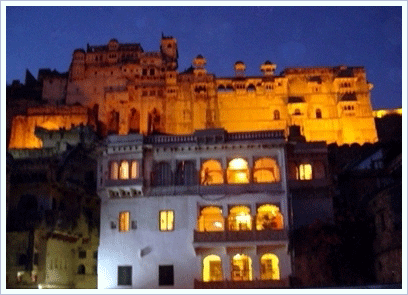
The Bundi Palace and Chitrashala | Bundi, Rajasthan

Bundi Palace, Rajasthan

Bundi Palace, Rajasthan

‘Picturesque, enchanting and magnificent.’ These would be just some superlatives that compliment the lingering medieval flavour that Bundi in Hadoti region holds.

The entrancing land of Palaces, stunning stepwalls or baoris and miniature paintings seems frozen in time. Bundi, also claims a take on the foundations of an authentic school of miniature painting.

An of beat destination ruled by the Hada Chauhans, Bundi is a rich repository on Indian art, culture and heritage and is frequented by domestic as well as international tourist.

It has magnificient medieval forts and palaces, miniature paintings, temples with intricately carved out idols and chattris, fabulous stepwalls and a picturesque lake.

The Bundi Palace

The Bundi Palace is situated adjacent to the Taragarh fort. This outstanding palace, built during the 16th and 17th centuries is a classic Rajasthani architecture. Only part of the palace is open to the public.

The quarried stone Bundi Palace is known for it’s traditional murals. Just one look at the monument will soak you with the royal opulence and splendour, an innate part of the lifestyle of the royals. Intricately engraved brackets, pillers, balconies, sculpted elephants and the extraordinary craftsmanship will catch your attention here.

The palace is entered through the Hathi Pole (Elephant Gate) into a small courtyard. You then come to the Ratan Daulat, the Diwan-i-am (Hall of Public Audience), where there is a marble throne. The highlight of this palace is the beautiful murals that carry the spectators back into the time of Bundi royalty.

Chitrashala

The silent, secret garden, with it’s elegant formal layout still visible through the tangle of wild-roses and weeds is the most enchanting place at the Bundi Palace. Showcasing the Bundi genre of miniature art, the walls and the ceiling are festooned with pictures out of the Ragmala and Raaslila-the story of Radha-Krishna.

Then there are hunting and court scenes, festivals, processions, animal and bird life that spring back images of all that was a part of the artist’s acuity then. The vibrant blue, green and turquoise on white with touches of terracotta yellow lend an arresting view.

The Bundi style of painting famous for its Rang Yojna infuses life in every bit and corner of Chitrashala. If you are an art connoisseur you could visit Bundi just for a glimpse of the miniature artwork that holds inspiration to people from world over.

Tags: , , , , , , , , , , , , , , , ,

Adhi – Din – Ka Jhonpra, Ajmer Rajasthan

Adhi Din Ka Jonpra , Ajmer, Rajasthan

Adhi Din Ka Jonpra , Ajmer, Rajasthan

Location and Architecture

At the foot of the Taragarh hill stands the relic of the past and interesting historical magnificent building Jamia (Jamia in Arabic Connotes a University). Al – Tamish popularly known as  Adhai- din – ka Jhonpra.

This is a masterpiece of Indo Islamic architecture located very close to the dargah. It was orginally a Sanskrit college, built within a temple. As Legend goes. 

This structure has this unique name because it took only two and a half days (Adhai Din) to complete its construction.

In 1193 A.D. when  Mohhamed Ghauri conquered Ajmer he turned the building into a mosque by adding a wall with seven arches, in front of the pillared hall in just two-and-a-half days (adhai-din) and hence the name. 

Whats Unique About Adhai – din – ka – Jhonpra

The mosque has extensive and massive stony structure replete with extermly fine and intricate workmanship on stone. Some believe that only the smaller marble arch in the mosque may have been constructed in 2-1/2 days but the whole massive structure, with its elaborate Arabic tracings and delicate engraving detail, is definitely seems to be a work of many years sustained labor.

Three pillars have been placed on one top of the other to give the impression of height of which no two pillars are alike. The pillared hall is 61 mtrs long and its 124 columns support the 10 shallow domes. An arcade of seven arches can be seen, which is finely engraved with Kufi and Jughra inscriptions from the holy Koran. The district pillars and arched screen with its ruined minarets make it a splendid architectural masterpiece.

Nevertheless you could yourself marvel at the stunning piece of architure , read the inscribed Koranic verses and amaze at how this poetry in stone could be accomplished in two and a half days.

Tags: , , , , , , , , , , , , ,

Umaid Bhawan Palace, Jodhpur, Rajasthan – An Amazing Palace Hotel

About Jodhpur

Jodhpur, a gateway to the Thar desert towns, is the second largest city of Rajasthan and for almost five centuries it was the capital of Marwar. Historically too this region was important for being a part of major trade route caravans loaded with the most precious merchandise made their way here from the ports of Gujarat. This Blue City seems to have been put together for the benefit of the tourist.

Some of the very famous places of interest of Jodhpur are Mehrangarh Fort, Umaid Bhawan Palace, Mandore, Mahamandir Temple, Jaswant Thada, Kailand Lake, Balsamand Lake, Gardens, Osian, Dhawa and Luni Fort.

About Umaid Bhawan Palace

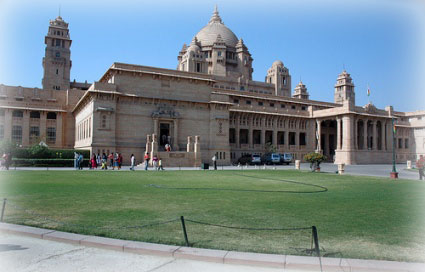
Umaid Bhawan Palace, Jodhpur, Rajasthan

Umaid Bhawan Palace, Jodhpur, Rajasthan

Umaid Bhawan Palace constructed with marble and pink sandstone is also known as the Chhittar Palace as it uses local Chittar sandstone.

Begun in 1929, it was designed by president of the British Royal Institute of Architects for Maharaja Umaid Singh and took 15 years to complete.

Probably the most surprising thing about this grandiose palace is that it was built so close to Independence, after which Maharajas and their grand extravagances were a thing of the past.

Umaid Bhawan was one of the last royal constructions in Rajasthan. The building stands as a grand palace and features gardens, palace halls, balconies, terraces and more. The palace is built in the sandstone and highlights the typical Rajputana style.

The complex is divided into three main segments – the heritage hotel, private residence and the museum. The whole palace complex has as many as 347 rooms. The palace stands grounded in an area of about 26 acres. Out of these 15 acres are occupied by palace lawns.

The heritage hotel is a popular venue for some of the most talked about weddings of film stars to business barons. It’s a magnificent structure that uses local stone and is representative of the Indo- Saracenic style of architecture.

Some sections are not open to the public, but one can still visit the palace to see the museum. To see the collection of old watches here is a sheer delight.

A Tip

If you really wish to spend a luxirious holiday, Umaid Bhawan Palace is the place. I have personally been there and frankly speaking I have never seen a more grandiose palace hotel than this one.

Tags: , , , , , , , , , , , , , , ,

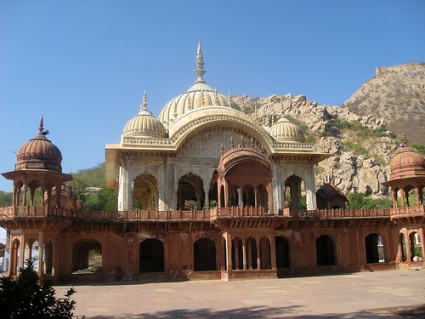
City Palace Alwar

City Palace, Alwar, Rajasthan

City Palace, Alwar, Rajasthan

Alwar has a rich past that dates back to pre-historic times. The alwar fort better known as Bala Quila stands 304 meters above the city and was constructed before the rule of Mughal empire, making this the oldest existing structure in the city.

Alwar being one of the newer royal states in Rajputana, its rulers never seemed to tire of fort-building as they went on build dozons of them in their kingdom.

Bala Quila was occupied successively by khanzadas, Mughals, Pathans, and Jats. In 1775, Pratap Singh ousted the Jats from the fort. His Successor, Bakhtawar Singh added to the existing structure the rooms of the palace, and some fine gold leaf painting on the ceiling.

Below the fort, in the heart of the old city, is the magnificient City Palace. Five massive gates were once closed  and caged tigers let loose at night to keep intruders at bay. Alwar’s district government inhabits the rooms of the former armory library and treasury.

In the grand courtyards where girls once danced in the light of the full moon to  entertain the maharaja and his courtiers, crowds now seek succor in the offices, and courts of the district administration.

Alwar City Palace Attractions

The Palace is particularly noted for its darbar room decorated with a frieze of miniature paintings and an upper chambet of mirror set in gilt. Previously used on state occasions. City Palace has a government Museum with one of the finest collection of miniature paintings. Located closed by are Moosi Maharani ki Chhatri, Vinay Vilas Palace, Vijay Mandir Palace and Moti Dungri.

The armory section has weapons dating back to the days of Hazrat Ali, the Prophet Muhammad’s son in law, and as renowned as the swords and armor of Muhammad Ghori. Akbar and Auranzab. The daggers, swords, shields and sabres on display are often richly ornamented and encrusted with jewels.

Art objects in jade, iviory and sandal wood are delicately filigreed, inlaid and enameled and a silver table with a trick impression of colored fishes floating in channels of water across it are other highlights of its collection.

Photo Source: http://www.flickr.com/photos/carltonbrowne/2128736110/

Tags: , , , , , , , , , , , , , , ,

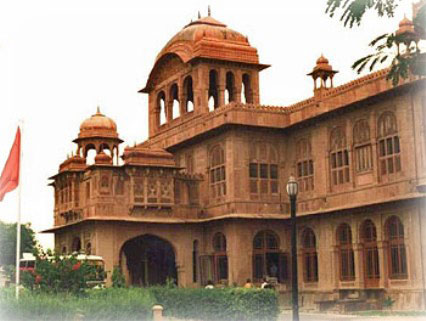
Lalgarh Palace Bikaner, Rajasthan

Lalgarh Palace, Bikaner, Rajasthan

Lalgarh Palace, Bikaner, Rajasthan

Located a little outside the city, this magnificent palace was designed  by Sir Switon Jocob for Maharaja Ganga Singh almost 90 years ago.

An interesting combination of European luxury and oriental fantasy,  the palace has a billiards room, a library, a cards room and a smoking room. Belgian chandeliers, cut – glass ornaments, oil paintings and lamps, all adding to its charm.

Important sights are Laxmi vilas and Shiv Vilas . Major part of the palace has now been turned into a luxury hotel and the peacock , pigeons and parrots provide many hours of relaxion.

A Museum in Lalgarh displaying an excellent collection of old photographs and hunting trophies. The museum is called the Shri Sadul Museum, which houses an immense range of photographs, and an incredible collection of the former maharaja’s personal possessions. The Sri Sadul Museum takes up the entire ground floor. There’s also an exhibition of Indian wildlife, stuffed and photographed.

The Anup Sanskrit Library household at Lalgarh  has one of the world’s largest collection and excellent collection of manuscripts, coins, stone and marble statues from almost every period of Indian history. specially intersting are the rare miniature sandalwood items fitted into almond and walnut shells.

This rambling palace is built round an open garden court overlooked by ladies apartment windows.  Local craftsman balconies, pillers with such skill that solid sandstone took on the look of delicate lace.

A cloister of peacock arches surround the stately marble countryed of the Laxmi Bilas. The marble corridors connecting whole palace are lined with hunting trophies and bronzes. There are so many things which cant be described here in the blog about the Lalgarh Palace. A visit is must especially if you are touring Bikaner area.

Tags: , , , , , , , , , , , , , ,

Keoladeo Ghana National Park – A Bird Sanctuary in Bharatpur, Rajasthan

Keoladeo Ghana National Park, Bharatpur, Rajasthan

Keoladeo Ghana National Park, Bharatpur, Rajasthan

History

In the middle of the 18th century a small reservoir was created three miles to the southeast of the Bharatpur fort. The building of the Ajan Bund and the subsequent flooding of this natural depression has created during the subsequent 250 years one of the world’s most facinating and spectacular bird reserves. It is commonly referred to as the Bharatpur Bird Sanctuary

The range of flora in the park is extraordinary for such a small area. Dozens of grasses provide cover, nest material and food to a range of birds and mammals. Trees range from the throny acacia or babul which dominates much of the park to ber, khajur and khejari.

The lakes with their rich range of floating plants algae, reeds, flowering plants to millions of crustaceans, insects and fish in such enormous quantities that thousand of bird can depend on the area for raising their young and as a winter home.

Famous Bird and Animal Species in the Park

From August through November, thousand of indigenous water birds breed and raise their young here. Painted strocks, spoonbills, cormorants, three kinds of egret, open billed strocks, purple herons, night herons and sarus cranes are some of the famous species that can be found here. In early October , the first migrants arrive from the high plateaus of central Asia, Mongolia, and Siberia. The ducks, geese and waders arrive first. Raptors, including the steppe eagle, golden eagle, osprey and harrier follow.

Some 35-40 beautiful species feed on sedge tubers till early March when they return to Central Siberia. The forest also supports animals as nilgai, sambar, wild boar, feral cattle, civet, jacket and the rhesus macaque.

How to Reach Keoladeo Ghana National Park

A metaled road runs through the park from the north gate near the main Agra- jai[pur road. Vehicles are now allowed only as far as the tourist and forest lodges. A good network of raised paths along tree-lined bunds give good cover for bird watching and the visitor can walk through much of the park along the bunds. Visiting the park at any time of the year is a rewarding experience especially betwen October and March.

Tags: , , , , , , , , , , , , , , ,

Desert National Park – A Wildlife Sanctuary in Jaisalmer, Rajasthan

Location and Area

Twenty – eight miles to the southwest of Jaisalmer, The Desert National Park Covers 1220 sq miles of scrub, thorn forest, desert and dunes. The range  of both flora and fauna is, to many surprisingly large for a desert area. The unique ecosystem reflects the successful adaptation  by a range of mammals, birds, insects and flowers to a harsh climate with temperature ranges from below freezing to over 130 F.

The rolling landscape of a sand – dunes and scrub- covered hills is often breathtaking beautiful. The active dunes of Sam contrast with 180 million year old wood fossils at Akal 10 miles from jaisalmer which indicate that his now arid area must have once been hot, humid and luxuriant.

The scant vegetarian and the animals dependent on it are in turn dependent on it are in turn dependent on whatever water is available. Water holes are therefore the ideal sports from which to watch animals and birds.

Desert National Park, Jaisalmer, Rajasthan

Desert National Park, Jaisalmer, Rajasthan

Famous Species in the Park

The small active desert fox is an important predator keeping a natural check on the population of desert rats and gerbils.

The wolf is perhaps the main predator and the jackal is found on the periphery of the park.

Group of blackbuck, chinkara and nilgiri are found in the villages and now thrive in the park’s areas of sparse.

Some smaller mammals have adapted to the desert environment by burrowing  like the gerbil, by living crested porcupine.

The desert bird life is extensive , ranging from a large number of birds of pery to sandgrouse, doves, quails, partridges, shrikes, bee- eaters and desert coursers. The most remarkable bird of the desert is the Great Indian Bustard weighing up to 30 pound. The Houbara Busted also found in the park Of three resident species of snadgrouse, the Indian sandgrouse is impressive with its routine of arriving in small groups to join large turbulent flocks in the early morning to drink at the same place each day.

Habitual destruction and hunting this majestic bird but its population in the park alone is over 1000. Many insects and reptile species evident throughout the park form important links in the desert food chains. The 43 species of reptile include lizards , chameleons and snakes.

Photo Source: http://en.wikipedia.org/wiki/Image:D%C3%A9sert-du-Thar.jpg

Tags: , , , , , , , , , , , , , , , , , ,

Pink City Jaipur, Rajasthan Rated in Asia’s Best Tourist Destinations

A survey, conducted by the elite magazine Conde Nast Traveller rated Jaipur as the seventh best city in Asia to visit. More than 32,000 Conde Nast Traveller readers participated in the 2008 Readers Choice Survey, and the complete results will appear in the November issue of the magazine.

“The 2008 Reader’s Choice Awards are a credit to the worldly expertise of our readers, passionate travelers for whom no island is too remote, no city too challenging, and no hotel too untested,” Klara Glowczewska, editor in chief of the magazine said. “These awards celebrate the destinations, lodgings and modes of transportation that exceed our expectations,” Glowczewska added.

The survey also states that three of the five best hotels in Asia are located in India with highest rated hotel in the world is the Oberoi Udaivilas in Udaipur, Rajasthan. Oberoi Amarvilas coming in second and Oberoi Rajvilas bagging the fifth spot.

About Jaipur

Jaipur India was founded by Sawai Jaisingh II, in 1727 AD, still preserves its glory of rich history and culture. The past comes alive in its impressive forts, majestic palaces and in its royal building which for centuries were the abode of royal families.

Some of the very famous tourist places in Jaipur are Hawa Mahal, City Palace, Jaigarh Fort, Albert Hall, Jantar Mantar, Amber Fort, Nahargarh Fort, Govind Dev Ji Temple, Sisodia Rani Bagh, Bm Birla Planetarium, Galta Ji,   Birla Temple, Kanak Valley and Jain Temple.

About Oberoi UdaiVilas

At 30 acres in total, everything at the Udaivilas is on a grand scale. From the Oberoi Spa by Banyan Tree – which occupies two entire floors and offers more than 30 different holistic treatments such as ayurveda and aromatherapy – to the Candle Room; a miniature glass palace or ‘Sheesh Mahal’ constructed of 175,000 separate mirror pieces, Udailvilas and its hospitality are simply breathtaking.

Heritage Tourism in Rajasthan

Rajasthan the ‘Land of Kings’ is steeped in romantic history, chivalry and valor. Formerly known as Rajputana, it boasts of some of the finest fortress – palaces, built with sandstone quarried from the Land itself. With its turbaned men and richly jeweled women, its crystal lake and island Palaces, its quaint havelies and villages, fairs and festivals, Rajasthan constantly beckons.

Tags: , , , , , , , , , , , , ,