Posts Tagged travel rajasthan

Patka (Waistband) – Traditional Clothing of Rajasthani Men

Patka - A Waist Band on Maharaja Jai Singh

Patka - A Waist Band on Maharaja Jai Singh

PATKA or kamarband  is a waistband (simply a piece of cloth tied across the waist ) in which a sword is fixed. There is a tradition of tying patkas as it is useful in two ways : Firstly it makes the person active and secondly it aids in tucking weapons and arms which made the two hands free to hold.

BACKGROUND

The Royal Rajasthani class used to tie high quality patkas like cotton ,silken  while  in  winter season they prefer woolen patkas. The past pictures depicts that earlier patka’s length and breadth was less. They used to have geometrical designs printed on them.

BASIC CLOTH

The cloth was woven, printed and embroidered. The base is of one colour and type only. Even bootis were of same colour as base. The corners had multi-coloured stems and on border huge size of bootis of lotus, chameli etc were embroidered.

HISTORY

During the period of Akbar, geometrical designs were made while in Jahangir and Shaahjahan period, floral pattern was in trend.  The best  example can be seen from collection shown in Kashi  Hindu University where there is patka in which beautiful combination and style of grape stem is depicted. The auspicious birds and animals like peacock were embroidered in it.

How Patka’s Evolved?

In eighteen century, patka become less useful. It used to have more ornaments and there was greater difference in their length and breadths. Gradually its broadness increased from 1.5 mtr to 2 mtr.

In 20th century, the art of making patka was stopped, only olden patka’s were used in royal courts. In Rajasthan, patkas of Chanderi, Banaras and Ahmedabad became popular. These patkas were worn in Mughal and Rajput courtyards.
Tags: , , , , , , , , , , ,

Kalbeliya Sapera Dancers – Famous Dancer Gulabo From Rajasthan

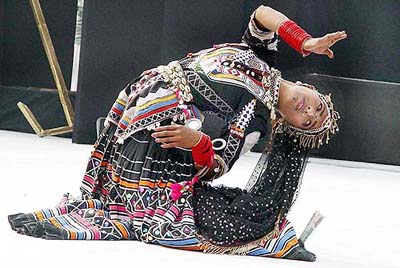
One of the most fascinating dance forms of Rajasthan, performed by the Kalbeliya snake-charmer’s community is Sapera Dance or you can say it Kalbeliya Dance.

Kalbeliya Dance Attractions

Kalbeliya Snake Dance of  Rajasthan

Kalbeliya Snake Dance of Rajasthan

In this Dance sapera dancers wear long, black skirts embroidered with silver ribbons. As they spin in a circle, their body moves very acrobatically. It is impossible to believe that they are made of anything other than rubber.

Vigorous and Zestful Display of Rajasthani Art

Kalbeliya Dancers are attired in traditional black accompaniment of pungi, dufli and plaintive notes of the ‘been’ – the wooden instrument of the snake charmers.

Two or three women sing in a high-pitched, free flowing voice, while others join in the dance. The vigorous and zestful display of their perfect movements to the enchanting tune of musical instruments is a treat to the eyes.

The Kalbelia Dancers perform in the time of any big festival or any cultural dance program all across the world.

Gulabo  – Famous Kalbeliya Dancer

Gulabi Sapera is famous in india as “GULABO – THE KALBELIYA DANCER FROM RAJASTHAN”.

The Kalbeliya Dance became a Rajasthan exclusive because of Gulabo. She is part of the international culture and music circuit,  jazz bands and have been a performer in films too.

Check out some of the Videos on Dance Performance by Gulabo

Tags: , , , , , , , , , ,

Sariska Tiger Reserve | Palace in Alwar, Rajasthan

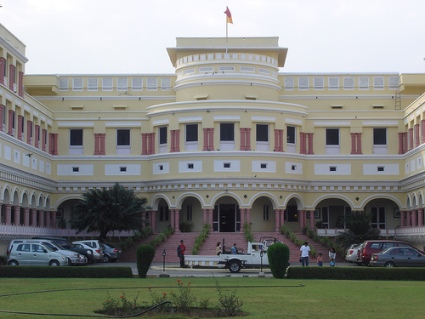
Sariska Palace, Alwar, Rajasthan

Sariska Palace, Alwar, Rajasthan

Location and Area

On the main highway to Jaipur 21 miles south of Alwar , lies the Sarisla National Park. Sariska is one of the few remaining pockets of forest in the Aravali range of hills and the area now covers 308 square miles is the core area.

Places to See in Sariska

The forest is mainly hilly with two extensive plateaus, Kanakwari and Kiraska and a wide Vally starting at the Baran Tal Gate and running south to Thana Gazi. At the northeastern corner, just off the road between Alwar and Sariska, is the Siliseth Lake where crocodiles are often seen. During the winter there are many migrant water birds also.

In spring the surrounding hillsides are filled with color as the flame of the forest and other flowering trees bloom. In the summer, the park is parched and brown but with the monsoon becomes lush and green. Among the undulating hills and wide valleys of Sariska is rare combination of natural history and archaeology.

At Sariska, opposite the Baran Tal Gate of reserve, is a large palace built in 1902 by Jai Singh of Alwar as a base for elaborate shoots. The palace is now a hotel. Sariska has a good networks of metaled roads From thee main arteries forest racks lead into side valleys. The forest department has provided many  artificial water holes on the roads which attract the animals  and makes wildlife observation from vehicles easy.

Famous Species in the Park

Because of the scarcity of water , viewing from hides overlooking waterholes at Salopka and Kalghati watch , photograph and study many of species. The forest contains sambar, nilgai, Chinkara, Chausigha and chital and predators include leopard, byena, jungle cat and wide boar apart from the tiger.

Photo Source: http://www.flickr.com/photos/trayser/61604730/

Tags: , , , , , , , , , , , , ,

Keoladeo Ghana National Park – A Bird Sanctuary in Bharatpur, Rajasthan

Keoladeo Ghana National Park, Bharatpur, Rajasthan

Keoladeo Ghana National Park, Bharatpur, Rajasthan

History

In the middle of the 18th century a small reservoir was created three miles to the southeast of the Bharatpur fort. The building of the Ajan Bund and the subsequent flooding of this natural depression has created during the subsequent 250 years one of the world’s most facinating and spectacular bird reserves. It is commonly referred to as the Bharatpur Bird Sanctuary

The range of flora in the park is extraordinary for such a small area. Dozens of grasses provide cover, nest material and food to a range of birds and mammals. Trees range from the throny acacia or babul which dominates much of the park to ber, khajur and khejari.

The lakes with their rich range of floating plants algae, reeds, flowering plants to millions of crustaceans, insects and fish in such enormous quantities that thousand of bird can depend on the area for raising their young and as a winter home.

Famous Bird and Animal Species in the Park

From August through November, thousand of indigenous water birds breed and raise their young here. Painted strocks, spoonbills, cormorants, three kinds of egret, open billed strocks, purple herons, night herons and sarus cranes are some of the famous species that can be found here. In early October , the first migrants arrive from the high plateaus of central Asia, Mongolia, and Siberia. The ducks, geese and waders arrive first. Raptors, including the steppe eagle, golden eagle, osprey and harrier follow.

Some 35-40 beautiful species feed on sedge tubers till early March when they return to Central Siberia. The forest also supports animals as nilgai, sambar, wild boar, feral cattle, civet, jacket and the rhesus macaque.

How to Reach Keoladeo Ghana National Park

A metaled road runs through the park from the north gate near the main Agra- jai[pur road. Vehicles are now allowed only as far as the tourist and forest lodges. A good network of raised paths along tree-lined bunds give good cover for bird watching and the visitor can walk through much of the park along the bunds. Visiting the park at any time of the year is a rewarding experience especially betwen October and March.

Tags: , , , , , , , , , , , , , , ,

Desert National Park – A Wildlife Sanctuary in Jaisalmer, Rajasthan

Location and Area

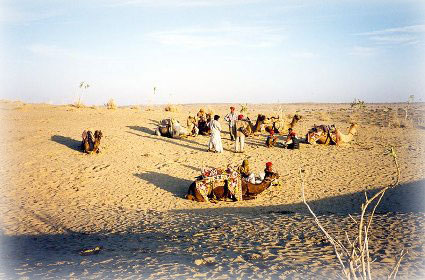
Twenty – eight miles to the southwest of Jaisalmer, The Desert National Park Covers 1220 sq miles of scrub, thorn forest, desert and dunes. The range  of both flora and fauna is, to many surprisingly large for a desert area. The unique ecosystem reflects the successful adaptation  by a range of mammals, birds, insects and flowers to a harsh climate with temperature ranges from below freezing to over 130 F.

The rolling landscape of a sand – dunes and scrub- covered hills is often breathtaking beautiful. The active dunes of Sam contrast with 180 million year old wood fossils at Akal 10 miles from jaisalmer which indicate that his now arid area must have once been hot, humid and luxuriant.

The scant vegetarian and the animals dependent on it are in turn dependent on it are in turn dependent on whatever water is available. Water holes are therefore the ideal sports from which to watch animals and birds.

Desert National Park, Jaisalmer, Rajasthan

Desert National Park, Jaisalmer, Rajasthan

Famous Species in the Park

The small active desert fox is an important predator keeping a natural check on the population of desert rats and gerbils.

The wolf is perhaps the main predator and the jackal is found on the periphery of the park.

Group of blackbuck, chinkara and nilgiri are found in the villages and now thrive in the park’s areas of sparse.

Some smaller mammals have adapted to the desert environment by burrowing  like the gerbil, by living crested porcupine.

The desert bird life is extensive , ranging from a large number of birds of pery to sandgrouse, doves, quails, partridges, shrikes, bee- eaters and desert coursers. The most remarkable bird of the desert is the Great Indian Bustard weighing up to 30 pound. The Houbara Busted also found in the park Of three resident species of snadgrouse, the Indian sandgrouse is impressive with its routine of arriving in small groups to join large turbulent flocks in the early morning to drink at the same place each day.

Habitual destruction and hunting this majestic bird but its population in the park alone is over 1000. Many insects and reptile species evident throughout the park form important links in the desert food chains. The 43 species of reptile include lizards , chameleons and snakes.

Photo Source: http://en.wikipedia.org/wiki/Image:D%C3%A9sert-du-Thar.jpg

Tags: , , , , , , , , , , , , , , , , , ,

Rajasthan Travel – A Recap of All The Blogs on Rajasthan

Hey All

I was really busy collating some great information on Rajasthan lately and would soon begin a series on sssshh!!

I thought we have travelled a lot in Rajasthan and now its time to just summarize what all we have already posted on this blog.

We started up with writing about Rajasthan, which included blog on terrain, flora, fauna and how the geography was setup  in Rajasthan. Then we mentioned about  how the real Rajasthan started in the pre historic days where we wrote about the glorious pasts of Rajputana dynasty, their kings and kingdoms.

We moved from there to Jewellery as we thought International Jewellery Show in Rajasthan is round the corner why not inform our traveler friends about how jewellery was worn in the historic days. We wrote on men’s jewellery, women jewelery, then jewellery to be worn on different parts of our body and different markets of jewellery in Rajasthan.

We got too much in the clothing and thought of moving into something Rajasthan was really associated with, so there came the Forts in Rajasthan. We wrote about as many as 25 different forts present in Rajasthan, detailing their architecture, location and the monuments which make them all the more famous.

As the traveler season was setting up, we started writing on the different adventure tourism in Rajasthan as water sports, para sailing, and the very famous camel safari, elephant safari. We also wrote a brief on wild life in Rajasthan and the birds in Rajasthan.

So this was all the recap I would like to brief you about. As I have already informed that we are bunch of guys passionate of our state Rajasthan, we would make sure that you my friend knows every bit of Rajasthan. Happy Reading!!

Tags: , , , , , , , , , ,

Trekking on Mountains in Rajasthan – An Adventure Travel

Trekking is one of the most famous adventure sports in Rajasthan. The mountain ranges of Rajasthan promise breathtaking and exciting trekking trips. The rugged beauty of these lofty mountains attracts travelers and tourists from all over the world.

Trekking in Rajasthan

Trekking on Sand Dunes in Rajasthan

Trekking on Sand Dunes in Rajasthan

Lying in the west of India, the topography of Rajasthan varies from sand-dunes of the desert to the lofty hill ranges of the Aravallis which makes Rajasthan a trekker’s paradise.

Trekking in Rajasthan is one way to have a great adventure holiday. The Rajasthan trekking referred below is in three very carefully chosen areas, as a Rajasthan trek is an enjoyable hike of its own kind. These regions offer excellent Rajasthan trekking value to exhilarate and give joy. You will be able to walk into Rajasthan’s few hills and visit some of Rajasthan’s far removed tribal folk. The areas are amidst and around the hills of Rajasthan, full of beauty and wild life.

Winter is the best time for trekking, though the monsoon months provide romantic, green getaways. It is best to trek in a small group, and carry only basic necessities, since provisions can be bought along the way, but do ensure a supply of bottled water. Trekkers can choose a camp in the open countryside, though there are likely to be quaint, personalized hotels available in most areas. Trekking can be along established routes, though a more exciting option may simply be to chart one’s own trails, moving practically as one likes. There is ample space for camping under starlit rights or in the Dak Bungalow and Forest Rest House depending on the tourists preference.

Trekking Places in Rajasthan

There are many beautiful meadows, dense forests,crystal lakes, waterfalls and rivulets meandering through the countryside. One of the oldest mountain ranges of the world, the Aravallis, extending from north-east to south-west have some beautiful forest areas. Mount Abu, about 1300 mts. Above sea level is an ideal locale.

Kumbhalgarh is another area in the Aravllis which is also good for trekking. Kumbhalgarh is just 90 kms from Udaipur off the Udiapur-Pali-Jodhpur road. Trek upto the historic Kumbhalgarh fort. There is also a wildlife sanctuary. The famous Jain temples of Ranakpur are close by too.

Trekking routes in Mount Abu, Kumbhalgarh and Rawali Tatgarh are not restricted to any particular area. The entire mountain system offers exciting trails which originate at starting points spread over the entire length and breadth of the Aravallis. One can trek from Abu road to Guru Shikhar( the highest peak of Aravalli), Thandi Beri to Kumbhalgarh fort or Ranakpur to Rawali Tatgarh.

Tags: , , , , , , , , , ,

The Fort of Mukundgarh – Jhunjhunu

The fort of Mukundgarh - Jhunjhunu

The fort of Mukundgarh - Jhunjhunu

About Mukundgarh

Mukandgarh is a city and a municipality in Jhunjhunu district in the Indian state of Rajasthan. It is part of Shekhawati region. It lies a few km from Nawalgarh.

Mukundgarh Fort
Mukungarh has a 300-year-old magnificent fort, which is now converted into a resort hotel, with all modern amenities.

There are havelis of Kanoria, Ganeriwal and Saraf, which are a fine example of fresco paintings.

Mukundgarh Fort is a heritage property, a grand construction and has amazing detailing of the famous Shekhawati frescoes on the walls. The hotel offers beautifully furnished rooms with a view of the fort’s courtyard or the green vegetation beyond.

The Ganeriwal Haveli Mukundgarh In Rajasthan India is stunning right from the intricately carved façade to courtyard walls; visitors will notice vibrant frescos and murals. Narrative murals depicting scenes from local legends, the life of Lord Krishna, etc. are to be frequently seen at the Ganeriwal Haveli Mukundgarh.

It has a few mosque and many temples. The iron scissors, textiles and brassware made here are of extremely good quality. Also worth a visit are Shiv Temple, Gopinath temple and Venugopal temple.

Chhatris at Mukundgarh, Jhunjhunu

Chhatris at Mukundgarh, Jhunjhunu

About Jhunjhunu

Jhunjhunu is very rich in presenting the glorious ancient monument as the Temples, Mosques, Forts, Palaces and Tombs.

Wells, Stepwells, Cenotaphs and Havelies of excellent fresco-paintings which speak with full throated ease about the glorious past of Jhunjhunu.

They are the master pieces of art and architecture, Shekhawati region offers many resorts of beauty to the tourist.

Tags: , , , , , , , , , , , ,

The Fort of Hanumangarh – Bhatner Fort

The fort of bhatner is situated at a distance of 144 miles in north- east of Bikaner on the northern extremity of Rajasthan. Traditions ascribe the laying of foundation of this fort by Changej Khan, but it is probable that Sardar Jajaluddin have built this fort. The area surrounding the fort which now forms an integral part of the Ganganagar District was an independent colony under the name of Bhattinagar.

This fort was regarded as one of the most important strongholds of the country. The fort had attained great historical celebrity from its position, being in the route of invasion from the central Asia to India. During the medieval time this great fort provided surest means of defense and proved as a strong bulwark against enemy attack.

Geography of Hanumangarh Fort

The massive and solid ramparts of the fort encloses an area of 52 bighs of land having gorgeous bastions at intervals.  Standing on moderate elevation the fort has rounded bastions in the embattled rampart walls and many imposing gates. The fort had ample storage of water collected in the 52 kunds within its four walls. This supply of rainy water lasted for complete one year for a large garrison.

Attractions and Monuments of Hanumangarh Fort

On gate of the fort belongs to the early period and looks very old. The other lofty gate was erected by Rao Manohar Kachhawa under orders of the Mughal ruler. The elegantly designed minarets of old times was replaced during renovation. The Jain ‘pasara’ is a building of old time in the fort. Three statues standing inside the fort also lay claim to antiquity each bearing an inscription.

The fort was famous in whole of country on account of its invincibility.  Varios clans such as Bhatti, Sohias, Chayab, Rathore possession over this fort which was regarded as the key to the desert land lying south of it, and the whole of northen Rajasthan. The heap of two great columns built of backed mud together with the life size statues are still visible in the fort. The mosque of Sherkhan, the Governer of the fort and nephew of Balvan also forms a part of numerous old structure in the fort.

Tags: , , , , , , , , , , , , ,

The Fort of Fatehpur

The fort of Fatehpur was a great stronghold of the Kayam Khanis who were originally the Chohans of Dadrewa. The fort was founded by Fatan Khan in 1451 A.D.

Geography of Fatehpur Fort

The site of the fort is surrounded by thick growth of trees. High sand dunes enveloped this place from all sides leaving no spacious passage through them. Thus protected by forest and sand dunes the fort was regarded as one of the most defensible fort of the desert area. The fort encloses a space of nearly 7000 feet in length and half of it in breadth.

A massive and gorgeous rampart wall with battlements encircles the fort having huge bastions at each corner. The thickness of the rampart wall is from 15 to 25 feet and the height nearly 20 to 50 feet. A solid deep ditch protected the fort from four sides leaving a gap of 20 feet between itself and rampart wall.

Attractions and Monuments in Fatehpur Fort

The first gate facing the south is of moderate size built in the usual way. Rampart wall spreads from this gate on two sides in a semi – circle. The other gate more massive and bigger facing the east.Through this gate the spacious enclosure of the palaces are erected. Towering over the rampart wall stands the famous palace of Telin. This palace is a beautiful piece of fusion of indo- Muslim art.

The Telin’s palace with its elagently carved projected balconies and short columns stands a monument to the earthy passion which devour the high and the low alike. At some distance from palace, the inner apartment for ladies are erected.

These structures are marked for their simplicity of design and exquisiteness of exudation. Projected  balconies in the side wall of palaces are still intact below which on the supporting stones floral designs are carved. The palaces are seemingly built of Khatu’s yellow stone that was regarded ideal for carving.

Some buildings lay buried in a half ruined condition. A modern looking small palace which stands in lose vicinity to the palaces was erected by the Rajpoots when they took possession of the fort.

Tags: , , , , , , , , ,