Posts Tagged folk dance of rajasthan

Holi Celebration in Rajasthan – Festival History and Folk Traditions

Holi, also called the Festival of Colours, is a popular Hindu festival celebrated in India.  ‘Holi’ falls on the full moon, in the month of Phalgun, which spans the end of February and the beginning of March on the calendar. This year(2010) Holi falls on 1st March.
History About Holi

The legend of King Hiranyakashipu is associated with the festival of Holi. This legend signifies the victory of good over evil, of devotion surpassing ambition.

The proud King was enraged by Prahlad’s (his son) disobedience and decided to punish him severely. He asked his sister Holika for help. It was believed that Holika was immune to fire and would never be burnt, so the King asked Holika to sit in the centre of a bonfire with Prahlad on her lap, so that the fire could devour him. The bonfire was lit, and young Prahlad sat in Holika’s lap, in its centre, praying to Lord Vishnu.

His devotion saved him, leaving him untouched by the flames, but Holika was burnt to ashes. To mark this legend, huge bonfires are lit on the eve of Holi.

Holi Celebration in Rajasthan

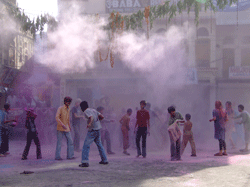
The colourful state of Rajasthan plays Holi much the same way as Mathura. A night before the full moon, crowds of people gather together and light huge bonfires to burn the residual dried leaves and twigs of the winter. People throw coloured water and powders (gulal and kumkum) at each other and make merry. Singing, dancing and the traditional beats of dhol add to the gaiety of the occasion.

Folk Traditions on Holy  in Rajasthan

Mali Holi :

The colourful festival of Holi is played in many different ways. The ‘mali’ or gardener community of Rajasthan has a unique style where the men colour the women with water and women retaliate by hitting them with sticks or long pieces of cloth

Gair at Godaji:

Men from 12 villages collects at Godaji village near Ajmer in Rajasthan to play gair a few days after holi. Each village brings his own drummer and gair troupes. The picturesque location for it is a valley surrounded by hills on all sides. Thousands of onlookers and close to hundred players make a wonderful sight and a fond memory.

Dolchi Holi at Bikaner:

In Bikaner district, members of  ‘Vyas’ communities have been celebrating Holi by throwing water at one another with force for the past more than 300 years. A specially designed vessel called ‘dolchi’ made from camel skin is used for the purpose. But the water is thrown only at the back of an individual.

We have SPECIAL OFFERS running for HOLI Celebration, Mail your tour inquiry to [email protected] or use our Rajasthan Tour Inquiry Form

Image Source – Wikipedia
Tags: , , , , , , , , ,

Kalbeliya Sapera Dancers – Famous Dancer Gulabo From Rajasthan

One of the most fascinating dance forms of Rajasthan, performed by the Kalbeliya snake-charmer’s community is Sapera Dance or you can say it Kalbeliya Dance.

Kalbeliya Dance Attractions

Kalbeliya Snake Dance of  Rajasthan

Kalbeliya Snake Dance of Rajasthan

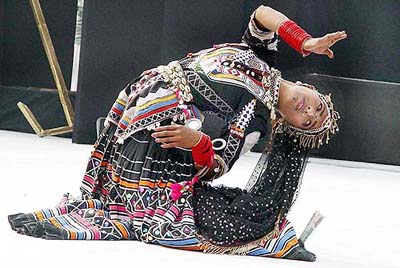
In this Dance sapera dancers wear long, black skirts embroidered with silver ribbons. As they spin in a circle, their body moves very acrobatically. It is impossible to believe that they are made of anything other than rubber.

Vigorous and Zestful Display of Rajasthani Art

Kalbeliya Dancers are attired in traditional black accompaniment of pungi, dufli and plaintive notes of the ‘been’ – the wooden instrument of the snake charmers.

Two or three women sing in a high-pitched, free flowing voice, while others join in the dance. The vigorous and zestful display of their perfect movements to the enchanting tune of musical instruments is a treat to the eyes.

The Kalbelia Dancers perform in the time of any big festival or any cultural dance program all across the world.

Gulabo  – Famous Kalbeliya Dancer

Gulabi Sapera is famous in india as “GULABO – THE KALBELIYA DANCER FROM RAJASTHAN”.

The Kalbeliya Dance became a Rajasthan exclusive because of Gulabo. She is part of the international culture and music circuit,  jazz bands and have been a performer in films too.

Check out some of the Videos on Dance Performance by Gulabo

Tags: , , , , , , , , , ,

Walar, Gawari – Famous Dances of Bhil and Garasia Tribal Communities in Rajasthan

Rajasthan’s population includes many tribals, who today constitute 12% of the population of Rajasthan, nearly double the national average. The main tribes of Rajasthan are the Bhils and the Minas and other smaller tribes include the Sahariyas, Garasias and the Gaduliya lohars.

Garasia Dance of Rajasthan

Garasia Dancers of Rajasthan

The tribes share common traits, which seem to link their past together but it is the differences in their costumes and jewellery, fair and festivals that set them apart from one another.

Music and Dances of Tribal Community

Music and dances are such an essential part of tribal life that professional musicians and dancers are redundant.

Walar Dance – Famous Dance Garasia Community

The ‘Garasia’ tribal inhabits the Abu Road and Pindwara tehsils of Sirohi districts and the neighboring territories of Kotra, gogunda and khewara tehsils of Udaipur districts, Bali and desuri of pali districts.

They have a folklore enriched with folktales, proverbs, riddles and folk music. Walar is an important dance of the Garasias which is a prototype of the Ghoomar dance.

Their dances are generally accompanied by the beats of the mandal, change and a variety of other musical instruments which provide a lively rhythm to their dance sequences.

Gawari Dance – Famous Dance of Bhil Commuinty

The most famous Bhil dance is the Gawari, a dance go from village to village for a month, during which the nine functionaries follow a stricts regimen.

The main character are Rai Buriya, the shiva, his two rais and Katkuria, the comic handman. Between the enactment of various episodes, the entire troupe dances around a central spot consecrated to a deity.

Tags: , , , , , , , , , ,

Fire Dance of Rajasthan – Extremely Difficult Dance to Perform

Folk Dance in Rajasthan is a multimedia canvas which portrays human emotion better than anything else and it is found in almost limitless variations. In some dance performances, whole communities participate; others are enacted only by men or by women.

Fire Dance of Rajasthan

Fire Dance of Rajasthan

Fire Dance of Rajasthan

Fire Dance an extremely difficult dance to perform which is done by the Banjara community of Rajasthan.

Performing fire dance or also known as “Agni Nach” is one of the most thrilling experience for must of the tourists, it is a pure devotional dance of Bikaner region, producing a mixed feeling of awe and reverence.

Mind blowing Skills of Fire Dancers

In this dance, dancers jump on to the fire with the accompaniment of drum beats. These drumbeats give a tempo for the performance. This music gradually rises & sets a dance in a fast tempo.

If there is a divine protection, than the Jasnaiths of Bikaner and Churu district must be responsible for cornering for the hazard of people. These dancers perform on a large bed of flaming coals, their steps moving to the beat of drums that rises in crescendo till the dancers appear to be in a near hypnotic state, most interestingly none of them get burns or blister on their feets. These devotional performances are usually to be seen late on a winter’s night.

Tags: , , , , , , , , ,

Bhavai Dance of Rajasthan – Exemplary Skill To Balancing Acts With Dance.

Rajasthan has a very rich and varied cultural heritage. When it comes to art, Rajasthan has everything in abundance – be it folk dances, drama, music,  handicraft. As far as Rajasthani dances are concerned, they are not only spectacular but also very colorful.

Bhavai Dance  – Traditional Folk Dance of Rajasthan

bhavai-2

Bhawai or Bhavai is the traditional folk dance of Rajasthan and is one of the nail biting, suspenseful dances of the state.

Performed with great skill, it consists of veiled women dancers balancing up to seven or nine brass pitchers as they dance nimbly, pirouetting, and then swaying with the soles of their feet perched on top of a glass, or on the edge of a sword.

Balancing Precision of Rajasthani Dancers

The womenfolk of these tribes are used to such balancing precision due to their endeavor in the parched desert areas.

A number of such urns and pots are easily carried across a distance in this fashion by the Rajasthani women who transport water from the wells to their homes.

The accompaniment to the dance is provided by the male performers singing melodious songs and playing a number of musical instruments, which include pakhwaja, dholak, jhanjhar, sarangi and harmonium.

The History of  Bhavai Dance

Believed to have originated in the neighboring state of Gujarat, Bhawai was soon picked up and adapted by the local tribal men and women who imparted the dance a distinctive Rajasthani essence.

This genre of dance is performed by the female performers belonging to the Jat, Bhil, Raigar, Meena, Kumhar and Kalbelia communities of Rajasthan.

Tags: , , , , , , , , , ,

Kucchhi Ghodi Dance of Rajasthan – Where The Dancer Rides a Dummy Mare

Entertainers and performers have been an integral part of the culture of Rajasthan since ages. The royal families of Rajasthan have always been known to invite these performers at their courts. These talented artists traveled through the state, skillfully reciting and staging tales of both passion and valor.

Kucchhi Ghodi -  Famous Traditional Dance of Rajasthan

Kucchhi Ghodi Dance of Rajasthan

Kucchhi Ghodi Dance of Rajasthan

Kucchhi Ghodi is one of the most famous dance forms and an exemplary folk art form. It brings rustic charms of rural life in Rajasthan.

Kucchhi Ghodi also known as Dummy Horse Dance derives its name from the word Ghodi meaning ‘mare’. It is a sprightly dance where the men and women costumes resembling horses and pretend to be cavalry soldiers or horsed bandits.

Attractive Colorful Horse Dummy Attires

The costume from hip down is a wooden horse and the footwork is coordinated with the beats of the drums and flutes to resemble the trotting movements of the horse rider looks very attractive and certainly eye catching in every sense.

The fast paced dance generates a high spirited verve in the audience and the mock fights are egged on with cheers. The costumes of the performers are flashy, colorful and pleasing.

Mock-Fights and Brandishing of Swords

This vigorous dance, uses mock-fights and the brandishing of swords, nimble sidestepping and pirouetting to the music of fifes and drums.  In this dance, performers play the part of the brave bandits of the Shekhawati region of Rajasthan known as the Bavaria.

The dacoits of this region were the local Robin Hoods; they stole from the rich, oppressive landlords and distributed among the poor and the needy. Though denounced as criminals, these bandits were highly regarded by the common folk.

Tags: , , , , , , , , , , , , ,

Terah Talli Dance of Rajasthan – Most Devotional Form of Dance

Music and dance reverberates across the long golden stretches of sand of Rajasthan. It is also infused in the blood of its hearty people.

People in Rajasthan know how to celebrate life and this very fact is possibly reflected in its many folk song and dance forms of Rajasthan, which exude an innate earthy charm. Each region of Rajasthan flavors its own form of dance styles and performers to the state.

There are dances that follow a lineage of age old traditions, adhere to religious significance, display their daring attitude as well as complimenting various fairs and festivals and  Terah Talli is one of famous traditional dance of rajasthan

About Terah Talli Dance

Terah Taali Dance of Rajasthan

Terah Taali Dance of Rajasthan

Terah Taali dance is one of the most devotional form of dance, practiced by  Kamad community of Pokhran and Deedwana, to honour their folk hero, Baba Ramdeo.

It is termed as `Terahtali’ as  thirteen manjeeras ( little brass disc) which is used to create rhythm on which, the dancers move.

Most Fascinating Dance of Rajasthan

The dance began with the women, who sit on the floor and her body parts are tied with the manjeeras. These are tied on their wrists, elbows, waists, arms and a pair in their hands as well.

Their Mail accompanists sing and play the tandoora while the women create a strong rhythm with the manjeeras.

Balancing Act Spellbound the Viewers

She perform various arabesques, while doing this, and for more special effects and for capturing the public gaze, at times the women also balance numerous pots on their hands and hold a sword in their mouth. Their balancing act spellbinds the viewers.

Tags: , , , , , , , , , ,

Ghoomar – Famous Social Folk Dance of Rajasthan

Dance is an expression of human emotion as much as music and it is found in almost limitless.

The desert region of Rajasthan is famous for the color and vibrancy of its folk forms. Each region in Rajasthan has its own form of folk dance. Tribal areas have maintained these folk dances which are often performed for special occasions.

Ghoomar – Rajasthan’s Popular Folk Dance

Ghoomar - Popular Rajasthani Folk Dance

Ghoomar - Popular Rajasthani Folk Dance

The famous Ghoomar,  Rajasthan’s popular folk dance gets its name from ‘ghoomna’, the pirouetting which displays the spectacular colors of the flowing ‘ghaghara’, the long skirt of the Rajasthani women.

There is an amazing grace as the skirt flair slowly while the women folk twirl in circles, their faces covered with the help of the veil. Their measured steps and various graceful inclinations of body, beating palms or snapping fingers at particular cadences while singing some lilting songs.

Women from all age group participate in Ghoomer dance. At times this dance may continue for hours or the whole night. While dancing, the dancers move in a circular direction with clockwise and anti-clockwise steps. The performers sometimes unite their hands and even clap their hand in-between.

The performers move gracefully on the beat of the songs in synchronizing steps. As the tempo of the dance increases, the dancers swirl fleetly.

Traditional Ritual in Rajasthani People

The Ghoomar dance is the characteristic dance of the Bhils and a community dance of the Rajputs, also which only the women traditionally perform. It is considered as one of the traditional rituals among this community. So, on the occasion of marriage, a bride is expected to dance Ghoomar after being welcomed at her husband’s home.

Suggestions

If you happen to travel Rajasthan in festival season, don’t miss a ghoomar recital at the City Palace in Jaipur.

Tags: , , , , , , , , , , ,