Posts Tagged wildlife santuary

Sariska Tiger Reserve | Palace in Alwar, Rajasthan

Sariska Palace, Alwar, Rajasthan

Sariska Palace, Alwar, Rajasthan

Location and Area

On the main highway to Jaipur 21 miles south of Alwar , lies the Sarisla National Park. Sariska is one of the few remaining pockets of forest in the Aravali range of hills and the area now covers 308 square miles is the core area.

Places to See in Sariska

The forest is mainly hilly with two extensive plateaus, Kanakwari and Kiraska and a wide Vally starting at the Baran Tal Gate and running south to Thana Gazi. At the northeastern corner, just off the road between Alwar and Sariska, is the Siliseth Lake where crocodiles are often seen. During the winter there are many migrant water birds also.

In spring the surrounding hillsides are filled with color as the flame of the forest and other flowering trees bloom. In the summer, the park is parched and brown but with the monsoon becomes lush and green. Among the undulating hills and wide valleys of Sariska is rare combination of natural history and archaeology.

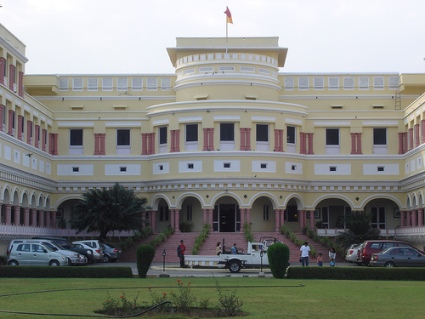
At Sariska, opposite the Baran Tal Gate of reserve, is a large palace built in 1902 by Jai Singh of Alwar as a base for elaborate shoots. The palace is now a hotel. Sariska has a good networks of metaled roads From thee main arteries forest racks lead into side valleys. The forest department has provided many  artificial water holes on the roads which attract the animals  and makes wildlife observation from vehicles easy.

Famous Species in the Park

Because of the scarcity of water , viewing from hides overlooking waterholes at Salopka and Kalghati watch , photograph and study many of species. The forest contains sambar, nilgai, Chinkara, Chausigha and chital and predators include leopard, byena, jungle cat and wide boar apart from the tiger.

Photo Source: http://www.flickr.com/photos/trayser/61604730/

Tags: , , , , , , , , , , , , ,

Keoladeo Ghana National Park – A Bird Sanctuary in Bharatpur, Rajasthan

Keoladeo Ghana National Park, Bharatpur, Rajasthan

Keoladeo Ghana National Park, Bharatpur, Rajasthan

History

In the middle of the 18th century a small reservoir was created three miles to the southeast of the Bharatpur fort. The building of the Ajan Bund and the subsequent flooding of this natural depression has created during the subsequent 250 years one of the world’s most facinating and spectacular bird reserves. It is commonly referred to as the Bharatpur Bird Sanctuary

The range of flora in the park is extraordinary for such a small area. Dozens of grasses provide cover, nest material and food to a range of birds and mammals. Trees range from the throny acacia or babul which dominates much of the park to ber, khajur and khejari.

The lakes with their rich range of floating plants algae, reeds, flowering plants to millions of crustaceans, insects and fish in such enormous quantities that thousand of bird can depend on the area for raising their young and as a winter home.

Famous Bird and Animal Species in the Park

From August through November, thousand of indigenous water birds breed and raise their young here. Painted strocks, spoonbills, cormorants, three kinds of egret, open billed strocks, purple herons, night herons and sarus cranes are some of the famous species that can be found here. In early October , the first migrants arrive from the high plateaus of central Asia, Mongolia, and Siberia. The ducks, geese and waders arrive first. Raptors, including the steppe eagle, golden eagle, osprey and harrier follow.

Some 35-40 beautiful species feed on sedge tubers till early March when they return to Central Siberia. The forest also supports animals as nilgai, sambar, wild boar, feral cattle, civet, jacket and the rhesus macaque.

How to Reach Keoladeo Ghana National Park

A metaled road runs through the park from the north gate near the main Agra- jai[pur road. Vehicles are now allowed only as far as the tourist and forest lodges. A good network of raised paths along tree-lined bunds give good cover for bird watching and the visitor can walk through much of the park along the bunds. Visiting the park at any time of the year is a rewarding experience especially betwen October and March.

Tags: , , , , , , , , , , , , , , ,

Desert National Park – A Wildlife Sanctuary in Jaisalmer, Rajasthan

Location and Area

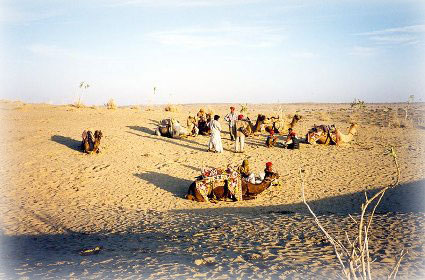
Twenty – eight miles to the southwest of Jaisalmer, The Desert National Park Covers 1220 sq miles of scrub, thorn forest, desert and dunes. The range  of both flora and fauna is, to many surprisingly large for a desert area. The unique ecosystem reflects the successful adaptation  by a range of mammals, birds, insects and flowers to a harsh climate with temperature ranges from below freezing to over 130 F.

The rolling landscape of a sand – dunes and scrub- covered hills is often breathtaking beautiful. The active dunes of Sam contrast with 180 million year old wood fossils at Akal 10 miles from jaisalmer which indicate that his now arid area must have once been hot, humid and luxuriant.

The scant vegetarian and the animals dependent on it are in turn dependent on it are in turn dependent on whatever water is available. Water holes are therefore the ideal sports from which to watch animals and birds.

Desert National Park, Jaisalmer, Rajasthan

Desert National Park, Jaisalmer, Rajasthan

Famous Species in the Park

The small active desert fox is an important predator keeping a natural check on the population of desert rats and gerbils.

The wolf is perhaps the main predator and the jackal is found on the periphery of the park.

Group of blackbuck, chinkara and nilgiri are found in the villages and now thrive in the park’s areas of sparse.

Some smaller mammals have adapted to the desert environment by burrowing  like the gerbil, by living crested porcupine.

The desert bird life is extensive , ranging from a large number of birds of pery to sandgrouse, doves, quails, partridges, shrikes, bee- eaters and desert coursers. The most remarkable bird of the desert is the Great Indian Bustard weighing up to 30 pound. The Houbara Busted also found in the park Of three resident species of snadgrouse, the Indian sandgrouse is impressive with its routine of arriving in small groups to join large turbulent flocks in the early morning to drink at the same place each day.

Habitual destruction and hunting this majestic bird but its population in the park alone is over 1000. Many insects and reptile species evident throughout the park form important links in the desert food chains. The 43 species of reptile include lizards , chameleons and snakes.

Photo Source: http://en.wikipedia.org/wiki/Image:D%C3%A9sert-du-Thar.jpg

Tags: , , , , , , , , , , , , , , , , , ,