Posts Tagged bikaner tour

Mohta and Mava Patti Havelis in Bikaner – Symbol of Wealth, Architectural Design and Colours

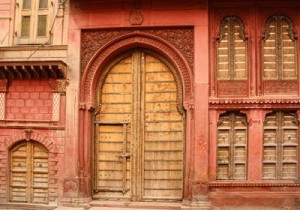
Located at Banthia chowk Bikaner, Mohta havelies cluster is well known among tourist for their architectural design. Havelies in mava patti and kothari Mohalla also deserve special mention.
Bikaner Havelis

Haveils – Symbol of Wealth and Status

These havelies were the residence of wealthy merchants who had a fancy for beauty and art. Nine months in a year they lived in far off lands to earn money and then came to this city to rest and enjoy and build havelies and live in them, show their wealth and status, their love, fascination for architecture and colours.

Haveli’s Attractions

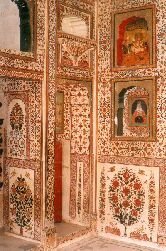
In every haveli the dankhana is the most adored room and most prestigious too. The guests are received here. It is significant to mention that every haveli has two dankhanas. One for men and another for women and these are situated at the main entrance of the haveli. A dankhana generally has six pillars. Every pillar has a glass mirror with gold frame engrossed with flowers mostly roses.

Every diwankhana has paintings of gods and goddesses. Apart from religious deities and flowers, the leaves fruits like apples, grapes, oranges and bananas also find place in most havelies in Bikaner.
Tags: , , , , , , , ,

Kothari Havelis in Bikaner – Old Marwari Architecture and Art Collection

Bhairondan Kothari Haveli

Located at Bikaner, Bhairondan Kothari is one of the most beautiful havelis in Rajasthan.  The European influence is obvious in the architecture of this haveli.

haveli6

It imparts fascinating beauty to its floors. Marble tiles are studded in the floors of the haveli. The beautiful poem of Kamayani is also written on these stone.

Poonam Chand Kothari Haveli

Another remarkable haveli near this haveli is the haveli of Poonam Chand Kothari. Its exterior carvings are as beautiful as those of Daga havelies.

Havelis Attractions

These both havelis contains excellent art collection. Remarkable carved sandalwood doors and windows, airy sandstones balconies, balu strades and lacy jharokhas (latticed stone window) enclose an old fashioned world where the generation overlap.

Tags: , , , , , , ,

Fort Museum in Junagarh, Bikaner – Fine Collections of Antique Weapons

Junagarh Museum - Antique Collection of Weaponry

Junagarh Museum - Antique Collection of Weaponry

The famous “Fort Museum” in Junagarh, Bikaner surely gives its visitors a great chance to peep into the history.  Ganga Mahal, the imposing hall of Junagarh Fort now houses the Museum.

Huge Collections of Rajput Weaponry

You will be amazed to see a huge collection of diabolic pistols, swords and weapons, each an exquisite work of art in this museum. Swords with ivory and crystal handles, some in shape of lions and other shapes can also be seen here. Cold and silver howdahs, jhulas, kis and a first world war biplane are also on view.

You should also visit the Diwan-i-khas, which houses an intricately carved mammoth sandalwood throne placed along with three massive arches.

Other important objects include a pair of drums belonging to jamblioji, the saint who predicted the foundation of the dynasty by Rao Bika for 450 years. Photographs and items of personal use by Maharaja Ganga Singh and miniatures are also on view.

 Junagarh fort was built under the supervision of Karan Chand the prime minister of Raja Rai Singhji, the sixth ruler of Bikaner, who ruled from 1571 to 1611 AD. Construction of the walls and associated moat commenced in 1588 and were completed in 1593.

Other Attractions of Junagarh Fort

Junagarh Fort, Bikaner

Junagarh Fort, Bikaner

The Junagarh fort in Bikaner encloses a number of temples, pavilions and 37 palaces. Each of the palaces are a work of art with carved windows, kiosk, hanging balconies and towers.

The Moon palace, the Flower palace, the Karan Mahal, and the Anup Mahal are all unique in their own rights. Each of the rooms of the Junagarh fort including the Rang Mahal, Ganga Niwas, Vijai Mahal, and Dungar Niwas are now living museums of the glorious past and grandeur.

Amongst the temples, Har Mandir is the most important and beautiful. The royal family worshipped their gods and goddesses here for long.

Tags: , , , , , , , , , , , , ,

Bhaneshwar and Sandheswar Temples – Bikaner Rajasthan

Bhaneshwar & Sandheswar Temples in Bikaner

The oldest existing structures in Bikaner are the 14th century Jain Temples built by two merchant brothers. Sandeshwar and Bhandeshwar. Neither had a son to carry on the family name, so each built a temple.  The temples are dedicated to 23rd Jain teerthankar, Parsvanathji.

Unlike other Jain shrines across the country, these temples are adorned with brightly coloured wall paintings. These temple maintains the piety of the traditional Jain place of of worship despite their radical appearance.

Architecture

The Bhandeshwar temple-rich in mirror work and the Sandeshwar temple-stylized enamel and gold leaf wall paintings.

The Bhandeshwar Temple is decorated with gold-leaf work, beautiful sculpted pillars, and floral designs. This temple is carved in red sand stone and white marble – its famous for carvings, wall paintings, structural beauty and artistically designed statues. The rich mirror work, decor and frescoes of Bhandashah and their gold leaf paintings are noteworthy.

What’s Unique about these temples

According to myth, it is said, that 40, 000 kg of ghee had been used in laying the foundation of these temple.

It is carved in red sand stone and white marble, famous for its carvings, paintings, structural beauty and artistically designed statues.

Tags: , , , , , , , , , , ,

Lalgarh Palace Bikaner, Rajasthan

Lalgarh Palace, Bikaner, Rajasthan

Lalgarh Palace, Bikaner, Rajasthan

Located a little outside the city, this magnificent palace was designed  by Sir Switon Jocob for Maharaja Ganga Singh almost 90 years ago.

An interesting combination of European luxury and oriental fantasy,  the palace has a billiards room, a library, a cards room and a smoking room. Belgian chandeliers, cut – glass ornaments, oil paintings and lamps, all adding to its charm.

Important sights are Laxmi vilas and Shiv Vilas . Major part of the palace has now been turned into a luxury hotel and the peacock , pigeons and parrots provide many hours of relaxion.

A Museum in Lalgarh displaying an excellent collection of old photographs and hunting trophies. The museum is called the Shri Sadul Museum, which houses an immense range of photographs, and an incredible collection of the former maharaja’s personal possessions. The Sri Sadul Museum takes up the entire ground floor. There’s also an exhibition of Indian wildlife, stuffed and photographed.

The Anup Sanskrit Library household at Lalgarh  has one of the world’s largest collection and excellent collection of manuscripts, coins, stone and marble statues from almost every period of Indian history. specially intersting are the rare miniature sandalwood items fitted into almond and walnut shells.

This rambling palace is built round an open garden court overlooked by ladies apartment windows.  Local craftsman balconies, pillers with such skill that solid sandstone took on the look of delicate lace.

A cloister of peacock arches surround the stately marble countryed of the Laxmi Bilas. The marble corridors connecting whole palace are lined with hunting trophies and bronzes. There are so many things which cant be described here in the blog about the Lalgarh Palace. A visit is must especially if you are touring Bikaner area.

Tags: , , , , , , , , , , , , , ,

The Fort of Bikaner – Junagarh Fort

The Fort Of Bikaner - Junagarh Fort

The Fort Of Bikaner - Junagarh Fort

Raja Rai Singh (1571-1611), one of Akbar’s most outstanding generals, built the impregnable unconquered Fort of Bikaner or more famously known as Junagarh Fort. Bikaner city was founded by Rao Bika, the son of Rao Jodha of Jodhpur, a prince of Rathore clan.

Location and Architecture of Junagarh Fort

The fort forms a quadrangle with the perimeter of 986 m. A thirty feet deep moat surrounds the outer part with the embattaled walls, hanging over it.  There are two entrances, facing east is the main entrance known as ‘Karan Pol’. Next to it, is the sun gate or ‘Suraj Pol’. The gate is built in the usual style, two great semi-circled towers joined by a portal under which a gate is opened.

Black stone slabs in the walls here eulogize Raisingh’s deeds of valour and gives a chronological record of the clan of the Rathors. Two life size statues of elephants flank the facade of the entrance.

Attractions and Monuments

The fort contains many palaces, pavilion and temples made of red sandstone and marble with kiosks and balconies. Inside the fort there are attractive palace section with beautiful paintings and carvings in courtyards, towers, balconies and windows. There is also a Rajput weapon collection, an important part of the museum located in the fort.

The palace of Raja Raisingh is the oldest building in the fort together with the Suraj Pol, the Karkhana Kallan, the Har Mandir, the Choubara, Hazari Darwaja and Rani Niwas. Most of them are built in yellow sand stones. Anoop Mahal, Rang Mahal, Anand Vijay Mahal with thin columns, arches and screens are noteworthy elegant monuments.

A board court decorated by exquisite panels intervenes between Anoop Mahal and Rai Niwas. This hall which served as Diwan-e-Khas has vermilion and gold gesso decoration, glass mosaics, lace-like mirror and stucco work. Phool Mahal is also nicely decorated with glass work.

Gang Niwas is a spacious durbar hall with a carved wood ceiling. The interior of this hall is decorated with richly carved red sand stone.

The fort journey has been really breath taking, though everything good comes to an end. Dont worry, we are not ending our forts series here, we have some unknown forts in Rajasthan which are equally important from Rajputana history. In the coming days, we will present some forts from Rajasthan which might  not have been accounted in the books of history but have always stood between the Rajasthan Dynasty Kings and their Enemies protecting the rulers from the outsiders.

Tags: , , , , , , , , , , , ,