Posts Tagged pilgrimage in rajasthan

Annual 797th Urs Commences in Dargah Shariff, Ajmer – One Of The Most Sacred Muslim Shrines in India

Annual Urs Festival Commences at Dargah Shariff, Ajmer, Rajasthan

Annual Urs Festival Commences at Dargah Shariff, Ajmer, Rajasthan

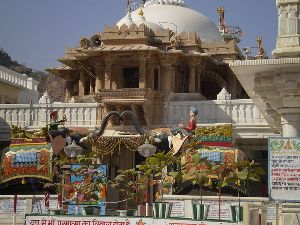
Dargah Sharif’ or ‘Holy Dargah’ is one of the most sacred Muslim shrines in india.

Venerated by both Hindus and Muslims, it is the tomb of Khwaja Moin-ud-din Chisti, a Sufi saint who came from Persia and devoted his life to the service and upliftment of the poor and downtrodden.

Annual 797th Urs commences with Flag Hoisting at Buland Darwaza

The 797th Urs of the 12th century Sufi saint, Khwaja Moinuddin Chishti, commenced on Friday with the flag-hosting ceremony at the Buland Darwaza.

About 200 people from the Gori family of Bhilwara, headed by Fakrudin Gori, came to Ajmer. As per age-old traditions, the family is authorized to hoist the Urs flag.

As the festival  began, the devotees, who have come from various parts of the country, wished each other Urs Mubarak’ and celebrated the occasion. They shopped at the dargah bazaar, which has been decorated extensively for the festival.

Different Activities During Urs

On the appearance of the moon for the month of Rajab, there comes a change in daily routine which is generally held at the Holy Shrine.

The main entrance of the Holy Tomb which in ordinary days is closed at night, is kept open through out the day and night (barring for 2 or 3 hours at night) during the six days of Urs.

All other daily and weekly programmes are suspended and few functions and ceremonies commence from that night.

Qul Day – Final Day of Urs

Qul ceremony takes place on the last day of Urs which is also the sixth day of the month of Rajab. This is considered to be a very important day. After the morning prayer, people start gathering the Holy Tomb.

The activities include recital of Quran, Darood, Shijra-e-Chishtia and other verses. People also tie small turbans on each other’s head and pray for the benefit of the people, for peace, prosperity and happiness.
Tags: , , , , , , , , , , , , ,

Bhaneshwar and Sandheswar Temples – Bikaner Rajasthan

Bhaneshwar & Sandheswar Temples in Bikaner

The oldest existing structures in Bikaner are the 14th century Jain Temples built by two merchant brothers. Sandeshwar and Bhandeshwar. Neither had a son to carry on the family name, so each built a temple.  The temples are dedicated to 23rd Jain teerthankar, Parsvanathji.

Unlike other Jain shrines across the country, these temples are adorned with brightly coloured wall paintings. These temple maintains the piety of the traditional Jain place of of worship despite their radical appearance.

Architecture

The Bhandeshwar temple-rich in mirror work and the Sandeshwar temple-stylized enamel and gold leaf wall paintings.

The Bhandeshwar Temple is decorated with gold-leaf work, beautiful sculpted pillars, and floral designs. This temple is carved in red sand stone and white marble – its famous for carvings, wall paintings, structural beauty and artistically designed statues. The rich mirror work, decor and frescoes of Bhandashah and their gold leaf paintings are noteworthy.

What’s Unique about these temples

According to myth, it is said, that 40, 000 kg of ghee had been used in laying the foundation of these temple.

It is carved in red sand stone and white marble, famous for its carvings, paintings, structural beauty and artistically designed statues.

Tags: , , , , , , , , , , ,

Parshavanath Temple, Nakoda – Barmer , Rajasthan

Parshavanath Temple, Nakoda, Rajasthan

Parshavanath Temple, Nakoda, Rajasthan

About Parshavanath Temple – Location

Nakoda pilgrimage, built in the desert land of Rajasthan, bears a gloriously pious dignity.  Dedicated to Jain Tirthankara Shri Parshavanath, this temple was built by the Mandlik family in 1458-59 A.D.

It is situated on a beautiful hill as high as 1500ft on the road from Jodhpur to Barmer.

The Temple at Nakoda is one among the main Jain tirth centres in India.  Because of the importance given to Adhisthayak in India, tirth is always full of pilgrims.

Architecture of the Parshavanath Temple

This is the tallest of all temples having three storeyes. The outer walls of the sanctum have beautiful sculptures in gray sandstone showing Dikpals, Vidhyadevis, Yakshinis and Shalabhanjikas. These beautiful sculptures are frequently compared to the ones in Khajuraho and Konark temples.

There is an image of the Jain saint (tirthankara) Parshvanath in black stone and the ancient idol of Shri Parshwanath Bhagwan is very attractive and full of magical powers.  It is said that 2300 years ago two brothers namely Veersen & Nakorsen has built up this city and the temples.

The main temple consists of the teerth Adhiraj idol along with the idols of Shri Adinath Bhagwan & Shri Shantinath Bhagwan in other temples in its campus. Shri Nakoda Parshwanath Bhagwan in Padmasan mudra, 58 cm in height, is an amazing blueish colour statue. The life history of Shri Shantnath Bhagwan is displayed in form of idols and placed on the walls of Shri Shantinath Bhagwan temple.

Other Jain Temples in Nakoda

There are several small and big temples near the main temple. On the right side of the temple a magnificent idol of ‘Sanwalia’ (dusky) Parshwanath is installed. In this very chamber the idols of Mother Saraswati, Dada Jindutt Suri, Acharya Kirtiratna Suri et al are also installed. There is the magnificent temple of Lord Aadinath at the rear of the main temple. The outer arch of this temple is very artistic.

The miraculous deity of this place, Shree Bhairavji Maharaj was ceremoniously installed here in samvat 1511 by Acharya Kirtiratna Suri. This pilgrimage continuously prospered after the installation of Nakoda Bhairav. The miracles of this place found abode in the minds of the people. The devotees poured in from various places of the country and abroad.

Image Source: Wikipedia

Tags: , , , , , , , , , ,