Posts Tagged museums in udaipur

Maharaja Sawai Mansingh Museum in Jaipur – Excellent Combination of the Mughal and Rajasthani Style of Architecture

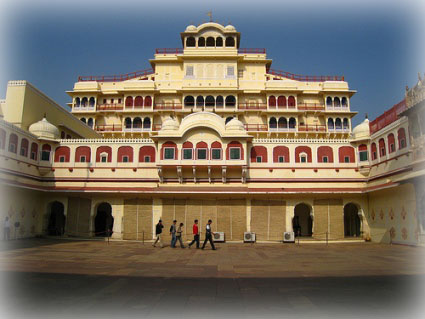
Maharaja Sawai Mansingh Museum in City Palace Jaipur

Maharaja Sawai Mansingh Museum in City Palace Jaipur

Maharaja Sawai Mansingh Museum is located within the City Palace complex and nestled amidst old buildings, temples and the palace quarters. This museum was founded in 1959.

The exhibits consist of the ancestral collections built up by the successive rulers of  Jaipur. A small selection of paintings, manuscripts, maps, carpets, textiles, costumes, weapons and armours was displayed in the Pothikhana (library) and the Silehkhana or armoury (both of these in their present form, were established in 1952) of the palace.

Different Exhibits of Museum

Sileh Khana Armoury Gallery

One of the richest collection of the Indian weapons in the world is displayed here in a most artistic and symbolic manner.

Amongst the important weapons displayed here are: Heavy Khanda(sword) probably of Raja Man Singh I, swords of Mughal emperors Jehangir and Shahjahan, night polo ball, Sawai Jai Singh’s pistol and matchlock guns of 17th century probably cast at Jaigarh fort, Amber.

Rekhla(miniature cannon), Jujarba(Camel Guns), lances, Katars(daggers), bows and arrows, Maces and Gunpowder flasks, Howdahs(Elephants seat used during hunting) are also on display.

Art Gallery

The Art Gallery is housed in the Diwan-i-Aam constructed for holding important State functions.

A variety of objects-miniature paintings, illustrated manuscripts, decorated bookcovers, palm-leaf and Sanchipat manuscripts, old printed books, gigantic Mughal carpets, gold and silver Takhis-Rawan (movable throne), covered Ambabadis and open Howdahs, palanquins and carriages with richly embroidered velvet coverings are displayed in this gallery.

There are rare bird and animal studies by Ustad Mansur, court scenes, battle scenes, portraits and mythological paintings by famous Mughal painters can be shown here.

Textile Gallery

The royal costumes are displayed in the first floor of the Mubarak Mahal. The enormous Atamsukh, a beautiful rich Banaras brocade quilted cloak of Maharaja Sawai Madho Singh I is an object of amazement.

Baggi Khana

There are many Chariots and Coaches of or say baggies are displayed. The most interesting amongst these are the 19th century European cab adapted to Indian conditions and the Thakurji ka Rath.

The two silver jars  the largest silver object in the world, as per entry in the Guinness Book of World record made in The City Palace in 1896 weighing 345 kg each and taken to England by Maharaja Sawai Madho Singh II filed with Ganges water in 1902 can be seen in Sarvatobhadra.

Tags: , , , , , , , , , , , ,

City Palace Museum in Udaipur – Perfect Destination To Trace The Relics of The Bygone Era

The huge City Palace, towering over the Pichola Lake, is the largest palace  in Rajasthan. Construction of this palace was started by Maharana Udai Singh, the city’s founder. The main part of the palace is now preserved as a museum with a large and varied collection.

City Palace Museum Also Known as  ” Pratap Museum”

City Palace Museum in Udaipur

City Palace Museum in Udaipur

Located inside the complex of City Palace, this museum is also known as Pratap Museum. The name Pratap Museum was given because the museum holds dear the armor of the brave and gallant Maharana Pratap and also possesses the drums and bugles of the great ruler Rana Sanga.

As you enter the City Palace, the straight way will take you to this museum of artifacts. The entrance gate of the City Museum is known as Ganesh Deori, which means “Door of Lord Ganesha”.

It was established in 1890 and is one of the earliest museums of the Rajasthan.

Priceless Possessions of Detailed Rajasthani Art

The museum has priceless possessions of the former age like antique paintings of Mewar and detailed Rajasthani art. You will find an unusual assortment of coins, sculptures, inscriptions, portraits and wall-paintings here.

It also displays the turban of Khurram, who was popularly known as Emperor ShahJahan. The turban still depicts the friendship that survived between ShahJahan and Maharana Khazan Singh.

Different Sections of The Museum

The museum is divided into several pavilions and halls. Every pavilion has a distinct theme of its own.

  • Mor Chowk and Manka Mahal

The museum includes the Mor Chowk with its beautiful peacocks in mosaics. The Manka (Ruby) Mahal has glass and porcelain figures while Krishna Vilas has a remarkable collection of miniatures.

  • Bari Mahal,  Zenana Mahal and Moti Mahal

In the Bari Mahal, there is a fine central garden. Zenana Mahal is the main place where you can see arms and armor, paintings and photographs, majestic insignia, processional accouterments and various other objects that reveals the royal legacy and conventions of the Maharanas of Mewar and Sisodia..

The Moti Mahal has beautiful mirror work and the Chini Mahal is covered in ornamental tiles.

The city museum opens between 10-4:30 and is closed on fridays and gazetted holidays.

Tags: , , , , , , , , , , , , ,