Archive for category rajasthan history

Man Singh Ji Saheb – Brave King of Jaipur

Raja Man Singh was son of  Bhagwant Das, king of Amber (Jaipur), and Rani Bhagawati ji Sahiba. He was born on December 21, 1550. After his father’s death he received the title of Mansab (a commander of 5000 soldiers) in 1589. In 1605 he became mansabdar of 7000 soldiers in the Mughal force of Akbar.

His devotion for Akbar

Akbar sent Man Singh to Rana Pratap, the grandson of Rana Sanga, to convince him to accept Mughal sovereignty. Rana Pratap invited Man Singh for a dinner but when he came to know that Man Singh wanted, him to accept Mughal sovereignty, he refused to come in dinner and sent his son Amar Singh for dinner.

Man Singh took it as insult of his king Akbar and left the dinner. After that he was appointed to lead the Mughal army against Maharana Pratap and he fought many wars against him for Akbar.

Haldighati war

In 3 April 1576 Man Singh fought a gruesome war with Maharana Pratap. In this war Man Singh’s “Mahout” and Rana Pratap’s famous horse “Chetak” were killed. The war was won by Mughal forces but one of Rana Pratap’s nobleman Jhala Man Singh saved him by putting the helmet of Rana Pratap and pretending to be Rana Pratap, was killed by Mughal forces.

Man Singh and Mughal’s Governor in Kabul

In 1580 when Akbar started to expend his empire in Kabul, his troops were hesitating to cross the Indus River. At that time the brave Raja Man Singh was able to cross that first and the remaining troops followed him. In 1582 Kabul was annexed by the Mughal Empire and Man Singh was appointed Governor.

Cultural Achievements

Raja Man Singh built a seven store temple of Lord Krishna in Virndavan as he was a devotee of Lord Krishna. Later three stores were demolished by Aurangzeb and four stores are still present in Vrindavan. Raja Man Singh devoted himself for Mughal Empire. He was  a trusted general of Mughal army that Akbar called him “Farzand” (son) and also included him in his Navaratnas.

Tags: , , , , , , , , , , , , , ,

Maharana Sangram Singh – Bravest Ruler of Mewar

Personal Profile

Maharana Sangram Singh, popularly known as Rana Sanga was born on April 12, 1484. His father, Rajmal, was the ruler of Mewar and a scion of the Sisodia clan of Suryavanshi Rajputs at that time. Rana had two brothers named as Prithviraj and Jaimal.

Childhood

In childhood, an astrologer told his brothers that Rana Sanga would become the next king of Mewar. Because of this the brothers got jealous and after a bad quarrel with his brothers, Rana left the fort.

Rana Sanga spent that period working as a shepherd in a remote village in Aravalli hills and got married the daughter of the village’s chief.

During that period, his two brothers died fighting violently for the throne and Rana returned to court. In 1509 he became the Ruler of Mewar after his father’s death.

Maharana Sangram Singh fought 18 battles with mughal army and sustained eighty-four wounds on his body during these battles. Even he lost his one arm and got crippled in one leg, he was a magnanimous winner. He won a lot of fights against rulers of Delhi, Gujarat and Malwa.

Battle of Khanwa

On March 17, 1526 Maharana Sangram Singh launched a furious attack on the center and right wing of Mughal force. In this battle the brave Rajput soldiers showed the great heroism by stuffing themselves in the mouth of Mughal army’s cannons to stop the throw.  Rana Sanga sustained many wounds but he fought on. The battle’s carried on for many days but result was not decided. Maharana Sangram Singh chose to retreat from the battle.

Achievements

Maharana Sangram Singh established Mewar as the foremost Rajput state and united the Rajput states to put up a strong defense against the Mughal armies. He brought Mewar to the heights of success and governed a large part of Rajputana. Rana Sanga is the finest example of the Kshatriya king as the Protector, the Suryavanshi king whose focus was on consolidating and developing his state.

Tags: , , , , , , , , , , , , , , ,

Raja Amar Singh Rathore – A Brave Commander in Mughal Emperor Shah Jahan’s army

Raja Amar Singh Rajthore was a great king of a Rajput family. He was a commander in Mughal emperor Shah Jahan’s army whose saga of bravery is sung in Ajmer in Rajasthan.

His Exile

Raja Amar Singh Rathore was the eldest son of Maharaja and as per the tradition he was the obvious heir to the throne but because of his snide behavior towards the new mughal spouse, he was ordered to remain in exile rest of his life. He left Rajasthan and went to Agra where Mughal emperor Shah Jahan offered him a significant post in his army. After joining Mughal army he fought many battles and because of his brave performances he got steadily promotions in Shahjahan’s administration.

Amar Singh’s conflict with Shah Jahan

In mughal court the other fellow courtiers got jealous with Amar Singh as he was getting more value by their king. One day when Amar Singh went for a hunt without taking permission of Shah Jahan, the other fellow courtiers told that it is insult of Mughal emperor. Amar Singh challenged that he is not answerable to any one and killed a courtiers because of his misbehavior. Shah Jahan was shocked by this act and entire mughal army was trying to capture Raja Amar Singh. But the brave king jumped from Agra fort with his horse and escaped his life.

Bravery at its best

Shah Jahan gave the responsibility to Amar Singh’s brother in law to kill him. His brother-in-law invited Amar Singh for a compromise in mughal court and there he was killed by them. Shahjahan kept Amar Singh Rathore’s body was thrown on a tower challenging the Rajputs to take it away.

Brave wife of brave king

Amar Singh’s wife wanted to be sati with her husband so she went to Ballu (a friend of Amar Singh) to take his body. Ballu took the bravest Rajput soldiers with him and killed the mughal soldiers coming in his way. The brave Ballu jumped from Agra fort with Amar Singh’s body and delivered it to his wife. After this brave act Ballu got injured badly and died.

Tags: , , , , , , , , , , , , , ,

Rawal Ratan Singh – Brave Rajput King

Rawal Ratan Singh ruled over Mewar from 1302 to 1303 AD. He belonged to Guhilote clan and was the 42th ruler of Mewar. He ascended the gaddi of Mewar in 1302 after his father was Samar Singh and got the responsibility to maintain the warlike tradition of his house by defending the fort of Chittor against Alauddin khilji’s force.

A Justified Ruler

Rawal Ratan Singh was a brave and warrior noble king, Apart from being a loving husband and justified ruler; he was very fond of arts and patron. He got married with famous beauty, Rani Padmini. The lady was so much beautiful that Alauddin khilji attacked several time to get a glimpse of her. Every time Rawal Rantan Singh defeated him and save the glory of Rajputs.

Alauddin khilji wanted to get Rani Padmini so he told Rawal Rantan Singh that he considers Rani Padmini as a sister and wanted to see her. Ratan Singh allowed him and invited him to his fort. But Rani Padmini allowed Khilji to see her reflection in the water. While returning Alauddin was accompanied by Rawal Ratan Singh for some way and he unfaithfully seized him and took him as a prisoner into his camp. Khilji sent a message to the fort that Rawal Ratan Singh can only be freed by exchanging Rani Padmini as his mistress.

Rani Padmini’s brave act

Rani Padmini made a plan and sent a message to Alauddin khilji that she wanted to meet him. She went to his tent with 700 servants in palkis and told Alauddin that no one will peek inside those palkis. She put another condition that she will meet her husband Rawal Ratan Singh first. Alauddin allowed her to do so but he did not know that the palki’s were containing thousands of soldiers with swords. By performing such a brave act Rani Padmini save her husband Rawal Ratan Singh.

Gallant Leadership of Ratan Singh

In 1303 AD, Alauddin khilji attacked,Chittor with a huge force but every time the brave king, Rawal Rantan Singh defeated him every time. After seven months Rana has to submit and got death while fighting against Sultans, on 26 august 1303AD. He defended his fort till the last breath. Rani Padmini and other ladies, who lost their husbands in war, performed Jauhar.

Tags: , , , , , , , ,

Maharaja Sawai Mansingh Museum in Jaipur – Excellent Combination of the Mughal and Rajasthani Style of Architecture

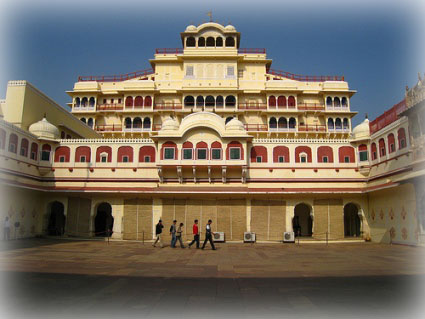
Maharaja Sawai Mansingh Museum in City Palace Jaipur

Maharaja Sawai Mansingh Museum in City Palace Jaipur

Maharaja Sawai Mansingh Museum is located within the City Palace complex and nestled amidst old buildings, temples and the palace quarters. This museum was founded in 1959.

The exhibits consist of the ancestral collections built up by the successive rulers of  Jaipur. A small selection of paintings, manuscripts, maps, carpets, textiles, costumes, weapons and armours was displayed in the Pothikhana (library) and the Silehkhana or armoury (both of these in their present form, were established in 1952) of the palace.

Different Exhibits of Museum

Sileh Khana Armoury Gallery

One of the richest collection of the Indian weapons in the world is displayed here in a most artistic and symbolic manner.

Amongst the important weapons displayed here are: Heavy Khanda(sword) probably of Raja Man Singh I, swords of Mughal emperors Jehangir and Shahjahan, night polo ball, Sawai Jai Singh’s pistol and matchlock guns of 17th century probably cast at Jaigarh fort, Amber.

Rekhla(miniature cannon), Jujarba(Camel Guns), lances, Katars(daggers), bows and arrows, Maces and Gunpowder flasks, Howdahs(Elephants seat used during hunting) are also on display.

Art Gallery

The Art Gallery is housed in the Diwan-i-Aam constructed for holding important State functions.

A variety of objects-miniature paintings, illustrated manuscripts, decorated bookcovers, palm-leaf and Sanchipat manuscripts, old printed books, gigantic Mughal carpets, gold and silver Takhis-Rawan (movable throne), covered Ambabadis and open Howdahs, palanquins and carriages with richly embroidered velvet coverings are displayed in this gallery.

There are rare bird and animal studies by Ustad Mansur, court scenes, battle scenes, portraits and mythological paintings by famous Mughal painters can be shown here.

Textile Gallery

The royal costumes are displayed in the first floor of the Mubarak Mahal. The enormous Atamsukh, a beautiful rich Banaras brocade quilted cloak of Maharaja Sawai Madho Singh I is an object of amazement.

Baggi Khana

There are many Chariots and Coaches of or say baggies are displayed. The most interesting amongst these are the 19th century European cab adapted to Indian conditions and the Thakurji ka Rath.

The two silver jars  the largest silver object in the world, as per entry in the Guinness Book of World record made in The City Palace in 1896 weighing 345 kg each and taken to England by Maharaja Sawai Madho Singh II filed with Ganges water in 1902 can be seen in Sarvatobhadra.

Tags: , , , , , , , , , , , ,

Arabic And Persian Research Institute in Tonk , Rajasthan – Rare Collection of Arabic and Persian Artifacts and Books

Tonk is a small town, located at a distance of 96 kms from Jaipur. It is popular among tourists for its magnificent mosques, mansions and havelis.

In the ancient times, Tonk was ruled by the tribes of ‘Pathans’ from Afghanistan. The old town boasts of the architecture prevalent in Mughal era.

Arabic and Persian Research Institute

Tonk Institute of Arabic and Persian

Tonk Arabic and Persian Research Institute

There is a research institute in Tonk which has a library of Arabic, Persian and Urdu manuscripts and a rare collection of literature from India, Iran &  Arabian countries.

Famous Art Gallery of Institute

An Art Gallery was started in 2002, in which many artistic presentations of different classes are displayed. The beautiful calligraphic designs enchant the comers. Namda calligraphy, art of charming photography, collection of postage stamps etc. capture the eye of the visitors.

Calligraphy on human hair, pulse, rice and sesame alongwith the lines written inside the transparent glass bottles has made the Institute a centre of attraction of tourists and visitors.

Display Hall

A separate hall with the name of “Display Hall” is also maintained for displaying some of the important and historical manuscripts enriched with some of the seal impressions of kings, princesses etc. and notes in their own hand writings with signatures etc., which are preserved under the intact show-cases covered with a transparent glass for the common people.

The various manuscripts on different subjects written with golden frontispiece and floral designs drawn with the ink made of precious stones are a centre of attraction not only for the scholars but also for the general public.

Tags: , , , , , , , , , , , , , ,

Government Museum in Ajmer – Narrates The Rich History of Rajasthan

Ajmer Government Museum is one of the most attractive propositions of the city of Ajmer. It narrates the rich history of the place and preserves it with utmost care is the.

The museum is situated in the heart of the old city and is close to the railway station. The museum is housed in the beautiful fort and palace built by the Mughal Emperor Akbar in 1570. After British occupation in 1818 and during the first war of Independence in 1857 it was used as the Rajputana Arsenal by the British which gave the name magazine.

Government Museum in Ajmer

Government Museum in Ajmer

Museum Also Known as “Rajputan Museum”

The Museum was started in 1908 by the Government of India with the object of collecting and preserving many unique objects of antiquarian interest which were lying uncared for and scattered all over Rajasthan.

The rajputan Museum as it is significantly named, has in its galleries important exhibits from almost all the princely States. There is a library attached to his museum which cotains rare books and important historical publications.

Different Sections of Ajmer Government Museum

The Museum houses a rich collection of artifacts ranging from the Guptas to the late medieval period.

  • Home of Excellent Collection of Sculptures

An excellant collection of sculptures from the Chauhan centre of Baghera (10th 12th A.D.) are also preserved here as also a fine collection of Jain Tirthankara images and rare images of Gomukha Yaksha and Saraswati which are on display in the Jain gallery of this Museum.

  • Epigraphical Section

The Epigraphical section has around hundered exhibits, many of whom are still in excellent condition.Of special interest are the Brahmi inscription from Barli (2nd century B.C.), the Jodhpur Inscription of Bauka, the Pratapgarh Inscription of Mahendrapala II and the Nagari. Samoli Slab Inscription of Siladitya.

A number of important copper plate grants add to the value of rich collection of museum. They include: two copper plates of Maharaj Sarvanatha of Uchchhakapla (437-38 A.D. refferring to Kalachuri Era), Daulatpura copper plate of the Pratihara king Bhojadeva and, the copper plate of Rana Kumbha of Mewar.

  • Rich Collection of Paintings and Coins

The museum also has a rich collection of paintings and coins. From the early punch marked coins to those of the Gupta coins, once can trace the developments of coins in India. Coins of the Rajputs kings are also preserved here.

Tags: , , , , , , , , , , ,

Rajasthan – Location, Geography, Formation, Flora, Fauna and Districts

Rajasthan is a place of camels plodding over soft sand dunes. It is a state of men with proud mustaches and women with twinkling anklets in colorful swirling ghagras.

The landscape is dotted with island palaces shimmering on idyllic blue lakes, temples and fortresses situated on hilltops of the rugged and rocky Aravalli, exquisite palaces built during the reign of some of its many erstwhile Rajput dynasties and well laid out gardens with pavilions and kiosks, all of which add to the splendor and whimsical charm of this majestic land.

When was Rajasthan Born?

Rajasthan was formed on 30 March 1949, when all the princely states ruled by Rajputs(formerly known as Rajputana) merged into the Dominion of India.

The only difference between erstwhile Rajputana and Rajasthan is that certain portions of what had been British India, in the former province of Ajmer-Merwara, were included. Portions lying geographically outside of Rajputana such as the Sumel-Tappa area were given to Madhya Pradesh.


Geography of Rajasthan

Rajasthan, lying between 23º30′ and 30º11′ North latitudes and 69º 29′ and 78 º 17′ East longitudes at the northwestern part, is one of the biggest state of India.

Rajasthan is edged by Pakistan in the west and northwest, the states of Punjab, Uttar Pradesh and Haryana in the north and northeast, the state of Madhya Pradesh lies in the southeast and Gujrat in the southwest. The Tropic of Cancer passes across the southern point of the state in the Banswara district.

Rajasthan Covers 11% of the Total Geographical Area of India

Rajasthan has an area of 3, 42,239sq.km comprising of the 11% of the total geographical area of India. The extensive topography includes rocky terrain, rolling sand dunes, wetlands, barren tracts or land filled with thorny scrubs, river-drained plains, plateaus, ravines and wooded regions .


Main features of Geography of Rajasthan – Thar desert and Aravali range.

A massive portion of the state of Rajasthan( about 70% of total landmass) is desiccated and encloses the biggest Indian desert – the Thar Desert known as the ‘Maru-kantar’. This desert region embraces the districts of Jaisalmer, Barmer, Bikaner and Jodhpur.

The Aravali mountain ranges that run from Delhi to Gujarat cut through the State almost vertically. The Aravali ranges divide the State through south-east and north-west. The north-west region covering two-thirds of the state consist mostly of a series of sand dunes. Bikaner, Jaisalmer, Jodhpur and part of the Jhunjhunu districts form” part of this region. The eastern region has large fertile tracts.

District Map of Rajasthan - Source: Wikimedia

District Map of Rajasthan - Source: Wikimedia

Districts in Rajasthan

Rajasthan is divided into 33 districts and seven divisions:

  • Ajmer Division: Ajmer, Bhilwara, Nagaur, Tonk.
  • Bharatpur Division: Bharatpur, Dholpur, Karauli, Sawai Madhopur
  • Bikaner Division: Bikaner, Churu, Ganganagar, Hanumangarh
  • Jaipur Division: Jaipur, Alwar, Jhunjhunu, Sikar, Dausa
  • Jodhpur Division: Barmer, Jaisalmer, Jalore, Jodhpur District, Pali, Sirohi
  • Kota Division: Baran, Bundi, Jhalawar, Kota
  • Udaipur Division: Banswara District, Chittorgarh District, Pratapgarh    District, Dungarpur District, Udaipur, Rajsamand

Tags: , , , , , , , , , , ,

Rajasthan State – Elections 2008 At A Glance | Who Will Win ? My View

Rajasthan State was formed as ‘Rajputana’ by merging many big and small feudral kingdoms such as Jaipur, Jodhpur, Bikaner, Kota, Jhalawar, Matsya, Jaisalmer etc. Later on Siroi and Ajmer areas merged to form a larger state of Rajasthan.

After Independence, the state has undergone radical progress and development from various aspects as literacy rate, agriculture, power reforms and health factor. In last 60 years, the three chief ministers who really mattered for the developmental acceleration of the state are “Mr Mohan Lal Sukhadia”, “Mr Bhairon Singh Shekhawat” and “Madam Vasundra Raje”.

Though other chief ministers namely Mr Hiralal Shastri, Mr Venkatchari, Mr Teeka Ram Paliwal, Mr JaiNarayan Vyas, Mr Barkatulla Khan, Mr Shiv Charan Mathur, Mr Haridev Joshi, Mr Jagannath Pahadia, Mr Heera Lal Devpura and Mr Ashok Gehlot have also played a considerable part in bringing about changes in Rajasthan.

Rajasthan state had water scarcity as the major problem in the past and even today. The actual farmers were not the majority land owners as the kingdom owners owned the majority of land. It was Mr ML Sukhadia, who by his smart legislation helped the farmers gain ownership of the land they were cultivating. The state has shown rapid growth in transportation, irrigation and power sector.

By and large people were oppressed because of the very nature of feudalism in the past. Democracy was really never a part of their life till initial years of independence. The state of Rajasthan has mainly two national parties contesting the elections since a long time, they are Congress and Bhartiya Janta Party. Though small parties as Ram Rajya Parishad, Swatantra Party, Janta Dal and Lok Dal emerged, but could not win the voters confidence for staying long.

In last 60 years, the progress is commandable, still the state governments have failed to provide safe drinking water to the inhabitants.

In the last elections, Madam Vasundra Raje emerged victorious with comfortable majority against the popular belief of Congress doing a second term under the leadership of Mr Ashok Gehlot. Infact, parties loose and parties win, but they hardly analyze why after remaining in power for 5 yrs, do poorly inspite of claiming all things in their favor. The congress lost in the last elections may be due to lack of communication between the general public and the bureaucrats.

I would continue from here tomorrow and will analyze and present my views on various elections agendas for state assembly this year around.

Tags: , , , , , , , ,