Posts Tagged rajasthan festivals

Gangaur 2010 – an Important and Colorful Festival for Women of Rajasthan

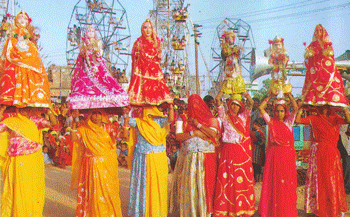
Gangaur is one of the most important festivals in Rajasthan.
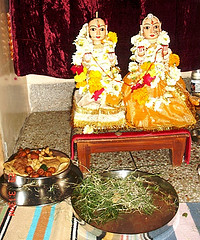
gangaur-rajasthan

It is celebrated in the month of chaitra (March-April), the first month of the Hindu calendar. This month marks the end of winter and the onset of spring. This year Gangaur festival will be on 18 March, 2010.

Honoring the Goddess Gauri

Gangaur is all about honoring the goddess Gauri. A manifestation of Parvati (Lord Shiva’s wife), she represents purity and austerity.

The word ‘Gangaur’ is literally made up of two words, ‘Gana’ and ‘Gaur’. ‘Gana’ is synonymous with Lord Shiva and ‘Gaur’ which stands for Gauri or Parvati.

It’s believed that Parvati returned to her parental home during Gangaur, to bless her friends with marital bliss. On the last day, Parvait was given a grand farewell by her loved ones and Lord Shiva arrived to escort her home.

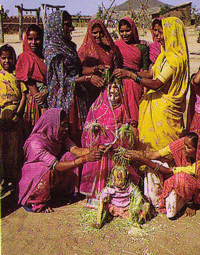
The festival is predominantly for women, who dress up in their best clothes pray for a husband of their choice, or the welfare of their husbands.

Traditional Procession of Gangaur in Jaipur

A traditional procession of Gangaur commences form the Zanani- Deodhi of the City Palace, passing through Tripolia Bazaar, Chhoti Chaupar, Gangauri Bazaar, Chaugan stadium and finally converges near the Talkatora. The procession is headed by a colorful pageantry of elephants, old palanquins, chariots, bullock carts and performance folk artistes.

In Jaipur, a sweet dish called ghewar is popularly distributed amongst friends and relatives.

Boat procession in Udaipur

In Udaipur, there’s a boat procession on Lake Pichola, and fireworks. Women balance several brass pitchers on their heads add to the interest. The occasion ends with fireworks on the banks of the lake.
Tags: , , , , , , , , , , ,

Kite Festival in Jaipur, Rajasthan – Colorful Sky Filled with Kites and Joy

The Rajasthanis love to celebrate and happily participate in elaborate rituals with gay abandon. There are numerous fairs and festivals  in Rajasthan and there is always something assigned to each month of the year. Kite Festival is certainly one of them, which is enjoyed by people of all age-groups in Jaipur Rajasthan.

Makar Sankranti or 14th January is celebrated with a lot of fanfare and color every year. Family and friends gather in throngs on top of roofs, celebrating Makar Sankranti and unleashing their kites on the sky and add a romantic touch to ethereal pink Jaipur monuments.

Kite Festival in Jaipur

The three-day festival will start tomorrow (14th Jan) with an inauguration at the Polo Ground, which is the venue for  kite flying and fighting for the three days of the festival.

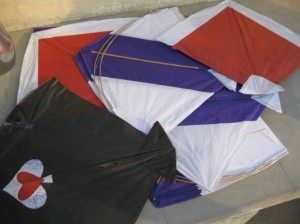
The festival includes two kinds of celebrations. A massive extravaganza follows with Air Force helicopters releasing kites from the sky, and hundreds of school children releasing balloons. Kites that look like wasps, exquisite stained glass windows, graceful mythical birds soar in the sky and the sky shimmers with magic.

Significance of Makar Sankranti

Makar Sankranti is a festival of the Sun god. The sun goes for Uttarayan popularly called Utran from this day according to Indian astrology.

Makar is a Rashi (Zodiac) and Sankranti means transition. Hence, Makar Sankranti means transition of the Sun from the zodiac Makar. People goes to Ganga Sagar near Kolkata, West Bengal, to take a bath on Makar Sankranti.

Large number of people go to Ganga Sagar to take a bath on this day. Kumbh Mela in Haridwar is also beginning from Makar Sankranti.

Tags: , , , , , , , ,

Sri Krishna Janmashtami – Lets Celebrate The Birth of Hindu God Krishna

Shri Krishna Janmashtami - Celebrating The Birth of God

Shri Krishna Janmashtami - Celebrating The Birth of God

Janmashtami celebrates the birth of one of the most famous Gods of Hindu religion, Bhagwan Krishna, on the eighth day (Ashtami) in the month of Sravana or Savana. Lord Sri Krishna was born on the ‘Rohini’ nakshatram (star).

It is generally celebrated in the month of August-September according to the Christian Calendar. According to the legends, Sri Krishna was born on a dark, stormy and windy night to end the rule and atrocities of his maternal uncle, Kansa.

How is Janmashtami Celebrated?

Special pujas are held in Sri Krishna Temples around the world. Special poojas and rituals are also held at midnight – the time of Krishna’s birth. Processions with tabloids depicting various episodes from the life of Shri Krishna enacted by children are a major highlight of the festival.

At every temple of lord krishna, this Janmashtami festival is celebrated with a great charm, people dance with bhajans, they offer pooja to lord. Social groups organise competitions like “Matki fod Pratiyogita”. Women and little children goes to lord Krishna’s temple for darshan and pooja.

People put Lord Krishna’s idol in the decorated little cradles. Singing bhajans like jai Kanhaiya Lal Ki, Madan Gopal ki, devotees offer prayers to Lord Krishna. They also chant mantras of Lord Krishna.

Devotees observe fast for the entire day and it is broken after the birth of the Lord at midnight. Only milk and milk products are preferred by them, as these were the favorites of Lord Krishna.

Sri Krishna Janmashtami is known by various names such as Krishnashtami, Gokulashtami, Saatam Aatham, Ashtami Rohini, Sri Krishna Jayanti and Sree Jayanthi.

Janmashtami Celebrated for over Two Days

Krishna Janmashtami is celebrated for over two days as “Rohini” nakshatra and Ashtami may not fall on the same day. The first day known as Krishnashtami, as the birth of Bhagwan Krishna falls on the eighth day after Raksha Bandhan, which generally falls in the month of August. The second day is known as Kalashtami.

Famous Krishna Temples in India

Some of the famous Krishna Temples in India where Krishna Janmashtami is celebrated with much importance includes Krishna Janma Bhoomi Mandir in Mathura, Banke Bihari Mandir in Vrindavan, Srinath Temple in Rajasthan, Dwarkadhish Temple in Gujarat, Guruvayur Temple in Kerala, Udupi Sri Krishna Temple in Karnataka, and ISKCON Temple in Tirupati.

Tags: , , , , , , , , , ,

Mewar (Gangaur) Festival – The Festival of Spring – Celebrated by Married Woman in Rajasthan

Woman Celebrating Gangaur ( Mewar) Festival in Rajasthan

Woman Celebrating Gangaur ( Mewar) Festival in Rajasthan

Mewar Festival is the festival of Spring or Rituraj, king of seasons.

Udaipur with its tranquil lakes, surrounded by the breathtaking Aravali hills, narrow meandering roads and lanes, is the ideal location for the festival.

About Gangaur Festival

Celebrated during the Hindu month of Chaitra(March- April), the two day festivity is marked by a joyous mood which pervades the environs of Udaipur. This festival is dedicated to Gauri, a manifestation of Goddess Parvati, the consort of Lord Shiva and Symbol of conjugal bliss and marital happiness.

During the Festival the delightful culture of Rajasthan comes into full view through songs, dances, devotional music and fireworks displays.

In days of yore, men had to go out for a long periods of time to attend to their professions and Gangaur was an occassion when married women were re- united with their husbands.

Thousands of people from the countryside comes to take part in the procession of Gangaur, which goes around from village to village. Tribal men and women get the opportunity to meet and interact freely and during this time, they select partners and elope to marry. An unusual, romantic custom sanctioned by the community, it helps many young people find their life partner.

Women make various ornaments out of gram flour for decorating the images of Isar and Gauri. The ornaments are so beautiful that they seem to made out of Gold itself and impart a life like appearance to the images.

Evenings are coloured with Gangaur processions . Groups of Women balancing several brass pitchers on their heads add to the gaiety of the Udaipur celebrations.

Rajasthani Women Decorating and Celebrating Mewar Festival

Rajasthani Women Decorating and Celebrating Mewar Festival

Highlights of Gangaur Festival

The highlight of the festival is a grand festival is a grand boat procession which starts from famous Lake Palace and ends at the Gangaur Ghat of Lake Pichola. A ‘Shobha Yatra‘ is taken out through the main street of the city  elephants, camels, horses and folk artists participate in this rally.

A fancy dress compedition for foreign couples dressed in Rajasthani costumes is a big draw for participants and spectators alike.

There are many sweets and dishes prepared during the festival which tastes amazing, and the best part is the Shobha Yatra which is great to watch and even involve.

Tags: , , , , , , , , , , , , , , ,

Desert Festival in Jaisalmer Rajasthan – Enjoy Camel Races, Polo, Rajasthani Dance and Traditions

A Lady Performing On a Camel Back during Desert Festival in Jaisalmer, Rajasthan

A Lady Performing On a Camel Back during Desert Festival in Jaisalmer, Rajasthan

The Desert Festival – An extravaganza of color, music and festivity is held in the desert city Jaisalmer in Rajasthan. Its held  every year during the Hindu month of Magh (February).

The city of Jaisalmer parades its charms to the world every year during this desert festival. It has, on display, some of the most fondly preserved components of Rajasthan’s rich culture. Added to this is the warmth and cheerfulness of the people of the Rajasthan who welcomes the tourist from the depth of their heart.

Sight Seeing at Desert Festival

There are various moments you can capture during this festival. You can film the site of a turbaned , handsome man with long mustaches and the flowing beard set in the backdrop of the romantic golden sands. You can watch spirited villagers participating in the festival, attired in their colorful best, astride their gaily caparisoned camels.

Swing to the high pitched musical instruments which echo in the vast expanse of the tranquil desert. You can even  tap your feet to peppy folk music.

The spectacular gair dancers of barmer and the fire dancers are great crowed puller too.

Tourists, Locals and Polo Sportperson playing Polo on Camels in Desert Festival in Jaisalmer, Rajasthan

Tourists, Locals and Polo Sportperson playing Polo on Camels in Desert Festival in Jaisalmer, Rajasthan

Special Event During Desert Festival  – Mustache Competition

The excitement heightens as the Maru-Shri(Mr. Desert) competition and the turban-tying contest get underway.

In the turban-tying competition and tug of war, Indian competes with Foreigners which adds to the fun of the festival.

An interesting event of the festival is ‘Mustache Mustache‘. In this competition the prize is given to the man with the longest mustache.

An interesting point to keep in mind is that in the Rajasthan turning mustaches upwards signifies honor while dropping mustache indicate surrender.

There are other events as Camel race and polo on camel back to keep the tourists and locals involved in this festival.

The grand finale is a trip to the Sam sand dunes on the moonlight night, where one can also experience the pleasure of a camel ride. The folk artistes performing on the sand dunes take the enhancement to its crescendo.

Arrangement for Staying in Desert Festival

The Rajasthan Tourism Development Corporation  puts up a Tourist Village during the fair. Loading and boarding facilities are provides in deluxe tents and huts.

There are also large number of luxury, moderate and budget hotels for a comfortable stay.

There are many other things you might be looking to get help while you plan visiting Rajasthan. Check our tourist help on Rajasthan.

Tags: , , , , , , , , , , , , , , ,