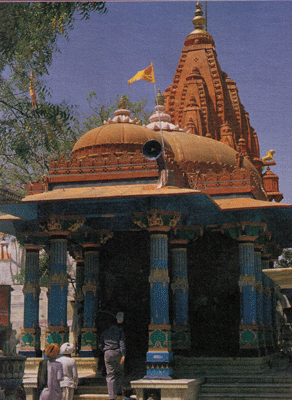
At a Distance of about 185 km from Udaipur, Mount Abu is famous for its temple, the most noteworthy being the Dilwara Temples. The land of meditating rishi munis. Mount Abu was said to be home to 33 crore God and Goddesses and an important Vaishnava and Shaivite pilgrim center up to the 11 century. Today it is recognized the world over its magnificent temples.
About Delwara Jain Temples
The hill retreat is a divine splendor in stone when in Mount Abu all roads will lead you to the Dilwara Jain Temples made out of intricately carved marble dedicated to the Jain Tirthankaras. The five legendary marble temples are considered to be one of the most beautiful Jain Pilgrimage sites in the world. The temples reside amidst mesmerizing surroundings of mango trees and wooded hills. A high wall, shimmering luminous in the sunlight, shrouds the temples complex.

An Exterior View of Dilwara Jain Temples, Mount Abu, Rajasthan
Vimal Vashi Temple
The main temple known as the Vimal Vasahi is the oldest one dedicated to the first Jain Tirthankara, Adinath. This exquisite piece of architecture was constructed by Vimal Shah, completed in AD 1031. Vimal Shah was a minister and commander-in-chief during the reign of Maharaja Bhimdev I.
The temple stands in an open courtyard embellished by 52 cells. Each cell house a beautiful statue of a Trithankara. Elaborately columned porticoes surround the main shrine. But there are several other temples around, each a masterpiece of perfection in art.
Temple History
Archaeological evidence suggests that Mahavira himself visited the site, making it especially sacred to the Jains as a tirtha or a pilgrimage. As a temple city it ranked among the finest ones.
The legend goes that exhausted by the massacres he had indulged in, Vimal Shah prayed fervently to goddess Ambika Devi. When she appeared he made two requests, one to get a son and the other the blessing to construct a temple on Mount Abu.
When the goddess commanded Vimal Shah to ask for one favor only, he talked over with his wife and decided that he would rather build the temple, since a son could never immortalize his deeds.