Archive for category about rajasthan

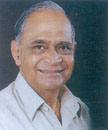
Sardar Har Lal Singh – Freedom Fighter from Rajasthan

Sardar_Harlal_SinghPersonal Profile

Sardar Har Lal Singh was a freedom fighter cum social worker who played a leading role in the Shekhawati farmers’ movement for abolition of the Jagirdari system. He was born in 1901 in the family of Chaudhary Daluram at village Mandasi of Jhunjhunu district in Rajasthan. His father died at the age of 13 years. His entire family was committed to the freedom movement.

His Contribution in Jagirdari Abolition Movement

Sardar Har Lal Singh was put out from his agricultural land and residence by the Jagirdars because of his acts of taking part in the Jagirdari abolition movement. Jagirdars lodged a number of false cases against him but he always succeeded in getting rid of them. The Mandawa thakur attacked him in 1946 in a planned conspiracy. During this a person was murdered and Har Lal Singh’s brother received serious head injuries. All attempts by the Jagirdars could not separate him from the freedom movement, and he continued to lead the farmers and served the farmers through Kisan Sabha and Praja Mandal.

A Family Committed for Freedom

Jagirdars imprisoned Sardar Har Lal Singh in 1938 for one year in two cases against him. During this period his mother Foolan Devi and wife Ramkauri took his place so that the movement is not adversely affected. They took a group of women in year 1939 and reached Jaipur for satyagrah. Both were arrested and put in Jail.

Sardar Har lal’s Achievements

Sardar Har Lal Singh became the President of Praja Mandal. This movement got support from famous Kisan leaders like, Sir Chhotu Ram, Baldev Ram Mirdha, Nathuram Mirdha and Chaudhari Kumbharam Arya. After a long struggle the farmers got rid of oppression and got the ownership rights over the land they were cultivating.

Sardar Ha lal Singh served the farmers through Congress Party after independence also. Har lal Singh later on also became first Chairman of Rajasthan Pradesh Congress Committee (RPCC) in 1957

Tags: , , , , , , , , , , ,

Maharaja Karni Singh – Famous Prince of Bikaner

MaharajakarnisinghPersonal Profile

Maharaja Karni Singh was the twenty third Maharajah of the princely state of Bikaner in India. He was born on 21st April 1924. His father’s name was Sri Sadul Singh Bahadur. He got preliminary education in Bikaner and completed his graduation with honours in History from St. Stephens College, New Delhi.

He was an academician of great merit and was honored with a Ph.D. by the University of Bombay for his research work, Relationship of Bikaner Royal Family with Central Authority (1465-1949.

Maharaja’s  Contribution for the City as Member of Parliament

Mahararaja Karni Singh served as a member of parliament for a span of twenty five long years from 1952 to 1977. Maharajah Karni Singh contributed much towards the recognition of Rajasthani language by the 14th schedule of Indian Constitution and became one of the famous people of Rajasthan.

His Passion for the Sports

He was a world renowned shooter. As an outstanding player, he participated in many Olympic and Asian Games in clay. pigeon shooting and won many medals for India. At the IXth Asian Games in New Delhi in 1982, Dr. Karni Singh was the proud flag bearer of the Indian contingent during the opening and closing ceremonies.

Maharaja as an Unbeaten Champion for Seventeen years

For seventeen years, the Maharajah has remained the unbeaten National champion in Clay Pigeon Trap from 1960 to 1977. He competed in five Olympics at Rome, Tokyo, Mexico, Munich, and Moscow. The international awards for the Maharajah that brought honor to India in general and Bikaner in particular are the veterans’ Gold Medal, Silver Medal in the 38th World Shooting Championships at Cairo, Second Asian Shooting Championships, Seoul (Korea): 1971 and many more.

Awards and Honors

In 1961, the Arjun Award, India’s highest award in sports, was conferred upon him for his outstanding contribution to sports. The famous Bikaneri Maharaja Karni Singh left for the heavenly abode on 6th September 1988. His daughter Princess Rajyashree Kumari also became a shooting champion of fame.

Tags: , , , , , , , ,

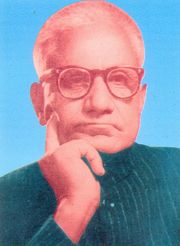
Ramkrishna Dalmia – Famous Industrialist of Rajasthan

ramkrishnaPersonal Profile

Born on 7 April 1893, RamKrishna Dalmia was a pioneer industrialist and founder of the Dalmia-Jain Group. He was born in a small village of Chirawa in Jhunjhunu district of Rajasthan. His father died when he was only 18 years old, leaving behind no property. Ramkrishna had to support his mother, grandmother, wife and his younger brother Jaidayal Dalmia.

His Beginning

His maternal uncle, Motilal Jhunjhunwala, gave him a job in his bullion business, which enabled him to earn just enough to support his whole family. He started speculating on silver and followed the advice of an astrologer. By luck he quickly made one lakh rupees. This was the beginning of what would soon become India’s third-largest business empire.

He started his business with a sugar factory Dalmianagar in the state of Bihar and after that he went on to set up many industries with the assistance of his younger brother. He built several sugar mills, and went on to acquire Bennett and Coleman, (the Times of India group).

His Contribution in Indian Independence

In the years leading up to Indian independence, Dalmia supported both Gandhi and Jinnah. Gandhi’s Civil Disobedience movement, started in 1930 with the salt Satyagraha, was, in fact, financed almost entirely by him.

At the time of India’s independence, he was among the wealthiest and most powerful men in India, with good contacts with most political leaders. At one point his name was being considered for India’s finance minister. However, in December 1956 the firebrand socialist Feroze Gandhi exposed in parliament how Dalmia, as chairman of a publicly traded bank and an insurance company, had illegally transferred nearly a crore rupees to his mill in order to fund the Bennett and Coleman acquisition. In 1956 he was sentenced to two years in jail.

However, Ram Kishan was a colorful character, and he appears to have bribed a doctor and spent the time at hospital, returning soon to his newly married sixth wife.

Tags: , , , , , , , , , ,

Professor Man Mohan Sharma – Eminent Chemical Engineer from Rajasthan

Manmohan sharmaPersonal Profile

Man Mohan Sharma was born in Jodhpur(Rajasthan) on May 1,1937. He did his education at Jodhpur, Mumbai and Cambridge and at the age of 27 he was appointed as a Professor in the University of Mumbai, Department of Chemical Technology.

Professor Sharma has published 235 papers based on original research, in international journals of high standing, and supervised 71 students in completing their Doctoral dissertations during his distinguished career.

His Contribution in Growth of Different Industries

He has been member of Board of Directors of several reputed companies like Indian Petrochemical Ltd, Hindustan Petroleum Corporation Ltd, Hindustan Organic Chemicals, Hindustan Antibiotics Ltd, Gharda Chemicals Ltd and Resins and Plastics etc from the early 1970s. He brought a rare clarity to the planning of to various industries as their adviser/consultant.

Professor Sharma was an exponent of innovations and he stressed for the industry to adopt techniques which eventually led to the successful implementation of many technologies. This resulted in substantial improvement in turn over, and financial advantage in different sectors of industry such as soda ash, petrochemical, pharmaceutical, and petroleum refining.

He was a member of the Scientific Advisory Committee to the Cabinet, Govt. of India on different occasions and had been Chairman of the Scientific Advisory Committee of the Ministry of Petroleum & Natural Gas from 1981 to June 2001. Currently he is Chairman of FIST, DST and Swarnajayanthi Fellowships/Scholarships, DST.

Professor’s Contributions to Chemical Engineering

He was editor of one of the most prestigious journals in Chemical Engineering, namely Chemical Engineering Science (Pergamon Press, UK) from 1975 to 1986. In addition, he has been member of Editorial Advisory Boards of several international journals of repute. For outstanding publications, he got the Moulton Medal of the Institution of Chemical Engineering, U.K. in 1971 and 1977.

Awards and Honours

For his contributions and achievements, Prof. M.M. Sharma has been recognised through several honours and awards. Some of them are: S.S. Bhatnagar Prize in Engineering Sciences in 1973, FICCI Award in 1981, the Vishwakarma Medal of the INSA in 1985, G.M. Modi Award in 1991, Meghnad Saha Medal in 1994, the prestigious Leverhulme Medal of the Royal Society in 1996, H.K. Firodia Award and Shatabdi Puraskar of the Indian Science Congress Association in 1999.

BHU Varanasi, Roorkee University, SM Kanpur University, Indian Institute of Technology Bombay and University of Mumbai have honoured Prof. Sharma with Honorary Doctorates.

Prof. Man Mohan Sharma was elected as a Fellow of the Indian National Science Academy (INSA) in 1976 and was President of the Academy in 1989-1990. He was elected as the Fellow of Royal Society (FRS), U.K., in 1990 and was the first engineer from India to become a Fellow. Prof. Sharma was awarded Padma Bhushan in 1987 and Padma Vibhushan in 2001.

Tags: , , , , , , , , ,

Raja Hasan Sagar – Musical Singing Sensation from Bikaner

rajaPersonal Profile

Raja Hasan, comes from the desert city of Bikaner (chhotikashi) in Rajasthan. He was born on 07 July 1982. His family belongs to the royal singers of the Jodhpur State thus singing comes naturally to Raja.

Raja considers his father Rafik Sager and his grandfather Allah Rakha Khan as his Gurus in singing.

His Passion for Music From Childhood

Raja’s first song was performed at the tender age of 7, when he left everybody stunned with his amazing performance and music pundits Raja has practiced the classical singing for almost 18 years. He is married and has lived in Mumbai for the past 8 years struggling as a singer before singing in Saregamapa 2007.

Raja’s Performances:

Raja is popular in India and in the Middle East too. During his stage shows abroad, Raja has made people dance to his tunes. He recently participated in an Indian reality show that was telecasted on Sony named “Ustadon ka Ustado” where he won with a cash prize of Rs 10lakhs and Rs 1lakh cash voucher. He also sang “Darne Walo Ko” for Royal Film Company’s newly dubbed film, The Real Don No. 1 that was released in March 2008. It’s dubbed from Telugu film, Don.

He was a finalist on Sa Re Ga Ma Pa Challenge 2007 who achieved 1st runner up in the competition attaining 3,52,40,963 votes in the final, losing to Aneek Dhar. Later he went on to win Ek Se Badhkar Ek (Zee TV) another singing and dancing programme aired on Zee TV. He also performed on the Zee TV show Sa Re Ga Ma Pa Mega Challenge. He represented the Rajasthan team.

He participated in STAR Plus’s Music Ka Maha Muqqabla and was on the Team Himesh’s Warriors. Himesh Reshamiya revealed on the show that Hasan lost his sister, although Hasan did not want this mentioned on the show. Himesh’s Warriors ended up being eliminated right before the Finals.

Tags: , , , , , ,

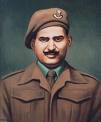
Major Piru Singh – Example of Single-Handed Bravery in Indo-Pak War 1948

major piru singh

Personal Profile

Company Havildar Major Piru Singh, was born on 20 May 1918 in Rajasthan. He was enrolled in the 6 Rajputana Rifles on 20 May 1936. During the Jammu & Kashmir operations in summer of 1948, Pakistani soldiers mounted a strong counter offensive in the Tithwal sector. The enemy also forced the Indian Army to vacate their forward positions across river Kishanganga.

After the setback, Indian troops took position on the Tithwal ridge. At this juncture, 6 Rajputana Rifles was moved from Uri to Tithwal to strengthen the 163 Bde in its impending offensive in the sector. The enemy was holding a high feature in the area and that its capture was essential for making any further progress.

India Attacked By Pakistan

The 6 Rajputana Rifles was assigned the task of securing these two features. The ‘D’ Company was to secure the first feature. The ‘C’ Company was to capture the second feature after the ‘D’ Company had carried out its task. The ‘D’ Company launched its attack on the objective at 0130 hrs on July 18th. The path to the objective was about one meter wide with deep ravines on either side. Overlooking this narrow path were the hidden enemy bunkers. A heavy fire done on the company by enemy and with half an hour it suffered 51 casualties.

Major’s Great Example of Bravery

During this battle, CHM Singh was with the leading section of the company. He rushed forward to deal with the enemy medium machine gun post which was playing havoc with his troops. Enemy grenade splinters ripped open his clothes and wounded several parts of his body. But this did not deter him. He still continued the advance, shouting the battle cry, “Raja Ramchandra Ki Jai”. Rushing forward he bayoneted the crew of the enemy MMG, with his own sten gun, silenced the menacing gun and occupied the post. By this time all his companions lay behind either dead or wounded.

The responsibility of clearing the enemy from the hill feature lay with him alone. Bleeding profusely he went forward to attack the second enemy MMG post.
This time a grenade wounded him in the face. The blood dripping from his face almost blinded him. By now2914 all the sten gun ammunition with him had been spent. He courageously crawled out of the occupied enemy trench and hurled grenades at the next enemy post. CHM Singh then jumped into another trench and bayoneted two enemy soldiers to death.

As CHM Singh, emerged out of the second trench to charge on the third enemy bunker, he was hit in head by a bullet and was seen dropping on the edge of the enemy trench. There was an explosion in the trench which showed that the grenade had done its work.  “He paid with his life for his singularity brave act, but he left for the rest of his comrades a unique example of single-handed bravery and determined cold courage.

Param Veer Chakra

The country is grateful,” wrote Prime Minister Jawaharlal Nehru to Mrs. Tarawati, 75-year old mother of Company Havildar Major Piru Singh, “for this sacrifice made in the service of the Motherland, and it is our prayer that this may give you some peace and solace.” Company Havildar Major Piru Singh was honoured with the highest war-time gallantry medal, Param Vir Chakra, posthumously. Jai Hind!! Jai Jawan!!

Tags: , , , , , , , , ,

Toshi Sabri: Famous Singer of Rajasthan

toshi Personal Profile:

Muhammad Ovez Sabri, popularly known as Toshi Sabri, is a singer of Rajasthan’s Sabri Family. He was born in Punjab on 4 July but later moved to Rajasthan.

Toshi’s father is a classical Indian musician so being from a musical family Toshi started singing at an early age. Toshi specializes in different ranges of music from Qawwali to Pop.

Passion for the Music

He is such passionate for the music that he left his study before giving 12th standard exams, and thus he couldn’t find a decent job in Mumbai. Before being chosen as Amul Star Voice of India, Toshi struggled a lot for two years in Mumbai. To prove himself and to show his magic of voice he sang at weddings, parties, occasions, restaurants and even in bar and last he got a big break. Toshi finished 4th in Amul Star Voice of despite being the best singer on the show.

He later participated in Ustaadon ke Ustaad and was among the top 4 finalists but unfortunately again he did not win. Later in 2008 he participated in Jo Jeeta Wohi Superstar which brought the best contestants from different reality shows from different channels. Toshi despite being the best singer on the show did not get much support from the judges and was eliminated after reaching the top 5.

Toshi’s Real Big Break in Music Industry

Because of these reality shows his real career started and he got song to sing in many popular bollywood movies. These include: Judai from Jannat, Jaage hai Baad Muddat ke from Summer 2007, Nathani Utaro from Horn OK Please.

He got his real big break when Mahesh Bhatt approached him and his brother Sharib to compose and sing a song for his next film Raaz-The Mystery Continues. The song titled “Maahi” turned out to be one of the biggest hits of 2009. With the success “Maahi” Mahesh Bhatt approached Toshi and Sharib to compose for their next movie titled Jashnn.

Although the movie did not do so well, the music was superhot. Toshi and Sharib are also composing for Madhur Bhandarkar’s Jail, Vaada Raha, Rutba and Vikram Bhatts Phir. Toshi is also singing in many upcoming movies which include Salman Khan’s Veer.

Tags: , , , , , , , , , , , , , , ,

Sagarmal Gopa – Great Freedom Fighter from state of Rajasthan

Sagarmal gopaPersonal Profile
Sagarmal Gopa, a famous freedom fighter, was born on 3 November in a Brahmin family in Jaisalmer.

His ancestors were the Rajgurus of Jaisalmer Kingdom and his father Shri Akhya Raj was in the state service of Jaisalmer.

Even Sagarmal belonged to a prosperous and prestigious Brahmin family-serving the state in esteemed posts but he never went for that. He noticed the indifferent attitude showed by his home state towards the freedom movement.

He was very disappointed by the attitude of rulers of Jaisalmer against freedom movement and resisted for that. He migrated with his family to Nagpur and dedicated his life completely towards the freedom movement.

His Struggle for Freedom Movement
He opposed anti people policies of the rulers of Jaisalmer and took active part in non -co-operation movement in 1921. Sagarmal also participated in the conferences of All India Council of Princely states. Because of this oppose he was expelled from Jaisalmer and Hyderabad. But he never stopped and continued his work for freedom movement.

He spread his message and motivated the public to join his cause through the press, by publishing numerous books,  ‘Jaisalmer Rajya Ka Gunda Shasan’ and ‘Raghunath Singh Ka Mukadma’.

In 1938 because of Sagarmal’s father’s death he returned back to Jaisalmer and was arrested on May 25th, 1941. He was then imprisoned, for many years and was never released. He was tortured in prison for years.  He died in the prison on 4 April 1946.

In His Honour
In Sagarmal Gopa’s honour the Government of India and the Department of Posts issued a commemorative stamp on December 29, 1986, for the series titled ‘India’s struggle for freedom’. A branch of the Indira Gandhi Canal is also named after him.

Tags: , , , , , , , , , , ,

Brahmagupta – Great Indian Mathematician and Astronomer

Brahamgupta

Personal Profile:

Brahmagupta, the great mathematician and astronomer was born in Bhinmal city in the state of Rajasthan. His father’s name was Jisnugupta. He lived most of his life in Bhillamal and often referred to as Bhillamalacarya, that is, the teacher from Bhinmal. Brahmagupta is famous for the important works on mathematics and astronomy.

Brahmagupta as Astronomer:

Brahmagupta worked on the secrets of universe and wrote Brahmasphutasiddhanta (the Opening of the Universe) in 628 in Bhinmal city. In this book he covered the topics of mean longitudes of the planets; true longitudes of the planets; the three problems of diurnal rotation; lunar eclipses; solar eclipses; risings and settings; the moon’s crescent; the moon’s shadow; conjunctions of the planets with each other; and conjunctions of the planets with the fixed stars.

Because of his great efforts and knowledge he became head of the astronomical observatory at Ujjain.

Brahmagupta as Mathematician:

In Brahmasphutasiddhanta, Brahmagupta defined zero as the result of subtracting a number from itself. Brahmagupta developed some algebraic notation and presents methods to solve quadratic equations. He presents methods to solve indeterminate equations. Brahmagupta gave remarkable formulae for the area of a cyclic quadrilateral and for the lengths of the diagonals in terms of the sides.

In 665 he wrote a second work on mathematics and astronomy named as Khandakhadyaka. In mathematics he give different formulas and theorems which now known as Brahmagupta’s formula and Brahmagupta’s theorem.  Brahmagupta described about Zero as one of the numerals which stood for meaning nothing. He also elaborates as to how integers positive and negative consequence when played with zero.

Tags: , , , , , , , , ,

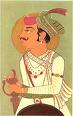
Rao Bika – Founder and King of Bikaner

Rao bika Personal Profile:
Rao Bika was the founder of the city Bikaner in Rajasthan. He was the son of Rao Jodha, founder of the city and principality of Jodhpur.

In 1465, provoked by a stray comment by his father, Rao Bika left Marwar (Jodhpur) to create his own kingdom. His mother Rao Jodha supported Bika. He left Marwar accompanied by his uncle, Rawat Kandhal, who provided politico-strategic advice and a small contingent of Rathore warriors (500 soldier and 100 cavalrymen).

He met with Mata Karni:
During his travel, Bika stopped at Deshnoke where he met with the mystic Karni Mata. She gave him her blessings for his success. Rao bika got encouraged by her support and took advantage of the internal rivalries of the Jat clans and by 1485 build a small fort called Rati Ghati at the site of the city which today bears his name. .

Establishment of Bikaner:
In 1488 he began the building of the city itself. In the beginning the neighbouring Bhati chiefs were suspicious of the new growing power in their vicinity. Karni Mata, who had become the kuladevi of Rao Bika brought the rivalry to an end by inspiring Rao Shekha – the powerful Bhati chief of Pugal, to give the hand of his daughter in marriage to Rao Bika. .

In 1488 what Rao Jodha died, Rao Bika attempted to claim the heirlooms promised him, only for his brothers to refuse his request. In a surprise attack he stormed Mehrangarh Fort but left his brothers unharmed and departed with only the promised heirlooms (among which were a sandalwood ’Pugal’ throne, a royal umbrella, a sword and a horse of ’divine origin’).

Bika’s grandfather Raimnal through palace intrigues had been drugged with opium and tied to his bed with his own turban and murdered. Remembering this Rao Bika had a special short lightweight bed made so his feet hung over the edge. The idea being that if the same thing happened to him he would still be able to stand up and fight with it on his back. This bed is today on display in the Phul Mahal in Junagarh Fort in Bikaner.Rao Bika died in 1504. .

Tags: , , , , , , , , , , ,