The Rajasthan state is poorly placed in terms of availability of water resources. It has only 1.16% of surface water and 1.70% of the ground water of the country. Average rainfall is 531 mm against national average of 1200 mm. Gross annual draft of ground water in the state is 13 BCM against recharge of 10.4 BCM.
Opportunities for Investors
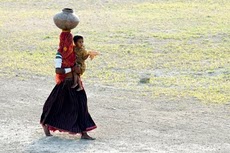
Due to the water scarcity, Rajasthan is severely affected with drinking water supply problems. So to resolve this problem, Rajasthan Government has taken up execution of major drinking water supply projects in a big way and there lies excellent opportunities for investment in this sector.
The major drinking water supply projects, as proposed for private investment, are basically of two configurations:
Transmission
The transmission system intends to carry water from the raw water source to different pumping stations.
Cluster Distribution
The cluster distribution system projects involves taking off water from existing transmission systems and conveying it to different villages/habitations in the project area.
Major Water Supply Projects in Rajasthan
A number of major water supply projects have been identified for implementation under public private partnership model.
- Mansiwakal Water Supply Project for Udaipur
- Bisalpur Jaipur Water Supply Project
- Fluoride Control Project for Bhinay-Masooda
- Jawai-Pali Pipeline Project
- Barmer Lift Canal Water Supply Project
- Bisalpur Dudu Phulera Project
- Madhopur -Baler Water Supply Project
- Churu-Jhunjhunu Water Supply Project Phase-II (Aapni Yojana)
- Sarwar-Nasirabad Pipeline Project
Government Initiatives
Rajasthan has demanded special status in terms of drinking water supply while pointing out that the desert State needs Rs.50,000 crore for supply of clean and safe potable water to the remote areas, including Rs.20,000 crore for projects presently under way.
The Rajasthan Government’s Public Health Engineering Department (PHED) has installed over 10,700 new hand-pumps and bore-wells in the State’s urban as well as rural areas this past January under a contingency plan for supply of drinking water.
