The Elephant Festival is one of the most popular fairs of rajasthan. It has its own charm and is celebrated every year on the occasion of Holi, the festival of colors. This year it will be organized on 28 February, one day before Holi.
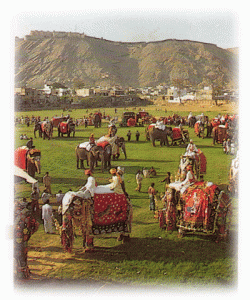
Decorated Elephants – Center of Attraction
Jaipur Elephant Festival is perhaps the only festival where Elephants are given prime importance. Here, as you would expect from the name of the Festival – Elephants are the center of attraction.
The famous Chaugan ground of Jaipur makes the perfect venue for the occasion. It commences with a parade of decorated Elephants marching towards the ground and beautifully decked with floral motifs, make ultimate picture for the tourists. Being the time for Holi, tourists play Holi mounting on these painted Elephants.
History about Elephant Festival
The Rajput kings, treated elephants with special enthusiasm as they not only during War times but also during royal festivities use the best which is Nishan-ka-hathi (the flag carrier) to lead the procession.
After the procession, King selects one elephant who entertain with their fights and other games in front of the royal guests including famous personalities of the British era and Maharajas of Indian dynasties. Latter, the flag carrying elephant rides up to Amber Palace. Now this tradition is carried on till today as Rajasthan Tourism revived the tradition by including the Elephant Festival in the cultural calendar.
Attraction of Elephant Festival 2010
According to organizing committee, for grand finale this year, five elephants would enter the stadium from different entrances with their mahouts carrying a mashaal (torch).
They would then congregate at the center to form a chaupar and play Holi which would be a prelude to the fireworks. Beside this, five private bands have been invited which would lend archetypal Holi music with drums etc.
The festival will be running from 4 pm till 7 pm and will also see the traditional elephant procession, folk dance Chang’, matka race for the tourists, tug-of-war between locals and foreigners and the folk dance of Brij.
