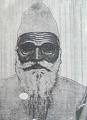
 Personal Profile
Swami Keshwanand was such an indifferent saint who served others for social benefits while himself being unmarried throughout his life. He was born at village Magloona in Sikar district of present-day Rajasthan.
His actual name was Birama, and he was the son of Thakarsi, a penurious camel-driver. In 1890 when Birama was seven, his father died and for a prolonged period, his mother had perforce to move from place to place in search of shelter and fodder for her animals. Mother and son finally settled at village Kelania in present-day Sri Ganganagar.
However, this was not the end of their misfortunes: Rajasthan was then headed for one of its periodic famines. There was no vegetation and drop of water left on the ground. All the animals died for want of fodder. People survived on grasses and the bark of “Khejri” trees. The ruling Savants were least bothered for the poor people. It was in these circumstances that Birama’s mother Saran died in 1899 at village Kelaniya.
Education
The famine of 1899 forced Birama to leave the desert region and move to Punjab in search of livelihood. He went to Mahant Kushaldas of the Udasin sect and expressed the desire to learn Sanskrit. Birama became a sannyasi in 1904 and did his education at the Sadhu Ashram Fazilka. At the Kumbha Mela held at Prayag in 1905, Mahatma Hiranandji Avadhut conferred on Birama the new name “Swami Keshwanand”.
Established Various Schools, Colleges, Hostels and Libraries
Swami Keshwanand was an orphan, illiterate, nomadic man who never received formal education but he established more than 300 schools, 50 hostels and innumerable libraries, social service centers and museums. Swami Keshwanand’s deep understanding of the rural society of the desert region can be gleaned from his book “Maru Bhumi Seva Karya”. In this book, he has explained the peculiarities of the Desert region, identified the problems and suggested appropriate and logical solutions.
Keshwanand as freedom fighter, educator and social reformer
He got very hurt because of Jalianwalla bagh incident and after that he started attending the meetings of the Indian National Congress, joined the Indian Independence Movement under the leadership of Mahatma Gandhi, and participated in the non-cooperation movement, for which was imprisoned for two years (1921-1922).
It was swami Keshwanand’s lifelong endeavour to eradicate social evils like untouchability, illiteracy, child marriage, indebtedness, poverty, backwardness, alcohol abuse, moral dissipation etc.
Honours
Swami Keshwanand was presented the “Abhinandan Granth” by the then chief minister of Rajasthan on March 9, 1958. He was a member of the Rajya Sabha for two consequetive terms, 1952-58 and 1958-64. The department of Posts, Government of India, issued a commemorative postage stamp in his honour on August 15, 1999.
